Key Takeaways
- Nine big funds sold Union Pacific in the third quarter, including Viking Global, Seth Klarman’s Baupost Group and Dan Loeb’s Third Point, while nine bought, led by GQG Partners’ new $476 million stake.
- Some buyers bought other railroads too: Avala Global opened a CSX stake, and GQG opened one in Canadian Pacific Kansas City.
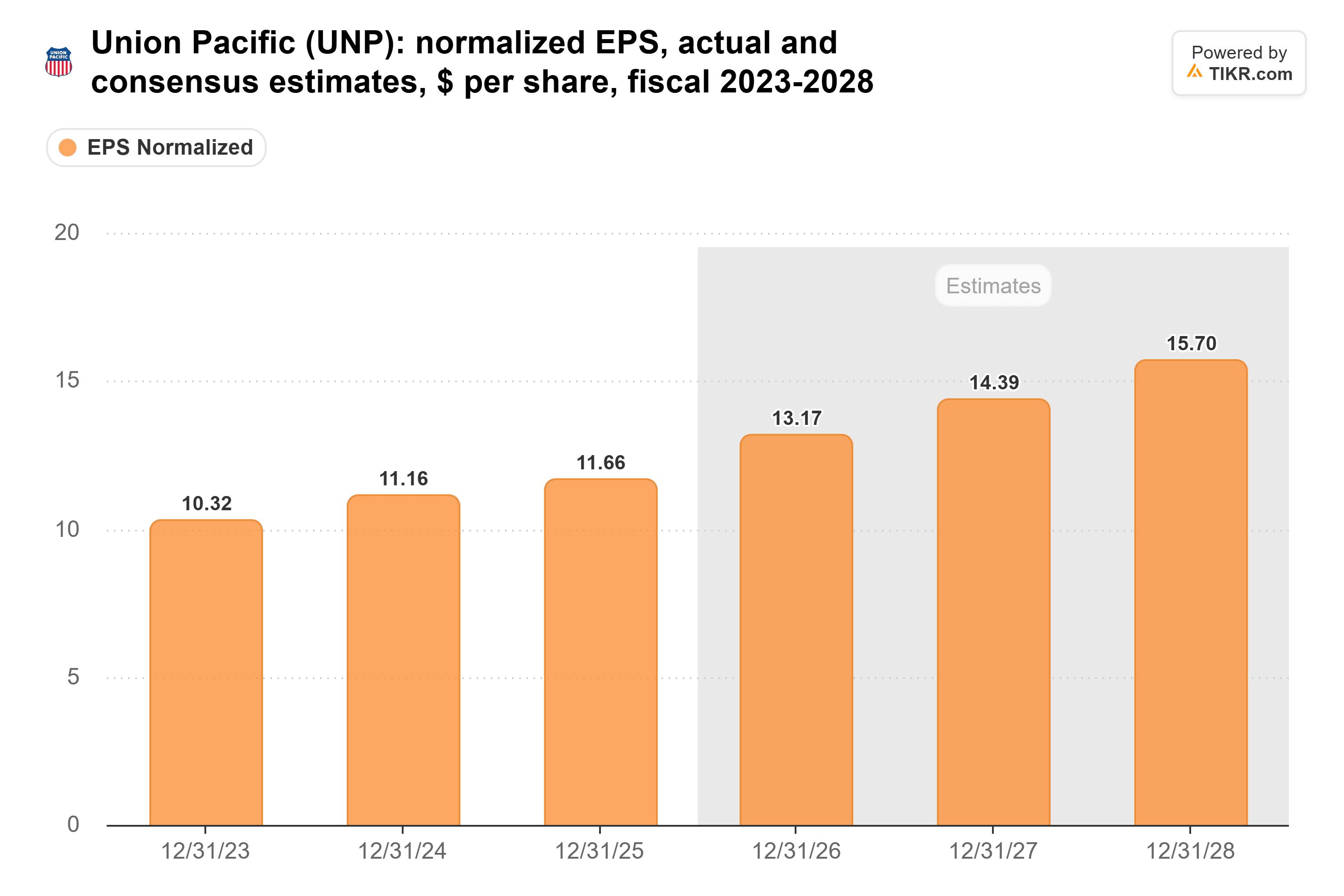
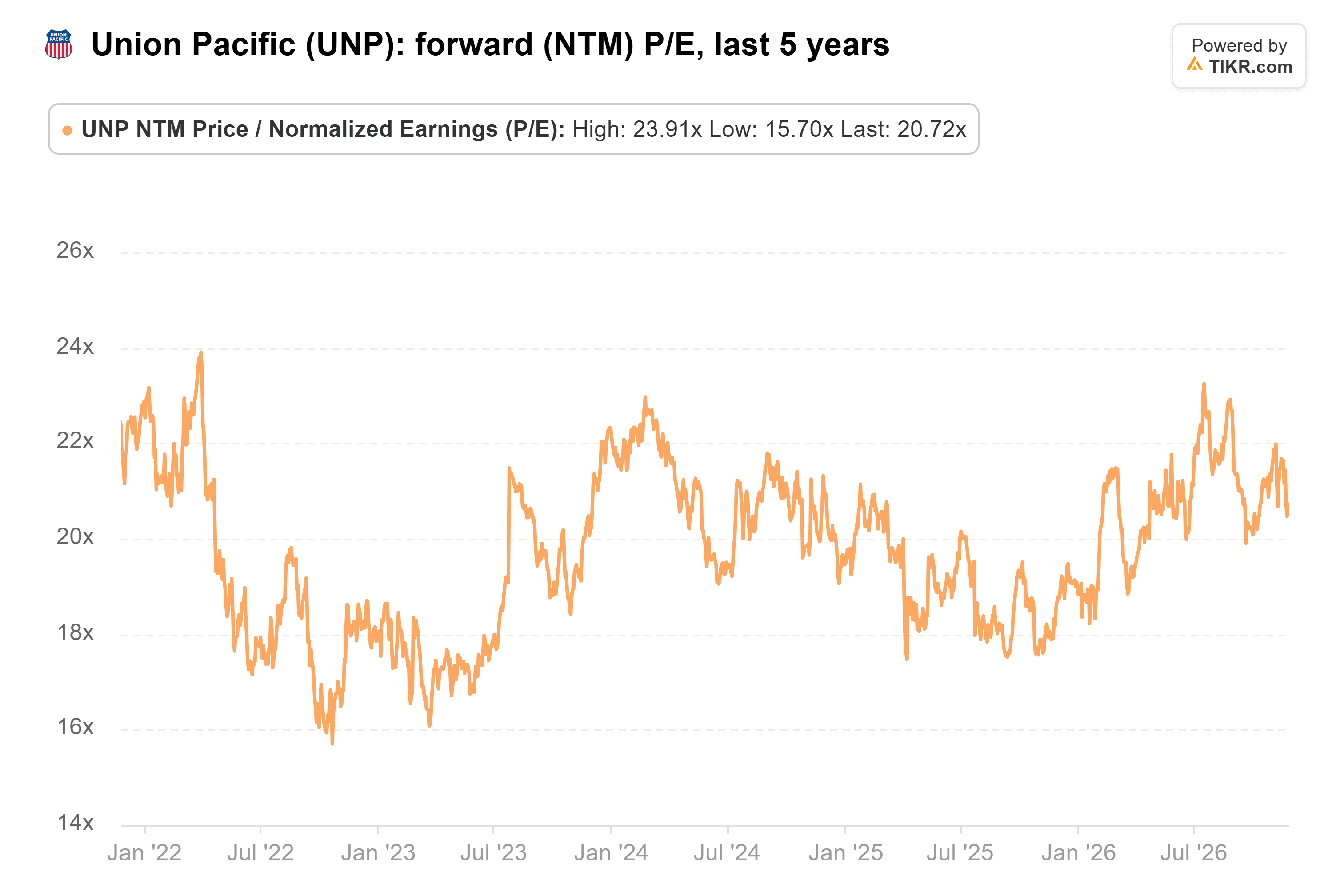
- Union Pacific trades at 21x forward earnings, just above its five-year average of 20x, and analysts expect EPS to grow from $11.66 in 2025 to $15.70 in 2028.
- The buyers have the better case, and the main risk is the $85 billion Norfolk Southern deal, which regulators may not rule on until late August 2027.
Big money split right down the middle on Union Pacific (UNP) last quarter. Of the 460 big funds that have filed 13Fs for the quarter ended Sept. 30, nine bought the railroad and nine sold it, while 54 held it at the quarter’s end.
Those counts cover funds readers know, plus any fund with $1 billion or more of US stocks in its 13F, with quant and index funds left out. A buy is a new position or 20% or more shares added. A sale is selling out or cutting 20% or more.
The sellers have the famous names
The biggest exit came from Andreas Halvorsen’s Viking Global, which manages $78 billion. Its 13F, filed Nov. 16, shows it sold all 2.05 million of its shares, about $557 million at quarter-end prices. Consulta, whose 13F holds $3.1 billion of US stocks, sold all 450,000 of its shares, about $122 million. That stake had been 4.4% of its 13F stocks a quarter earlier.
Dan Loeb’s Third Point, which manages $29 billion, also sold out: all 350,000 shares, about $95 million. Seth Klarman’s Baupost Group, which manages $25 billion, cut its stake 33% to 795,395 shares in its 13F filed Nov. 13, a sale of about $106 million.
Baupost didn’t leave, though. Its remaining shares were worth $216 million on Sept. 30. That was 4.3% of its 13F stocks and its ninth-largest holding.
TIKR tracks 25 analysts on Union Pacific. How many say “Buy”?
See the full breakdown of Buy, Hold, and Sell ratings on Union Pacific, along with Wall Street’s revenue and earnings estimates, all in one place. More than 500,000 investors use TIKR to research stocks like this one. See Union Pacific’s Analyst Ratings
GQG led the buyers
GQG Partners, which manages $164 billion, opened a new position of 1.75 million shares, worth about $476 million at quarter-end prices, in its 13F filed Nov. 13. That’s only 0.9% of its 13F stocks and its 33rd-largest holding. GQG also opened a stake in Canadian Pacific Kansas City (CP): 473,662 shares worth $40 million, an even smaller 0.1%.
PointState Capital, which manages $12 billion, made the more concentrated bet. It added 57% to its stake, about $79 million of buying. That left it with 793,307 shares worth $216 million, 5.0% of its 13F stocks and its ninth-largest holding. In the same quarter, it cut its CSX (CSX) stake 39%, to 1.56 million shares worth $73 million.
Avala Global, which manages $3.8 billion, went the other way on CSX. It opened a new CSX position of 867,800 shares worth $40 million, next to a new Union Pacific stake of 149,200 shares worth $41 million. CSX has since posted record revenue and raised its guidance, and it’s up 8% since Sept. 30.
Union Pacific is up 7% since Sept. 30. That’s the stock’s move alone: a 13F doesn’t show what anyone paid, or whether they still hold the shares today.
Do the numbers back the buyers?
Union Pacific reported a strong third quarter on Oct. 22. Its third-quarter release showed adjusted diluted EPS up 15% to $3.53 and carloads up 6%. Its adjusted operating ratio was 58.8%.
Analysts expect more of the same, with normalized EPS rising from $11.66 in 2025 to $13.17 this year and $15.70 in 2028:
Investors aren’t paying much of a premium for that growth. Union Pacific trades at 21x forward earnings. That’s just above its five-year average of 20x and well below its 24x peak in March 2022:
Analysts’ average price target has climbed with the stock, to $330 from $260 a year ago:
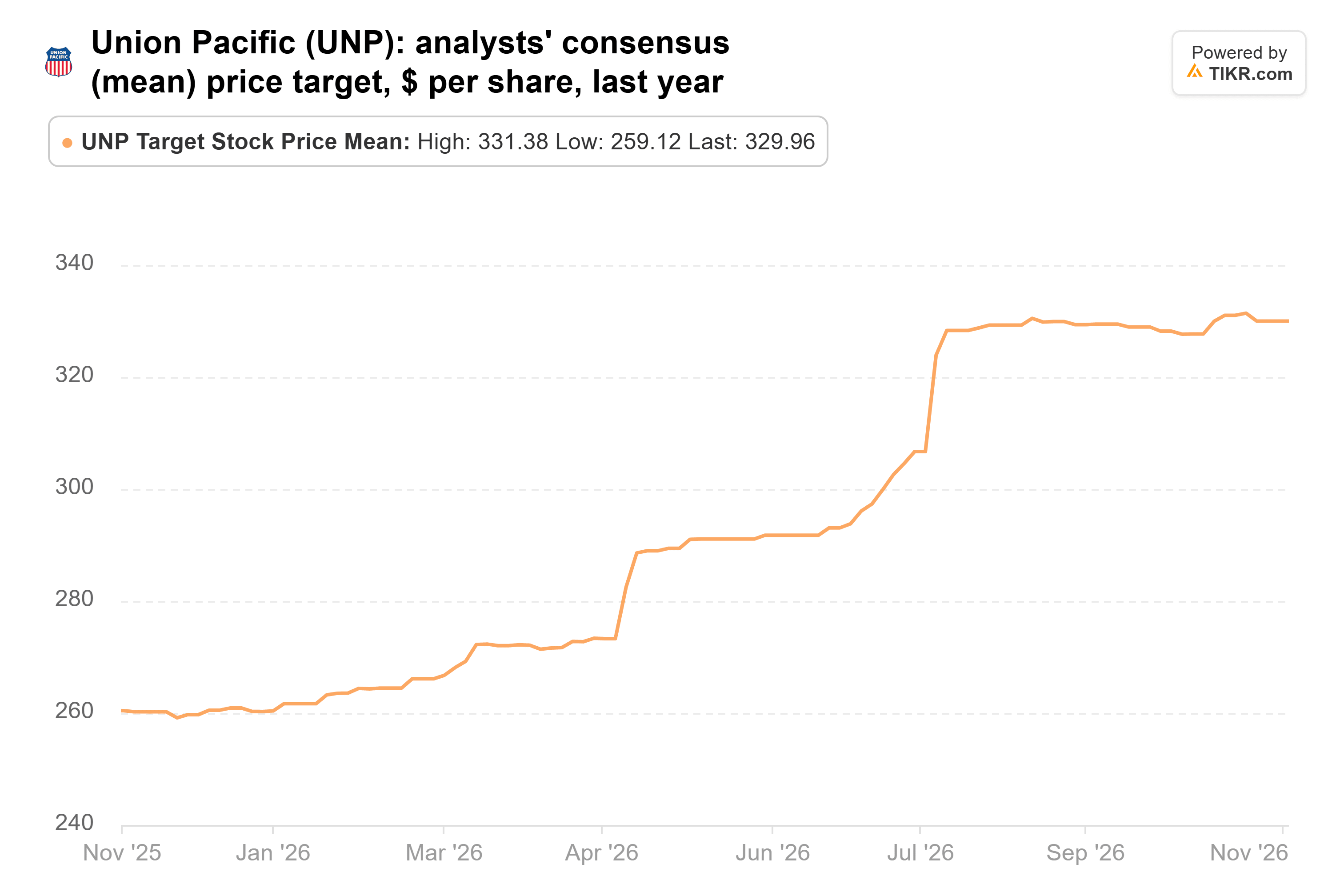
That $330 target is 13% above today’s price, and individual targets run from $245 to $375. A year from now, the market will be pricing 2028’s earnings. On 2028’s estimated EPS, $330 is about 21x, right around today’s multiple. So the target needs no re-rating, only for the estimates to hold.
Norfolk Southern is the wild card
Union Pacific agreed to buy Norfolk Southern for $85 billion. It’s the first rail merger the Surface Transportation Board will judge under its tougher 2001 rules. Shipper groups, rival railroads and a group of state attorneys general have asked the board to deny it without a full review. If the schedule holds, the board has until Aug. 28, 2027, to rule.
Still, I’m with the buyers. Union Pacific is growing earnings at a double-digit pace this year, and analysts see about 9% a year after that. Meanwhile, the stock costs only a little more than its five-year average. Even Baupost, on the selling side, kept it among its 10 biggest holdings.
To reach this year’s $13.17 consensus, Union Pacific needs fourth-quarter EPS of about $3.30 in its January report. The bigger test is the board’s ruling. The funds’ next 13Fs, due by mid-February, will show us which side kept going.
So what is Union Pacific stock actually worth?
TIKR lets you forecast the future price of any stock in less than a minute. Just enter a few assumptions into TIKR’s valuation model and see what Union Pacific could be worth. Start from Wall Street consensus estimates, or adjust the inputs to reflect your own view of the business. It’s free to use.
Disclaimer:
Please note that the articles on TIKR are not intended to serve as investment or financial advice from TIKR or our content team, nor are they recommendations to buy or sell any stocks. We create our content based on TIKR Terminal’s investment data and analysts’ estimates. Our analysis might not include recent company news or important updates. TIKR has no position in any of the stocks mentioned. Thank you for reading, and happy investing!