Key Takeaways
- NVIDIA reinstated Jensen Huang as CEO on Nov. 23, and the stock jumped 31% that day, then fell 6% after he reportedly told staff the company doesn’t need a succession plan.
- Huang’s refusal to name a successor keeps a key-man discount on the stock, even with him back in charge.
- NVIDIA trades at about 11x forward earnings, a third of its five-year average, while analysts expect its normalized EPS to more than double this fiscal year.
- Huang testifies before Congress on Dec. 1 and Dec. 3, but naming a No. 2 would do more for the multiple than anything he says there.
NVIDIA (NVDA) got Jensen Huang back on Monday, and he says the last two weeks taught him something.
NVIDIA’s board reinstated its founder as CEO 12 days after he resigned over a personal scandal and federal probes into chip exports. The stock jumped 31% on the news.
“I’m going to be a better CEO the second time around,” Huang told employees on his return.
At an all-hands meeting on Tuesday, he apologized to staff, Bloomberg reported, and reportedly told them NVIDIA doesn’t need a succession plan.
The stock fell 6% that day, and it dropped again on Wednesday.
TIKR tracks 63 analysts on Nvidia. How many say “Buy”?
See the full breakdown of Buy, Hold, and Sell ratings on Nvidia, along with Wall Street’s revenue and earnings estimates, all in one place. More than 500,000 investors use TIKR to research stocks like this one. See Nvidia’s Analyst Ratings
One man, 90% of the chips
Andrew Ross Sorkin, founder of the New York Times’ DealBook, raised the issue at this week’s DealBook Summit. For him, nothing sums up the AI industry’s risk better than “a company that sells the world 90% of the chips required for AI having no succession plan whatsoever.”
He has a point. Much of the AI build-out depends on NVIDIA, and NVIDIA depends on Huang.
On the Animal Spirits podcast, Ritholtz Wealth Management’s Ben Carlson took that to the stock: “how could you trade the stock at anything other than 10 times forward earnings when this sort of risk exists?”
The discount outlasted the comeback
The earnings estimates don’t explain a multiple this low. Analysts expect NVIDIA’s normalized EPS to more than double to $9.67 in the fiscal year ending January 2027, then rise to $16.61 in fiscal 2028.
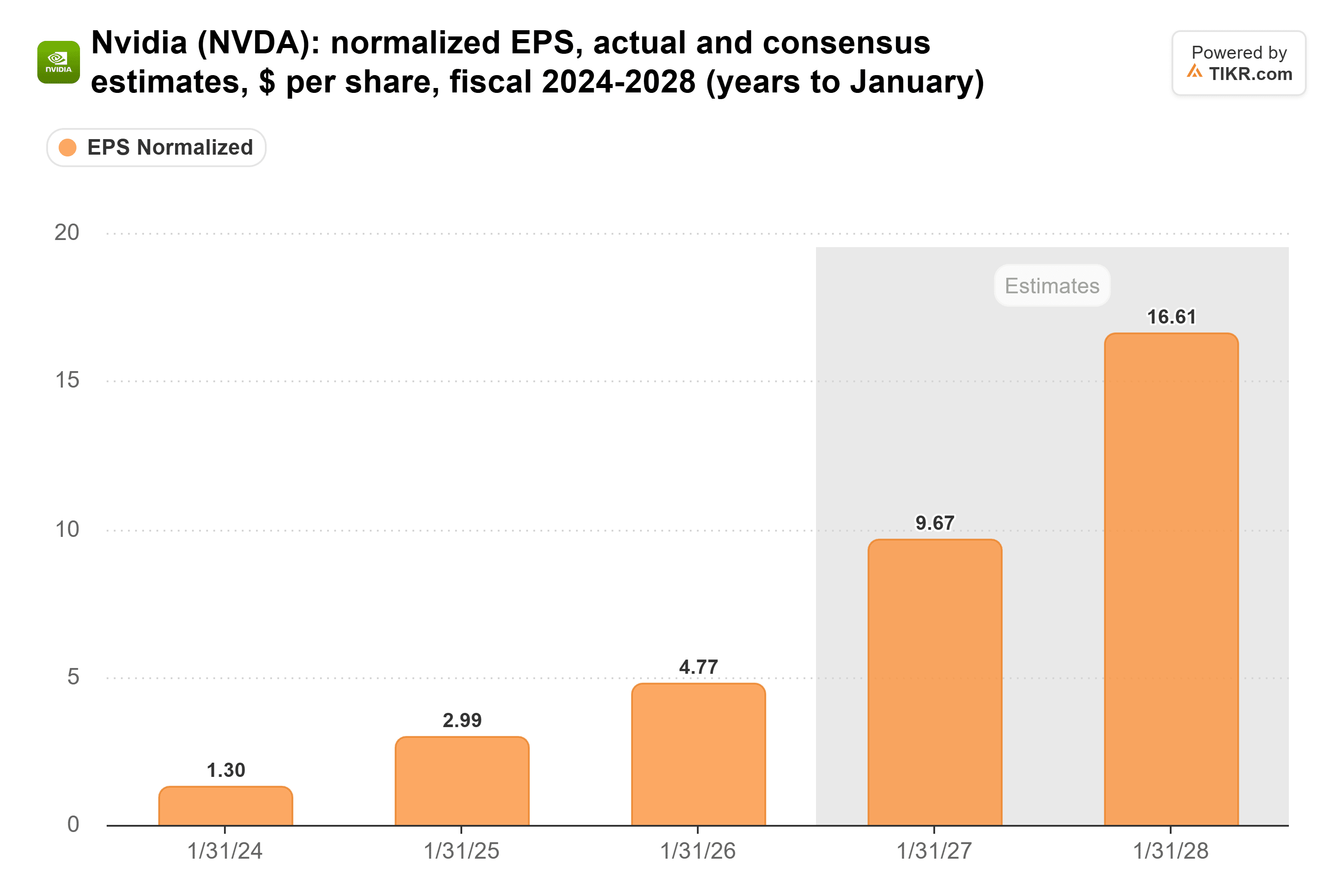
Still, the stock trades at about 11x forward earnings, a third of its 35x five-year average.
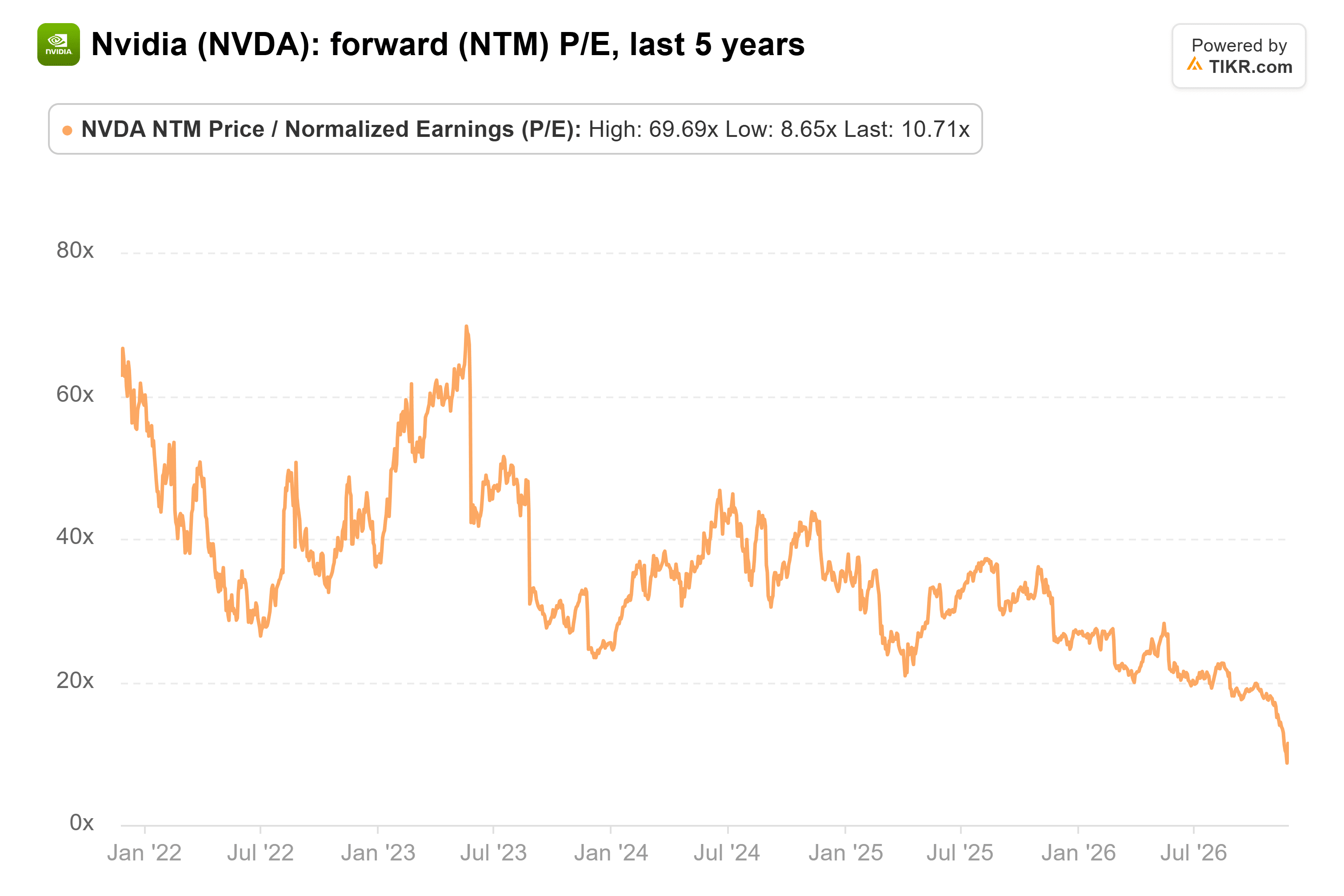
It hit a five-year low of 8.7x on Nov. 20, and Huang’s return only lifted it to about 11x, before Wednesday’s drop.
Huang isn’t the whole discount: the Justice Department and the SEC are still investigating alleged chip smuggling through Megaspeed, a blacklisted Singapore-based firm, and worries about AI spending hit chip stocks this week. But a succession plan is the one part Huang controls himself, and he just said no to one.
Thirty-three years, no backup
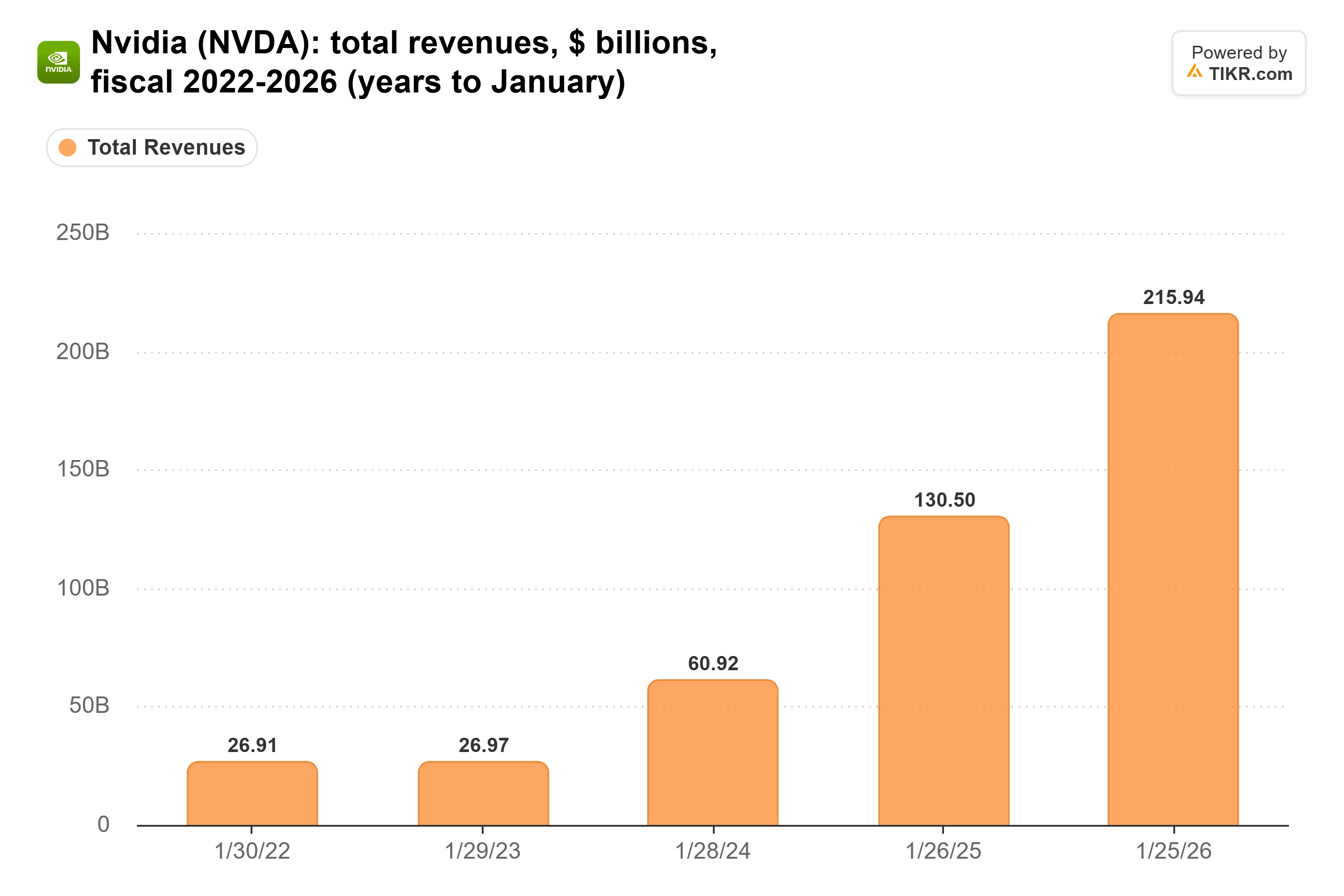
Of course, Huang has run NVIDIA without a named successor since he founded it in 1993, and shareholders have done just fine. Revenue grew from $26.9 billion in fiscal 2022 to $216 billion in fiscal 2026, 8x in four years.
So the market could shrug off the question again once the investigations fade. But we just saw what a plan is for: when Huang left without warning, NVIDIA had nobody ready. A plan wouldn’t mean Huang leaves. It would mean investors know who runs the company if he does.
The cheapest catalyst NVIDIA has
Huang can be a better CEO the second time around and still leave shareholders exposed. As I see it, naming a No. 2 is the cheapest catalyst NVIDIA has. Until the company does that, I’d expect the stock to trade well below its own history, even with earnings climbing this fast.
Next up: a closed-door House interview on Dec. 1 and a public Senate Banking Committee hearing on Dec. 3, and Congress still has plenty of questions for him. If he gets through those with his job secure and the multiple is still stuck near 11x, the market is telling him the plan matters more than he thinks.
So what is NVIDIA stock actually worth?
TIKR lets you forecast the future price of any stock in less than a minute. Just enter a few assumptions into TIKR’s valuation model and see what NVIDIA could be worth. Start from Wall Street consensus estimates, or adjust the inputs to reflect your own view of the business. It’s free to use.
Disclaimer:
Please note that the articles on TIKR are not intended to serve as investment or financial advice from TIKR or our content team, nor are they recommendations to buy or sell any stocks. We create our content based on TIKR Terminal’s investment data and analysts’ estimates. Our analysis might not include recent company news or important updates. TIKR has no position in any of the stocks mentioned. Thank you for reading, and happy investing!