Key Takeaways
- Sam Altman says OpenAI still plans to go public someday, but not now.
- S&P has said OpenAI makes up about half of Oracle’s (ORCL) backlog, so a later IPO leaves Oracle’s biggest customer paying with private money that has been harder to raise.
- Oracle says its build is fully funded, but analysts expect its free cash flow to stay negative through fiscal 2028, and its total debt reached $167 billion at the end of fiscal 2026.
- Amazon (AMZN) and Microsoft (MSFT) have more cash to fall back on, and Oracle’s mid-December report will show whether other customers are filling its backlog.
Oracle is spending tens of billions of dollars to build data centers for OpenAI, and an OpenAI IPO was the obvious way to pay for all that computing.
At the DealBook Summit, Andrew Ross Sorkin read back the line Sam Altman gave Fortune in September: “right now would be an ill-advised moment to go public.” Altman didn’t take it back. “We plan to be a public company at some point,” he said.
That’s a big risk for Oracle, since S&P has said OpenAI accounts for about half of its backlog. Amazon and Microsoft sell computing to OpenAI too, but neither has stretched its balance sheet the way Oracle has.
OpenAI is still raising money the hard way
Until OpenAI lists, it has to pay its bills from revenue and private money. The revenue is growing fast: Greg Brockman, OpenAI’s president, said at the same session that the company “doubled actually our enterprise revenue in Q3 alone.” That still doesn’t cover the losses.
According to figures from the Wall Street Journal, OpenAI posted an operating loss of about $13.5 billion in the third quarter, and CNBC reported that its latest funding round had reached $15 billion, half of its original $30 billion target.
TIKR tracks 43 analysts on Oracle. How many say “Buy”?
See the full breakdown of Buy, Hold, and Sell ratings on Oracle, along with Wall Street’s revenue and earnings estimates, all in one place. More than 500,000 investors use TIKR to research stocks like this one. See Oracle’s Analyst Ratings
Oracle’s money is in place for the build
In a statement on Nov. 20, Oracle said it “has secured all the funding we need to fulfill our contract with OpenAI.”
It still expects positive free cash flow in the second half of fiscal 2028 (its fiscal year ends in May), and more than $30 billion in fiscal 2029.
Getting that money back depends on OpenAI paying for years. Analysts’ estimates show how long Oracle has to wait for its cash to turn:
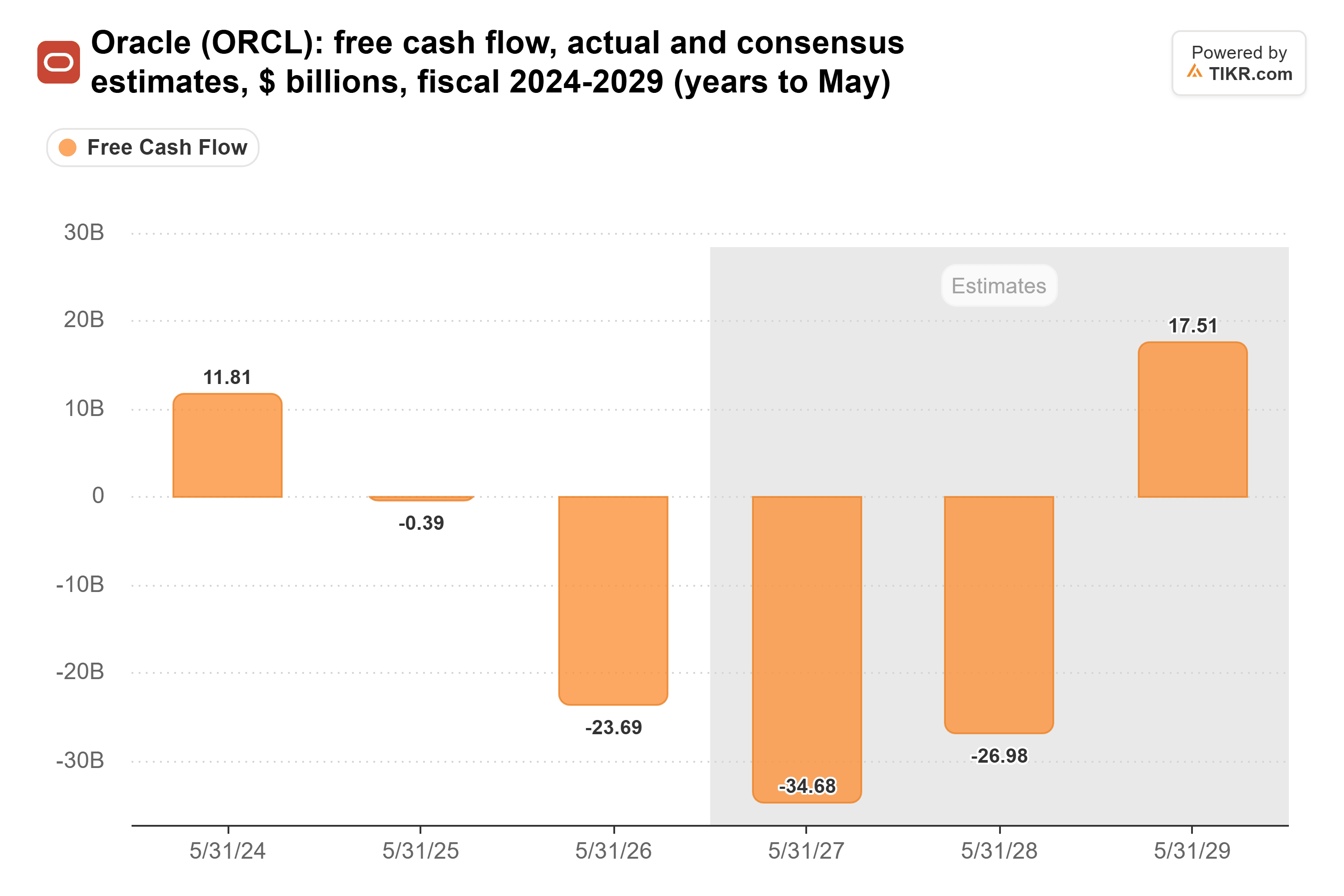
For fiscal 2029, consensus has $17.5 billion of free cash flow, well short of Oracle’s target of more than $30 billion.
The spending behind those numbers has multiplied:
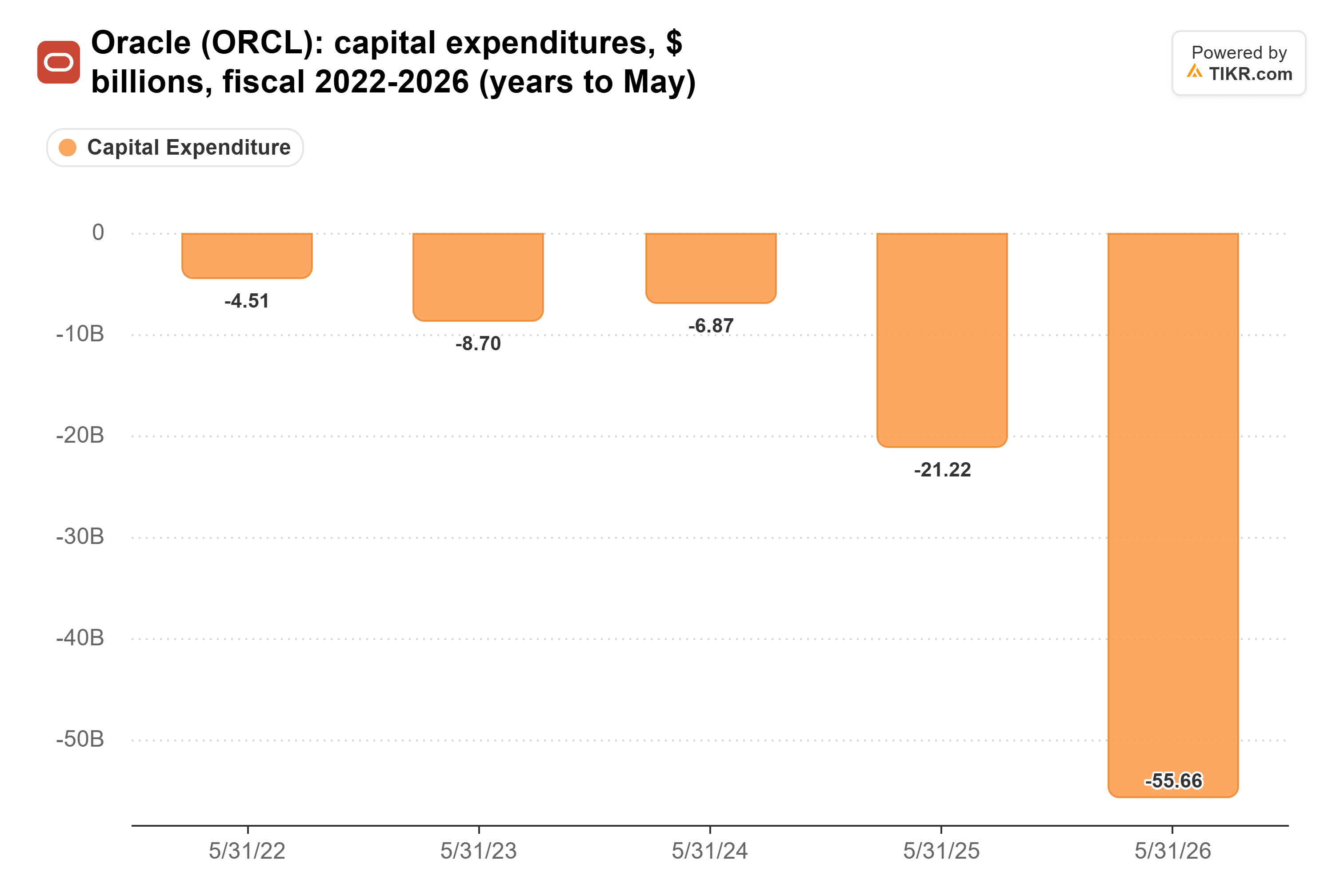
Capex was more than 12x higher in fiscal 2026 than in fiscal 2022.
Over the 12 months to Aug. 31, Oracle spent $75.7 billion on capex, more than its $71.8 billion in revenue.
Oracle has borrowed heavily to pay for it:
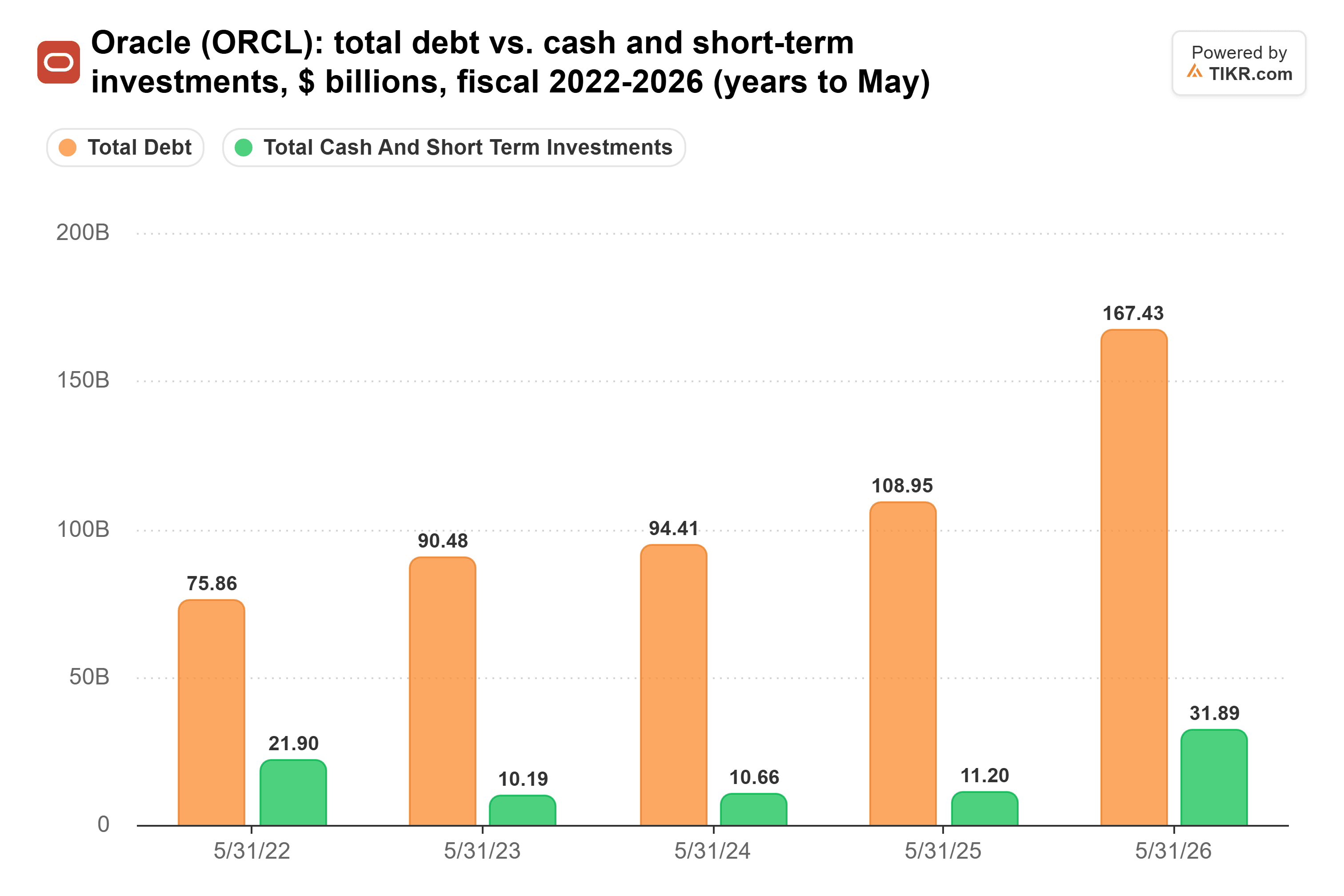
On top of that debt, Oracle has $288 billion of data center leases that haven’t started yet and don’t show up on the balance sheet.
S&P rates Oracle BBB-, one notch above junk.
Amazon and Microsoft have more cushion
Microsoft and Amazon also count on OpenAI’s checks clearing.
When OpenAI recapitalized in October 2025, it committed to buy an extra $250 billion of Azure services, and Microsoft came out with a stake of about 27%.
Amazon’s Q3 release lists OpenAI among new AWS agreements. But Amazon generated $168.3 billion of operating cash flow over the 12 months to Sept. 30, compared with $32.0 billion for Oracle in fiscal 2026, so it has far more to lean on if OpenAI slows its spending.
Oracle has to wait longer to get paid
The way I see it, Altman’s delay leaves Oracle depending on OpenAI’s private fundraising for longer, and a company that has borrowed this heavily against one customer’s contracts needs that customer to pay on time.
Oracle reports its fiscal Q2 in mid-December. If its backlog grows past $664 billion with new contracts from customers other than OpenAI, that would ease the concern.
So would OpenAI filling its round to the $30 billion it first aimed for.
So what is Oracle stock actually worth?
TIKR lets you forecast the future price of any stock in less than a minute. Just enter a few assumptions into TIKR’s valuation model and see what Oracle could be worth. Start from Wall Street consensus estimates, or adjust the inputs to reflect your own view of the business. It’s free to use.
Disclaimer:
Please note that the articles on TIKR are not intended to serve as investment or financial advice from TIKR or our content team, nor are they recommendations to buy or sell any stocks. We create our content based on TIKR Terminal’s investment data and analysts’ estimates. Our analysis might not include recent company news or important updates. TIKR has no position in any of the stocks mentioned. Thank you for reading, and happy investing!