
Key Takeaways
- Oracle said on Nov. 20 that Shackelford, its next gigawatt-scale Texas campus, is fully permitted and that it has secured the money for its OpenAI contract.
- Voters turned down data center proposals in the midterms, but Oracle’s Texas build is going ahead, with Nvidia’s Vera Rubin racks due there in the coming weeks.
- Money is Oracle’s harder problem: capital spending reached $55.7 billion in fiscal 2026, and CoreWeave’s third-quarter interest bill was about 4x its operating income.
- At 12x forward earnings, its lowest in five years, Oracle is already priced for a lot of trouble.
Voters spent the midterms saying no to data centers. Oracle (ORCL) just got a yes in Texas.
On Nov. 20, an anonymous investor account on X flagged a “big permitting win” for Oracle in Texas.
But the company confirmed it. In a statement the same day, Oracle said “Shackelford, our next gigawatt-scale campus, is fully permitted,” and that it expects to hand over Nvidia (NVDA) Vera Rubin racks there in the coming weeks. It also said it has secured the money for its OpenAI contract. Investors have the same worry about CoreWeave (CRWV), which also borrows heavily to build for OpenAI and others.
The timing makes that a bigger deal than it sounds. Ed Elson, co-host of Prof G Markets, summed up the midterms on the Nov. 10 episode: “More than 40 data center proposals were voted on across the country, and only one of them passed.”
Texas, apparently, didn’t get the memo.
TIKR tracks 42 analysts on Oracle. How many say “Buy”?
See the full breakdown of Buy, Hold, and Sell ratings on Oracle, along with Wall Street’s revenue and earnings estimates, all in one place. More than 500,000 investors use TIKR to research stocks like this one. See Oracle’s Analyst Ratings
Texas is still building
Analysts expect Oracle’s revenue to grow from $67.4 billion in fiscal 2026 to $184 billion in fiscal 2029, and gigawatt campuses like these are how Oracle gets there:
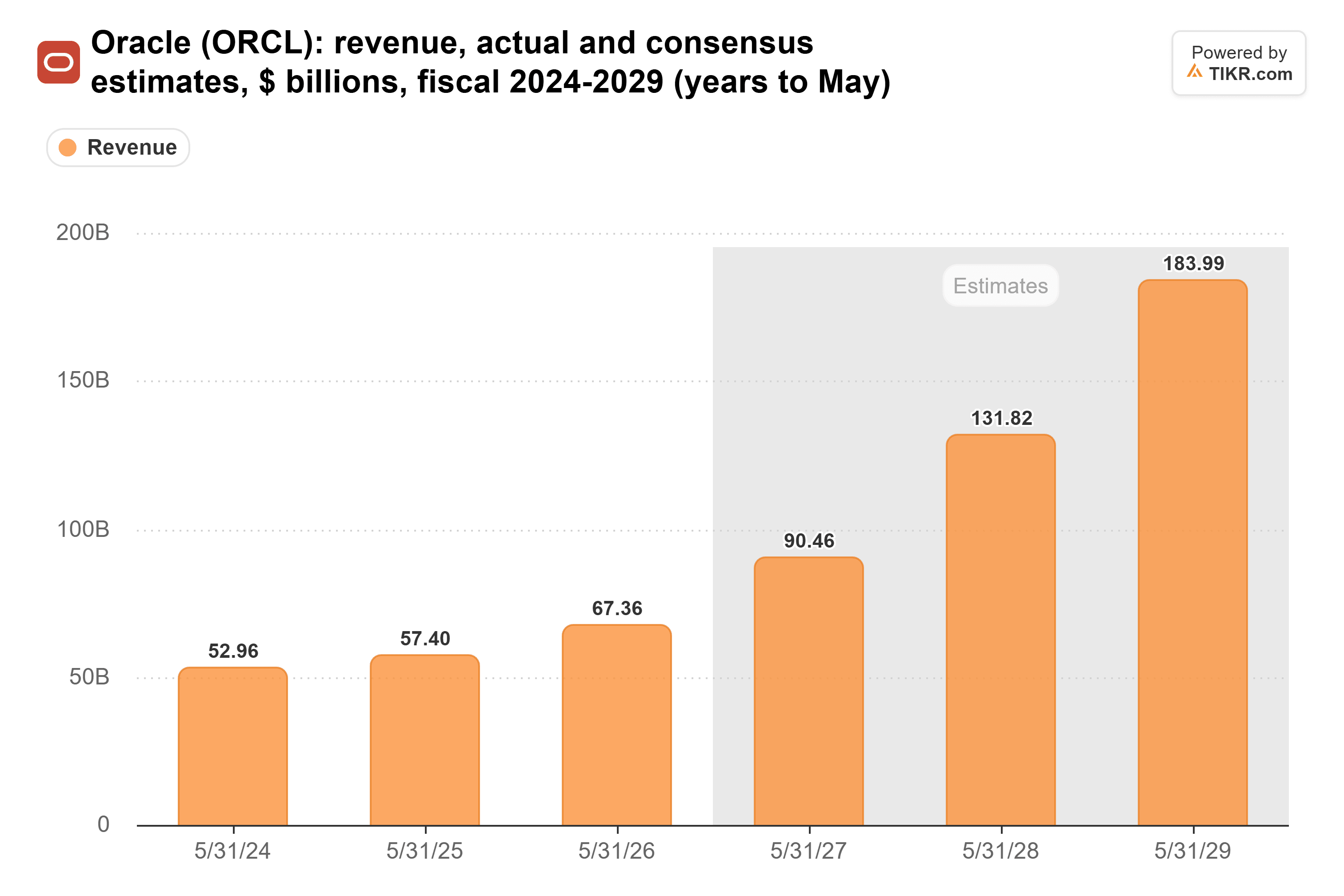
Analysts already count on campuses like Shackelford, so I wouldn’t expect the permits to lift those estimates. They do remove one way Oracle could fall short of them.
The handover is good news for Nvidia too. Interim CEO Colette Kress said “Vera Rubin is off to an explosive start,” and Nvidia guided fourth-quarter revenue to $130.0 billion, plus or minus 3%. Every campus that clears its permits gives those racks one more place to go.
Money is the harder problem
Permits were never Oracle’s biggest risk, though. Its capital spending went from $4.5 billion in fiscal 2022 to $55.7 billion in fiscal 2026:
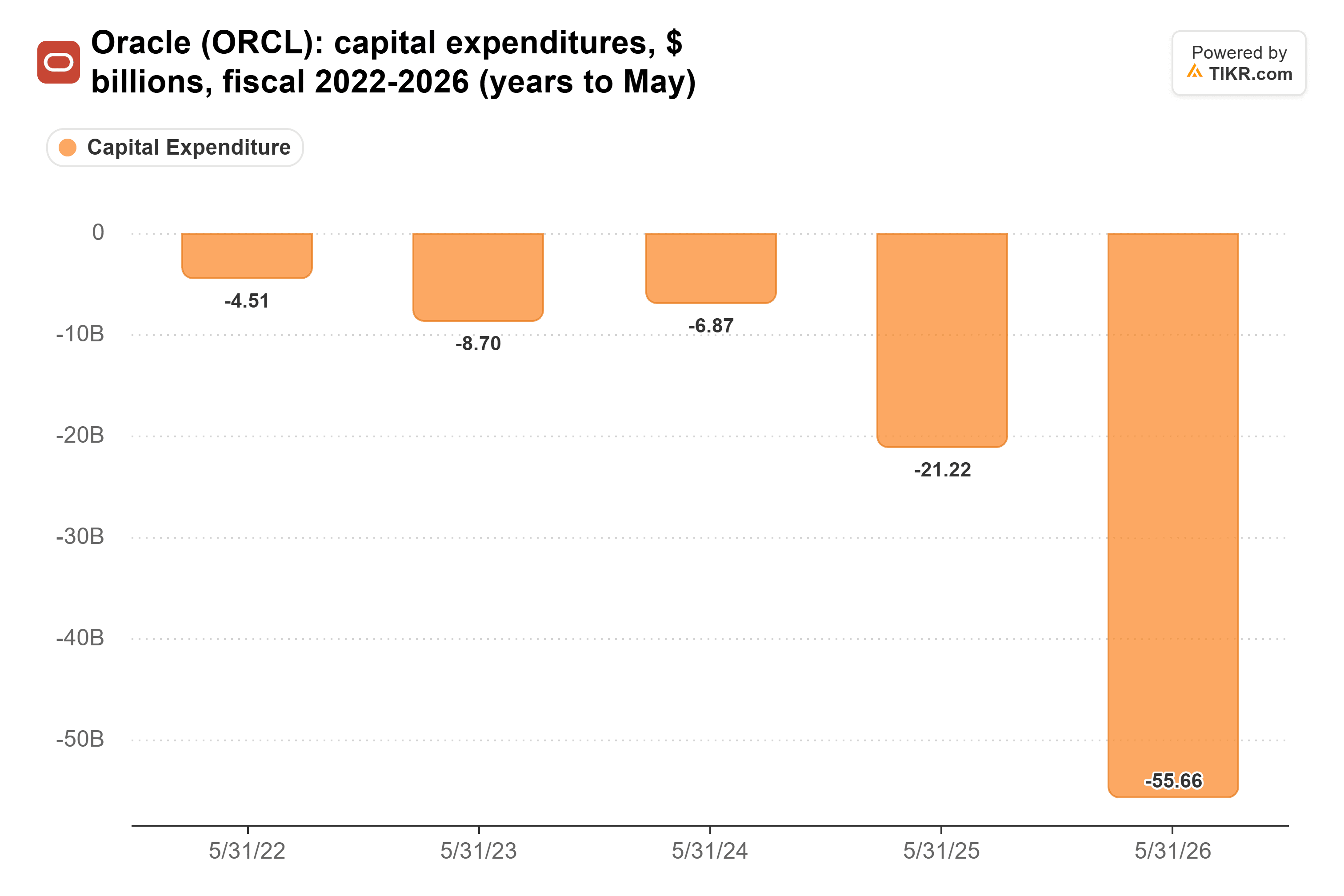
Management expects $90 billion to $95 billion this fiscal year, or no more than $70 billion net of customer prepayments. S&P rates Oracle BBB-, and its credit default swaps hit record wides on Nov. 17.
So the funding half of Oracle’s statement may matter even more than the permits. Oracle pointed to its final capital raise, about $10 billion of stock and $10 billion of notes priced on Nov. 2, and said it could fulfill the OpenAI contract even if its talks with equipment vendors produce no further agreements.
OpenAI’s side is the part Oracle can’t fund. S&P has said OpenAI is about half of Oracle’s backlog, which stood at $664 billion at Aug. 31, and OpenAI’s latest funding round has reached $15 billion, half its original $30 billion target, according to CNBC.
CoreWeave shows what that money costs a smaller builder. In the third quarter, its net interest expense was $846 million, about 4x its $207 million of GAAP operating income. Can CoreWeave keep borrowing at a cost its revenue backlog of about $132.5 billion can carry?
Priced for a stall
Oracle trades at 12x forward earnings, its lowest in five years and far below its 21x five-year average:
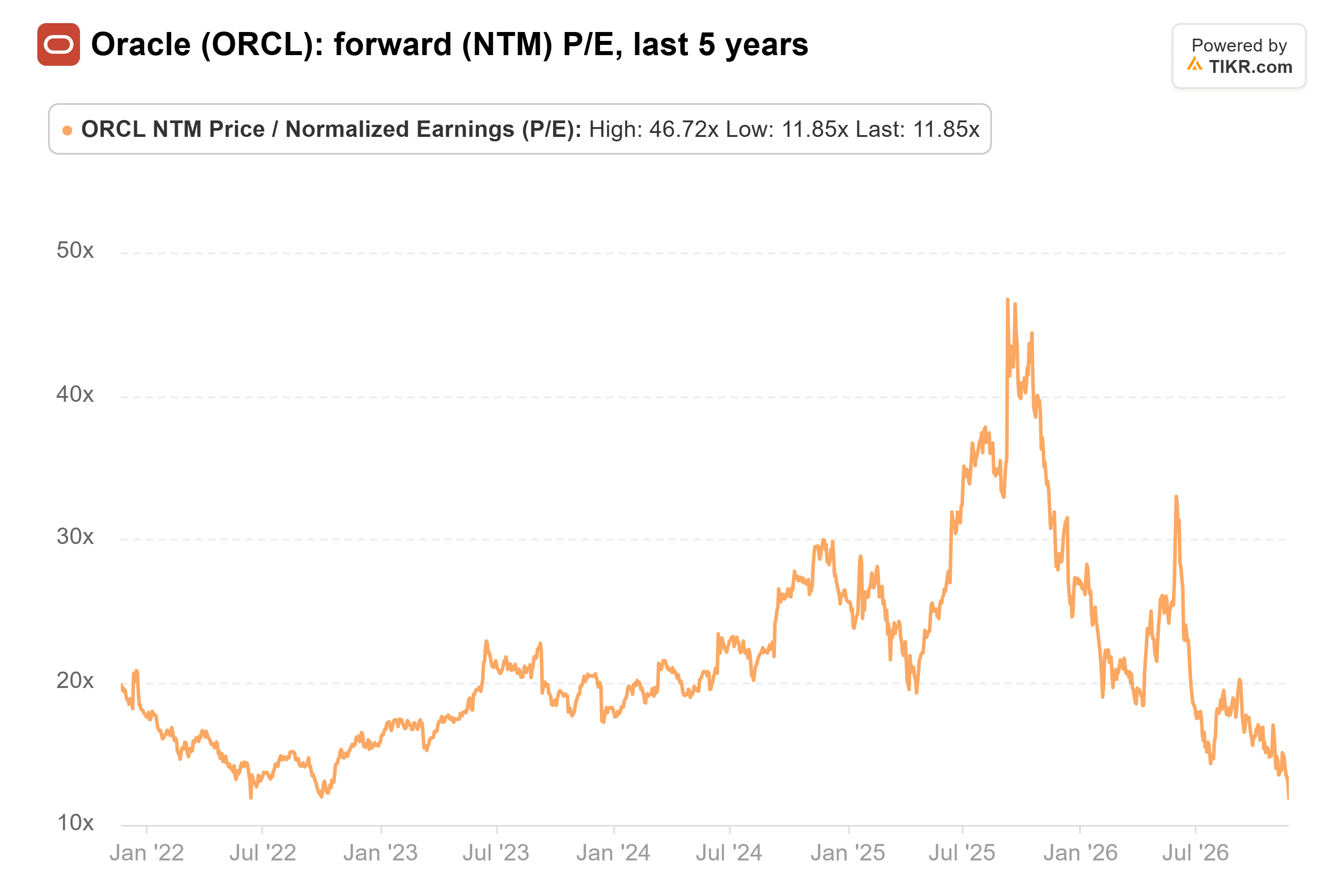
The way I see it, 12x is the price of a build that stalls, and Oracle’s Texas build isn’t stalling. The real risk is whether OpenAI keeps paying, and at this multiple, investors are being paid well to take it.
One permitted campus doesn’t settle the backlash, and local fights may end up raising costs more than stopping builds. The next tests come quickly: the Vera Rubin handover at Shackelford, then Oracle’s fiscal second-quarter results in mid-December, where remaining performance obligations above August’s $664 billion and net capex on pace for $70 billion or less would show the money is holding up as well as the permits.
So what is Oracle stock actually worth?
TIKR lets you forecast the future price of any stock in less than a minute. Just enter a few assumptions into TIKR’s valuation model and see what Oracle could be worth. Start from Wall Street consensus estimates, or adjust the inputs to reflect your own view of the business. It’s free to use.
Disclaimer:
Please note that the articles on TIKR are not intended to serve as investment or financial advice from TIKR or our content team, nor are they recommendations to buy or sell any stocks. We create our content based on TIKR Terminal’s investment data and analysts’ estimates. Our analysis might not include recent company news or important updates. TIKR has no position in any of the stocks mentioned. Thank you for reading, and happy investing!