Key Takeaways
- Elon Musk says SpaceX gets a large compute cluster working reliably in about 2 months, against about 6 months he guesses it takes rivals.
- That speed is SpaceX’s best answer on how to fund its buildout, because a cluster that starts renting sooner pays for itself sooner.
- SpaceX’s capital spending rose from $4.4 billion in 2023 to $20.9 billion in 2025, and its free cash flow went from about breakeven to negative $14.1 billion.
- Speed only pays while rental prices hold, and the next quarterly results will show whether rent is coming in as fast as the spending goes out.
SpaceX (SPCX) has a pitch for the AI buildout, and it has nothing to do with rockets. It’s speed.
On Nov. 11, Zero Hedge posted Bernstein’s ranking of how much of each company’s data center pipeline actually gets built, with Meta, Microsoft and Google at the top.
> SpaceX has a chance of going about half the GW next year of actually usable compute. > > “Actually usable” is an important metric. It takes us ~2 months working 24/7 to get a large compute cluster working reliably. I’d guess closer to 6 months for others.
That’s 3x faster, if his guess about everyone else is right.
A day later, SpaceX said it’s pursuing a roughly $50 billion supercompute campus in Cochise County, Arizona, aiming for up to 6 gigawatts at its peak. That’s on top of the Starbase site worth up to $24 billion that it’s already asking Texas to give it a tax break on.
Computer scientist Alexander Wissner-Gross put it bluntly on Nov. 11’s episode of the Moonshots with Peter Diamandis podcast: “SpaceX used to be a rocket company. It isn’t a rocket company anymore. It’s a neo-hyperscaler at this point.”
TIKR tracks 40 analysts on SpaceX. How many say “Buy”?
See the full breakdown of Buy, Hold, and Sell ratings on SpaceX, along with Wall Street’s revenue and earnings estimates, all in one place. More than 500,000 investors use TIKR to research stocks like this one. See SpaceX’s Analyst Ratings
Two months is a real edge
Musk’s 6-month figure for rivals is his own guess. But SpaceX’s track record makes its own 2 months easy to believe. Its IPO prospectus says it built Colossus in 122 days and Colossus II in 91, against a benchmark of about two years. It’s also getting the power it needs approved: on Nov. 10, Mississippi’s Environmental Quality Permit Board upheld the air permit for the 41 permanent gas turbines at its Southaven plant.
Speed matters because of payback. SpaceX’s CFO has said new compute pays for itself in less than a year, and Musk has since floated a six-month payback. With a one-year payback, getting a cluster renting four months sooner earns back a third of its cost before a slower builder’s cluster is working reliably.
Wall Street’s estimates already count on SpaceX’s compute earning fast. Analysts expect revenue to climb from $48.9 billion this year to $181 billion in 2027 and $335 billion in 2028:
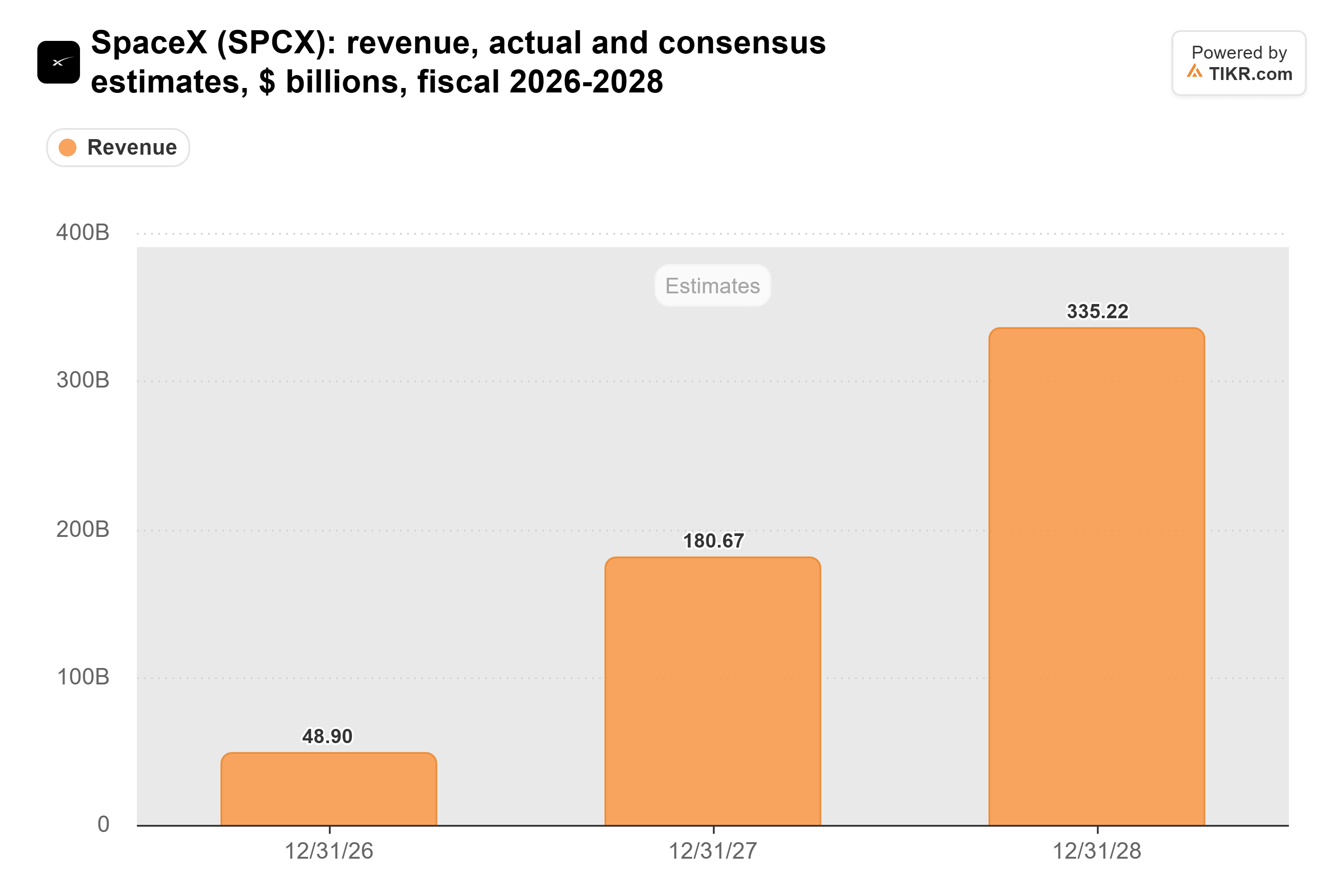
A ramp that steep has no room for clusters sitting idle for half a year. Musk’s post backs the ramp analysts already expect, and nothing in it adds capacity they haven’t counted.
The bill keeps growing
SpaceX’s capital spending nearly quintupled in two years as it built out compute:
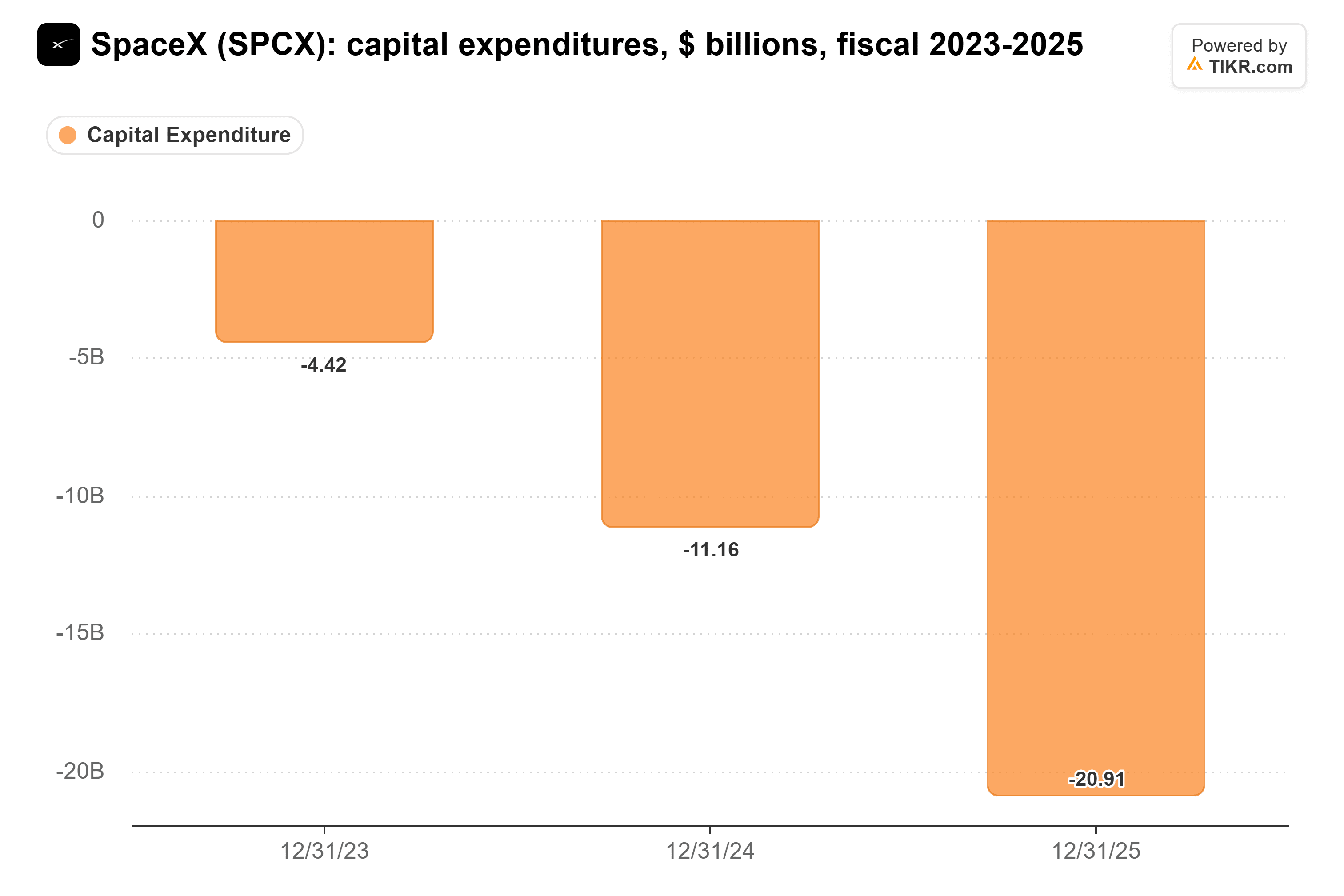
Over the last twelve months it’s even higher, at $55.1 billion, and management expects $35 billion to $40 billion in the fourth quarter alone.
That spending has pushed free cash flow deep into the red:
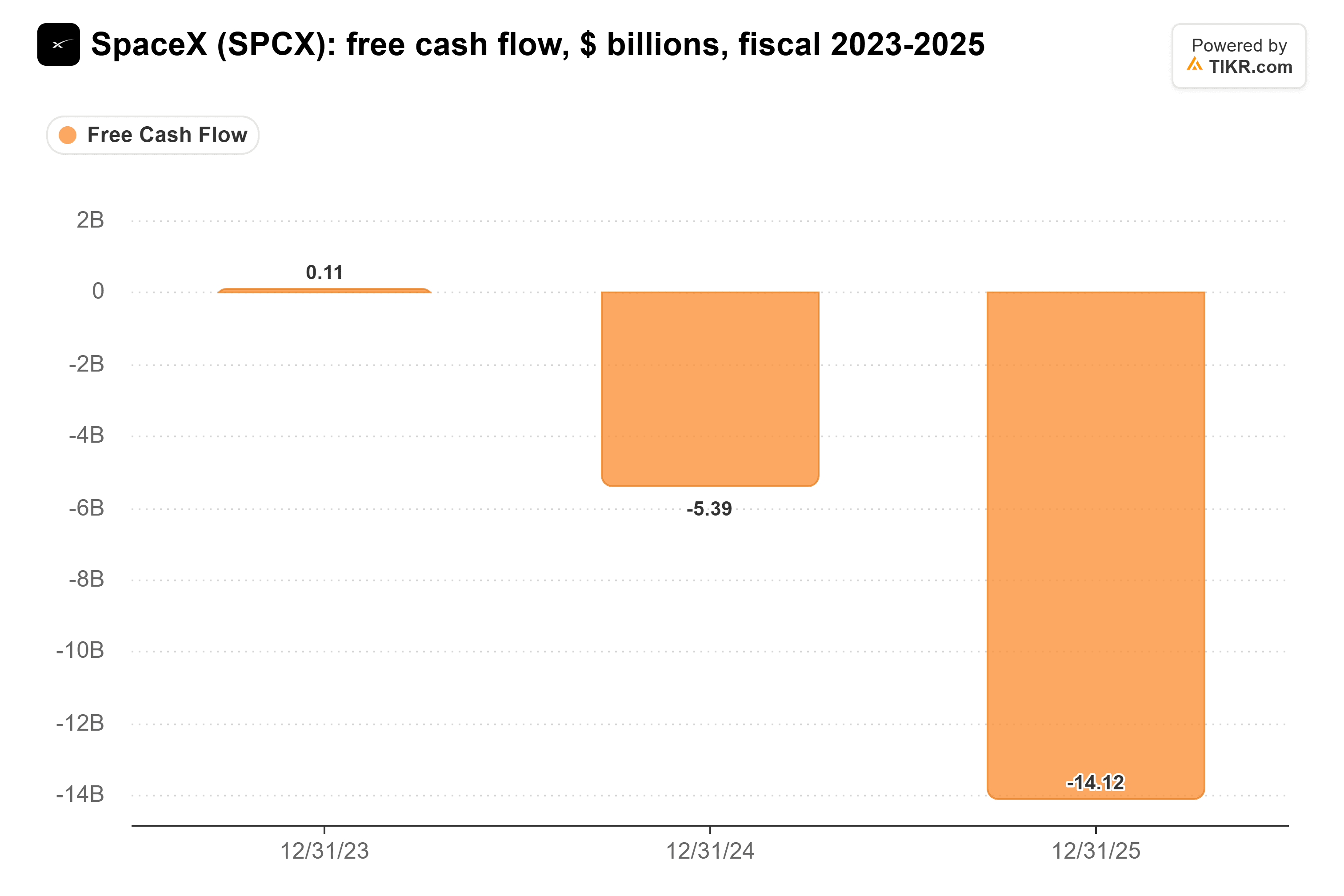
Over the last twelve months, free cash flow was negative $39.3 billion. Every month a cluster spends getting reliable is a month of capex with no rent coming in, and Arizona’s $50 billion has to come from somewhere. So clusters that start earning sooner are the cheapest way SpaceX can pay for its next campus.
Fast only pays if prices hold
Faster clusters only earn more while rental prices stay up. Musk himself has said SpaceX’s revenue will drop if compute becomes plentiful and cheap. Management also called its pricing “effectively the spot market rate” on the third-quarter call, so a drop in prices hits revenue right away.
Renters can leave, too. Anthropic’s contract lets either side walk away on 90 days’ notice, and on Nov. 9 Anthropic cut its own model prices by 20%.
I’d take the 2 months seriously
I think the 2-month figure is SpaceX’s strongest argument for its whole compute buildout, and the Colossus build times back it up. If its clusters earn back a third of their cost before rivals get theirs working, SpaceX can keep adding campuses like Arizona faster than slower builders can pay for theirs. What it can’t control is what a gigawatt rents for in 2028.
Fourth-quarter results in early 2027 will show how much cash that quarter’s buildout used. After that, first-quarter revenue, guided at $33 billion to $37 billion, will show whether rent is coming in as fast as the clusters go up. Before either, Cochise County holds a public hearing on the Arizona campus on Dec. 9.
So what is SpaceX stock actually worth?
TIKR lets you forecast the future price of any stock in less than a minute. Just enter a few assumptions into TIKR’s valuation model and see what SpaceX could be worth. Start from Wall Street consensus estimates, or adjust the inputs to reflect your own view of the business. It’s free to use.
Disclaimer:
Please note that the articles on TIKR are not intended to serve as investment or financial advice from TIKR or our content team, nor are they recommendations to buy or sell any stocks. We create our content based on TIKR Terminal’s investment data and analysts’ estimates. Our analysis might not include recent company news or important updates. TIKR has no position in any of the stocks mentioned. Thank you for reading, and happy investing!