Key Takeaways
- JPMorgan cut its Home Depot (HD) price target to $390 from $400 after the Q3 report and kept its Overweight rating, a target 15% above the current price.
- To reach $390, Home Depot needs to earn analysts’ fiscal 2028 estimate of $17.11 a share and trade at a slightly higher multiple than its five-year average.
- Analysts have cut that fiscal 2028 estimate from $19.04 since September 2025, and Home Depot’s comps are still below the roughly 3% it needs before its costs start to leverage.
- The Street’s $378 average target looks like the likelier landing, and Home Depot’s fiscal 2027 outlook in February will show whether $390 is in reach.
Home Depot just posted its best comparable sales growth in four years, and JPMorgan cut its price target anyway.
On Nov. 18, the firm lowered its target to $390 from $400 and kept its Overweight rating, a target still 15% above the current price.
A good quarter with a margin catch
Comparable sales grew 2.2% in Q3. But margins were the test going into the report, and Home Depot now guides to an adjusted operating margin of about 12.8% for the year, the bottom of its earlier 12.8%-13.0% range.
Incoming CEO Richard McPhail, who takes over on Nov. 23, said the lower gross margin outlook behind it is “driven simply by a change in product mix.”
TIKR tracks 36 analysts on Home Depot. How many say “Buy”?
See the full breakdown of Buy, Hold, and Sell ratings on Home Depot, along with Wall Street’s revenue and earnings estimates, all in one place. More than 500,000 investors use TIKR to research stocks like this one. See Home Depot’s Analyst Ratings.
JPMorgan is betting on a better 2027
JPMorgan analyst Christopher Horvers cut his fiscal 2027 EPS estimate by 2%. He expects demand to keep improving, with sales up about 2.5% in fiscal 2027.
RBC Capital is less upbeat: on Nov. 18, it cut its target to $334 from $342 and kept a Sector Perform rating.
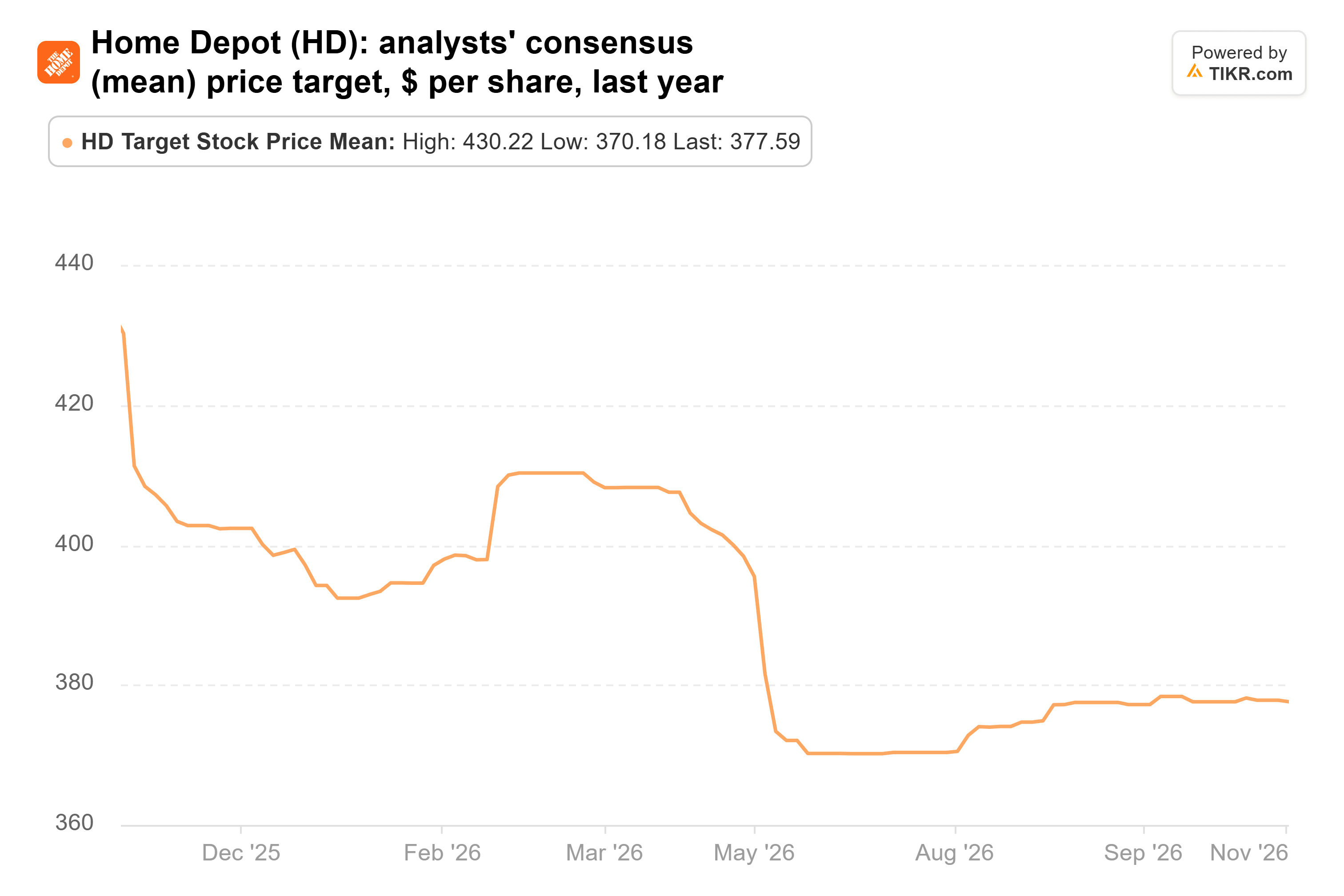
Wall Street’s average target has fallen from $430 a year ago to $378 on Nov. 17, before most of this week’s cuts, with targets running from $310 to $425:
Does $390 add up?
A year from now, investors will be pricing Home Depot on fiscal 2028, which ends in January 2029. Analysts expect normalized EPS of $15.76 in fiscal 2027 and $17.11 in fiscal 2028:
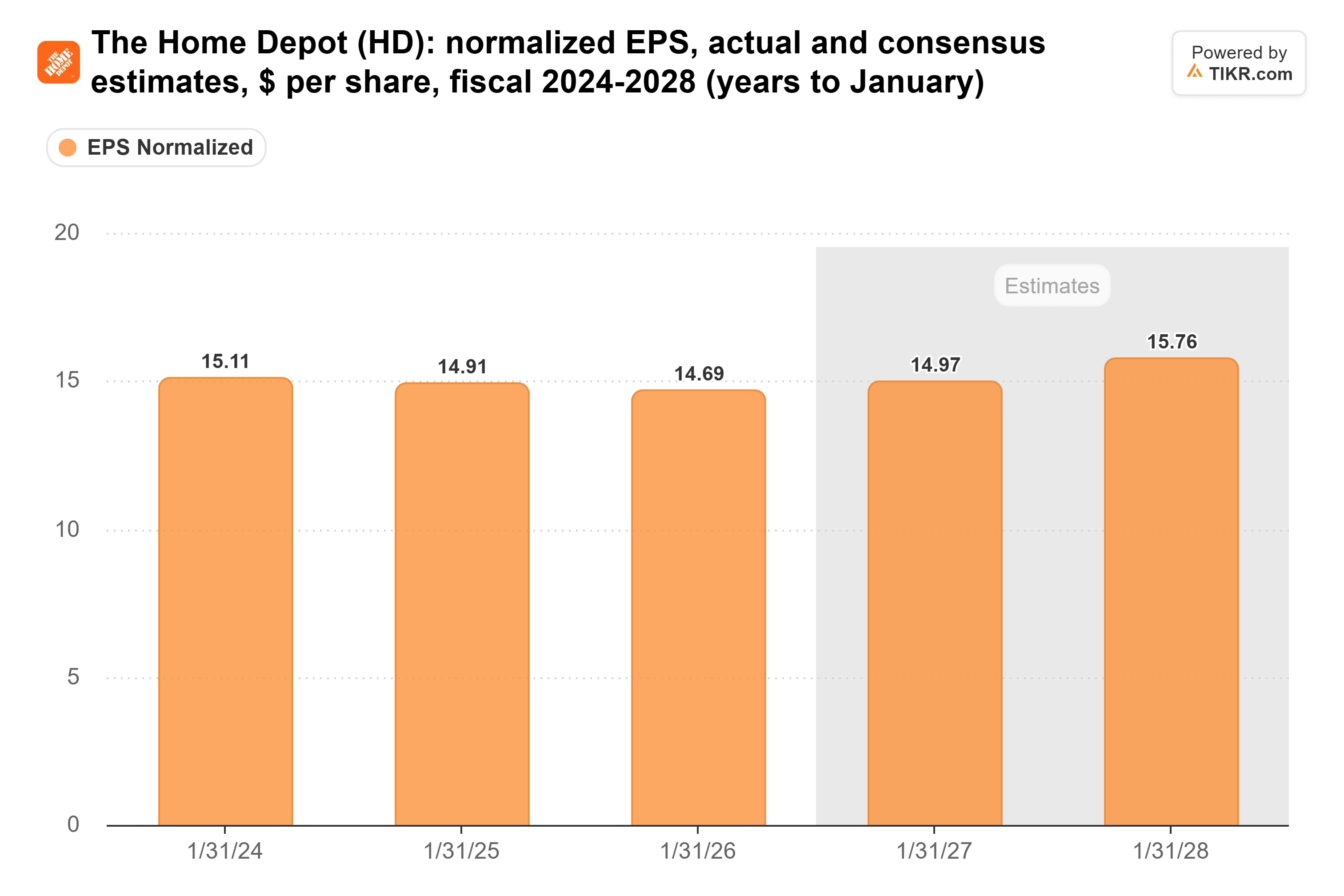
On $17.11, $390 is 23x earnings (our math, since JPMorgan hasn’t published its method).
Today the stock trades at 22x forward earnings, and its five-year average is 22x:
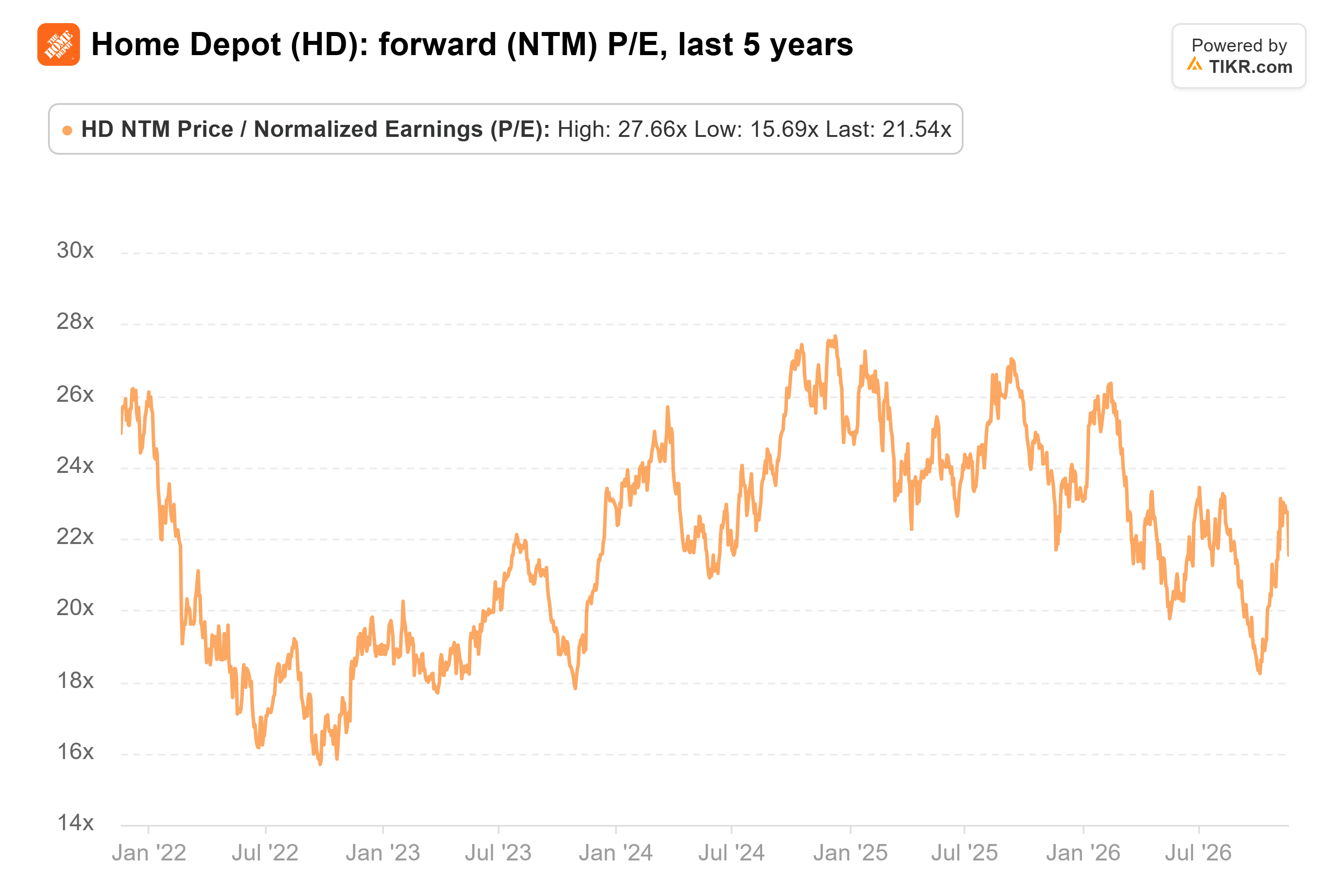
So the target needs earnings to grow 9% from the next 12 months’ estimate and the multiple to rise 6%.
The stock hit 28x in December 2024, so 23x is well within its range.
$378 looks more likely than $390
Analysts expected $19.04 for fiscal 2028 at the end of September 2025 and have cut it to $17.11 since.
Management said last December that its costs only start to leverage at about a 3% comp, and it now guides to about 1.4% for this year. JPMorgan’s own sales forecast for fiscal 2027 is below that line too.
JPMorgan isn’t asking for much on the multiple, but with the earnings estimates still falling, I’d expect the stock to land closer to the Street’s $378 average than to $390.
Home Depot will give its first fiscal 2027 outlook with its Q4 report in February. An adjusted EPS guide at or above the $15.76 consensus, with comps guided near 3%, would put $390 within reach.
So what is Home Depot stock actually worth?
TIKR lets you forecast the future price of any stock in less than a minute. Just enter a few assumptions into TIKR’s valuation model and see what Home Depot could be worth. Start from Wall Street consensus estimates, or adjust the inputs to reflect your own view of the business. It’s free to use.
Disclaimer:
Please note that the articles on TIKR are not intended to serve as investment or financial advice from TIKR or our content team, nor are they recommendations to buy or sell any stocks. We create our content based on TIKR Terminal’s investment data and analysts’ estimates. Our analysis might not include recent company news or important updates. TIKR has no position in any of the stocks mentioned. Thank you for reading, and happy investing!