

Key Takeaways
- Jim Cramer questioned Berkshire Hathaway’s $10 billion stake in Alphabet on the day Berkshire reported its third-quarter results.
- Alphabet’s free cash flow was negative $9.1 billion in the third quarter, as $51.4 billion of capital spending outran $42.3 billion of cash from operations.
- Berkshire bought its stake in Alphabet’s June stock sale, which helped pay for that spending, so the negative cash flow is part of what it signed up for.
- Alphabet trades at 20x forward earnings, below its five-year average of 23x, but analysts see free cash flow staying negative through 2028.
Jim Cramer has a question for Berkshire Hathaway (BRK-B). He posted it on X on the same day Berkshire reported its third quarter:
“Why did Berkshire take such a big, ill-advised position in Alphabet?”
He’s talking about the $10 billion that CEO Greg Abel put into Alphabet (GOOG) in June, when Berkshire bought shares at a discount in Alphabet’s stock sale. So far Berkshire is losing money on it. Before Berkshire’s report, Bloomberg noted that Alphabet’s shares had fallen more than 24% since June, to below the price Berkshire paid.
Alphabet’s cash flow is going the wrong way too. In the third quarter, it brought in $42.3 billion of cash from operations and spent $51.4 billion on capex. That left free cash flow at negative $9.1 billion.
That’s a strange look for a Berkshire holding.
TIKR tracks 58 analysts on Alphabet. How many say “Buy”?
See the full breakdown of Buy, Hold, and Sell ratings on Alphabet, along with Wall Street’s revenue and earnings estimates, all in one place. More than 500,000 investors use TIKR to research stocks like this one. See Alphabet’s Analyst Ratings
Alphabet now spends more than it makes
Analysts don’t expect that to turn around soon. TIKR’s consensus has Alphabet’s free cash flow negative this year, next year and in 2028:
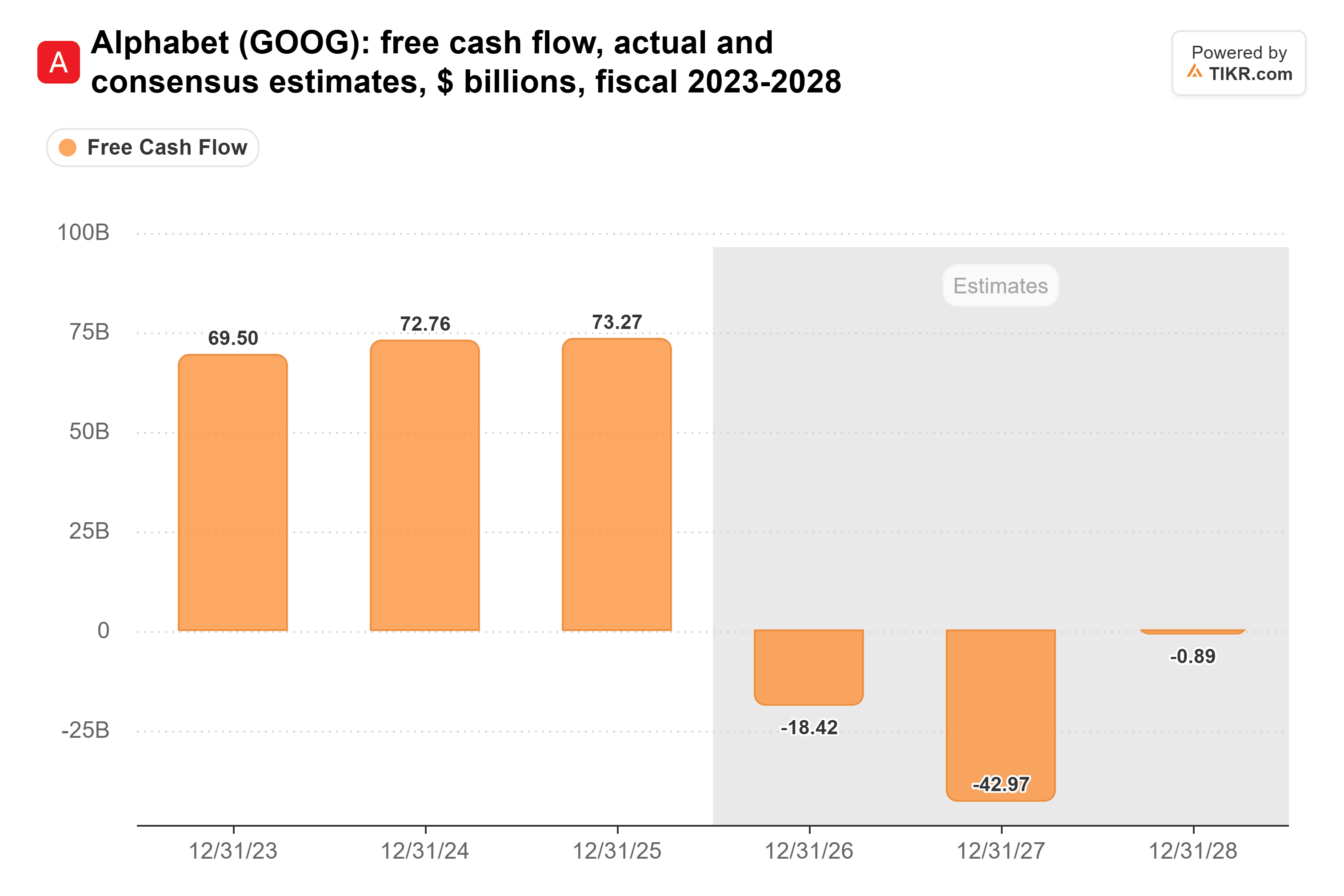
Alphabet made $73.3 billion of free cash flow in 2025. Analysts see that falling to negative $18.4 billion this year and negative $43.0 billion in 2027, then getting back to about breakeven in 2028.
Capex is the reason. Alphabet’s quarterly capital spending has more than tripled since the end of 2024, and in the second quarter of 2026 it rose above the cash its operations bring in:
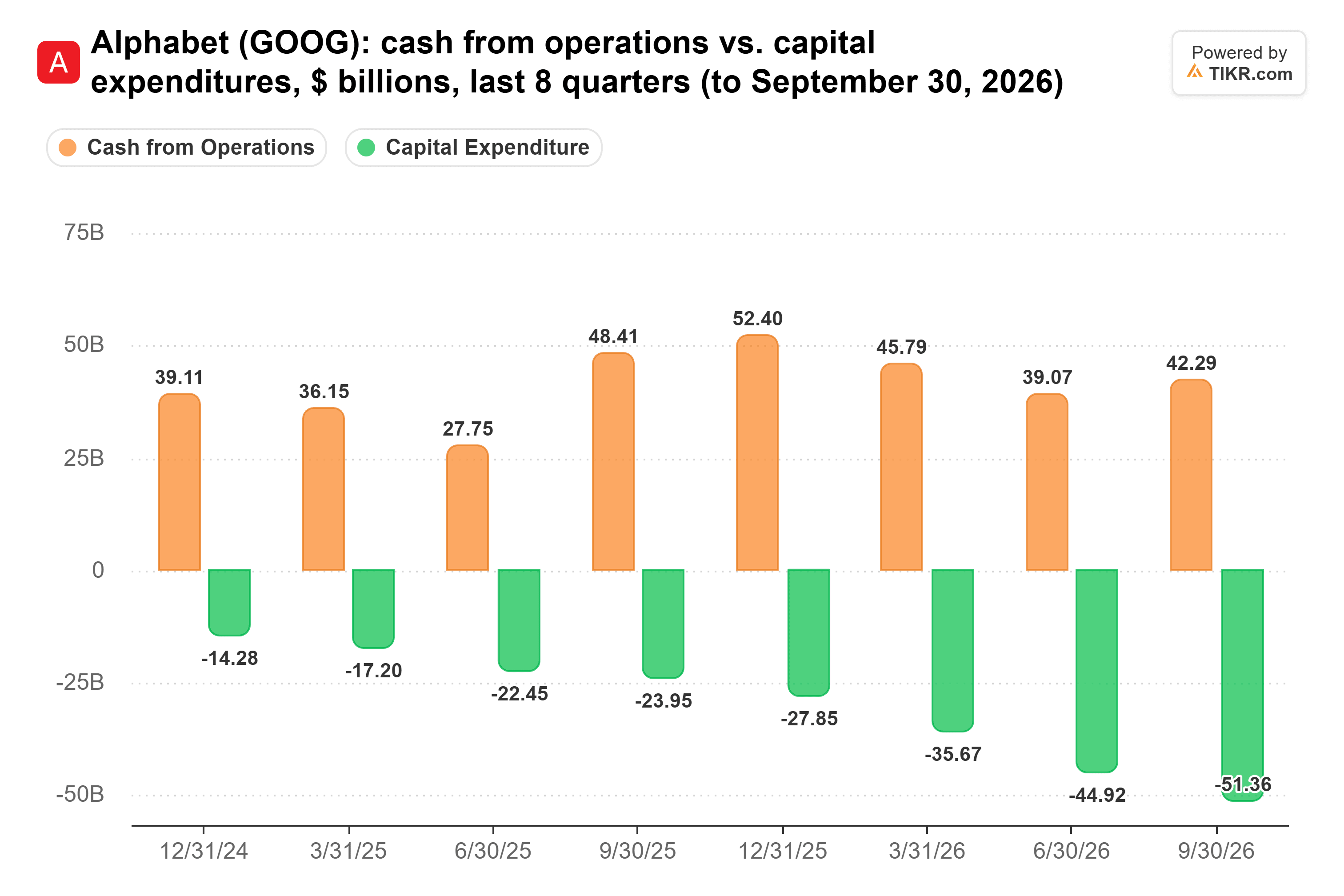
Analysts have 2027 capex at $308.0 billion, about half the revenue they expect that year. On a recent episode of The Real Eisman Playbook, investor Steve Eisman said what that means for the whole group: now that the hyperscalers are raising money to fund the build, “the AI story has become partially dependent on the whims of the capital markets.”
Berkshire wrote the check
Cramer’s question treats Berkshire like a buyer that got caught out. But Berkshire is one of those capital markets. Its $10 billion was part of the $49.6 billion of new stock Alphabet sold in June, and Alphabet also more than doubled its long-term debt in the first six months of 2026. Bloomberg describes Abel’s money as going “to support its AI-related investments.”
When a company sells that much new stock, it’s telling you its cash flow won’t cover its plans for a while. Berkshire bought in anyway, at a discount.
As for “big,” $10 billion is less than 3% of the $377.4 billion of cash Berkshire reported on Saturday. It’s also about what Berkshire spent buying back its own stock in the third quarter ($9.6 billion). Bloomberg brought up Warren Buffett’s 2016 Apple purchase, which critics called late in the iPhone maker’s run and which became one of Berkshire’s most profitable bets. Same playbook here.
Cheaper than when Berkshire bought
Anyone following Berkshire in today pays much less for Alphabet’s earnings than buyers did earlier this year. The stock trades at 20x forward earnings, below its five-year average of 23x and well under the 33x it reached on April 30, weeks before Berkshire bought:
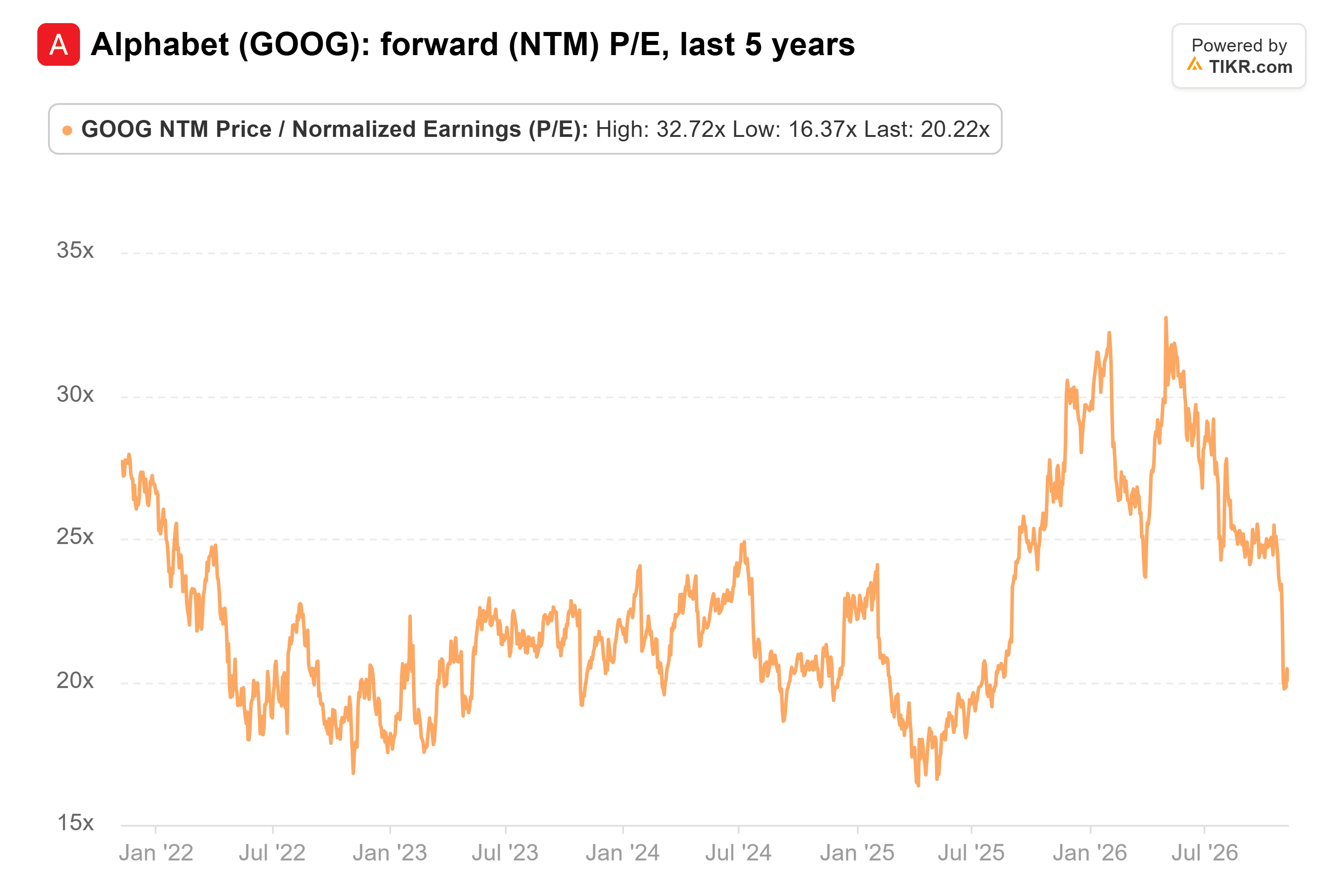
The risk is simple: all that spending has to pay off, and analysts don’t see positive free cash flow through 2028. Search revenue, which pays for the build, grew 12% in the third quarter, down from 19% in the first.
The way I see it, Cramer is right that Berkshire’s timing looks bad, but “ill-advised” goes too far. Berkshire got what Alphabet was selling in June: a stake in the build-out, paid for with new stock. Today’s buyer gets the same bet below Berkshire’s price, at a multiple well off this year’s high. Of course, the cash has to come back eventually. Berkshire’s third-quarter 13F in mid-November will show whether Abel added to the stake, and Alphabet’s fourth-quarter results in early February should give its next word on 2027 spending.
So what is Alphabet stock actually worth?
TIKR lets you forecast the future price of any stock in less than a minute. Just enter a few assumptions into TIKR’s valuation model and see what Alphabet could be worth. Start from Wall Street consensus estimates, or adjust the inputs to reflect your own view of the business. It’s free to use.
Disclaimer:
Please note that the articles on TIKR are not intended to serve as investment or financial advice from TIKR or our content team, nor are they recommendations to buy or sell any stocks. We create our content based on TIKR Terminal’s investment data and analysts’ estimates. Our analysis might not include recent company news or important updates. TIKR has no position in any of the stocks mentioned. Thank you for reading, and happy investing!


