
Key Takeaways
- The Wall Street Journal reported that Jensen Huang told cloud executives Nvidia “could just give all this capacity to Elon.”
- On Nvidia’s Nov. 17 call, interim CEO Colette Kress said its neocloud commitments apply only once a neocloud has its own financing.
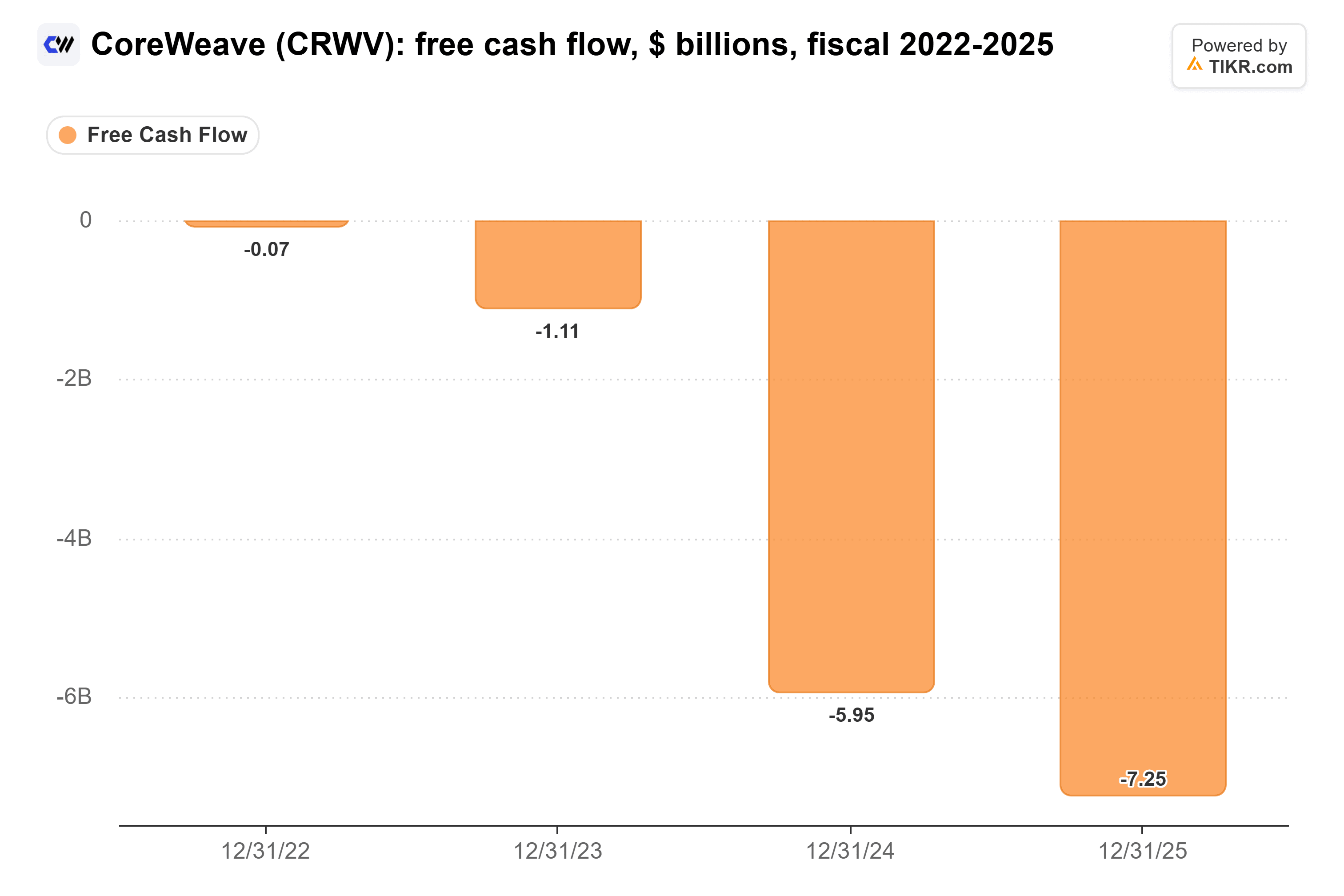
- CoreWeave burned $7.25 billion of free cash flow in 2025 and has funded its build-out with debt.
- Neocloud stocks jumped after the report, but the funding burden still sits with them.
Nvidia (NVDA) reported a record quarter on Nov. 17, its first since Jensen Huang resigned as CEO. Earlier that day, CNBC’s Jim Cramer asked on X: “Will it turn the lights out on the neoclouds?”
That question hangs over CoreWeave (CRWV) and Nebius (NBIS). On Nov. 16, CoreWeave fell 6.1% and Nebius fell 7.6%. Huang had already hinted at the answer, and it involves Elon Musk, whose AI business sits inside SpaceX (SPCX). SpaceX already rents computing capacity to Anthropic, which uses its Colossus 1 data center, and to Alphabet’s Google.
At Nvidia’s GTC conference in Berlin in October, Huang told cloud executives that if they wanted Nvidia’s GPUs, their customers would need to pay up front, The Wall Street Journal reported. According to executives who heard the remarks, he added:
“You’re not charging what you should be charging. I don’t even need you guys. I could just give all this capacity to Elon! Elon wants it!”
Kress Kept Huang’s Terms
Nvidia didn’t reopen the checkbook. Kress said Nvidia will be “disciplined and selective” about neocloud financing. Its neocloud commitments total up to $32 billion and take effect only after the providers secure financing, bring the capacity online and Nvidia accepts it. Asked if that was a change, she said no: funding is the neocloud’s job.
Nvidia can afford that stance. Kress raised the fiscal 2028 growth outlook to about 75% from 70%, citing demand and better chip supply. Before the report, analysts expected revenue to more than quadruple, from $216 billion in the year ended January 2026 to $895 billion in the year ending January 2029:
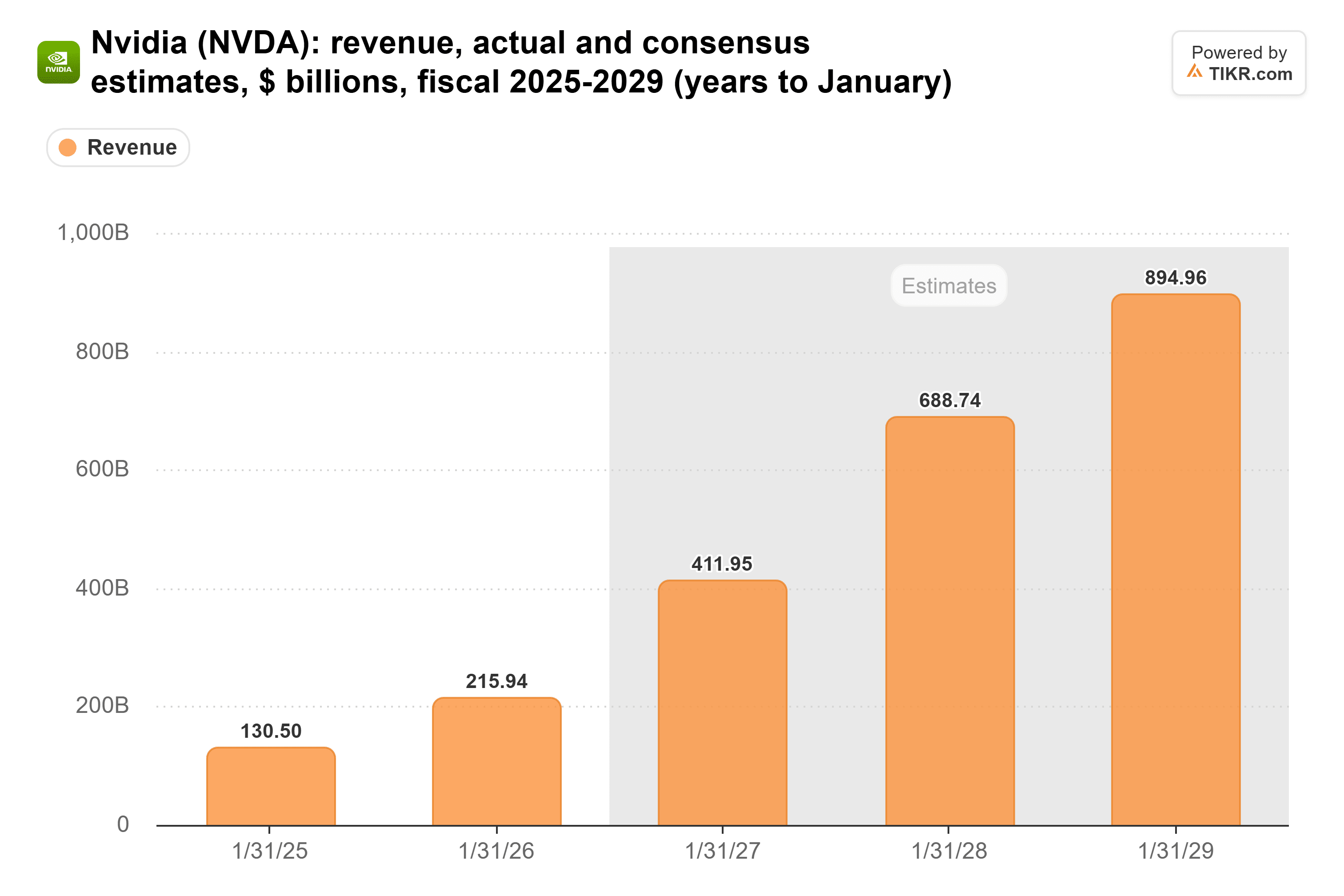
The new guide implies about $741 billion for the year ending January 2028, above the $689 billion analysts had expected.
TIKR Tracks 41 Analysts on CoreWeave. How Many Say “Buy”?
See the full breakdown of Buy, Hold, and Sell ratings on CoreWeave, along with Wall Street’s revenue and earnings estimates, all in one place. More than 500,000 investors use TIKR to research stocks like this one. See CoreWeave’s Analyst Ratings
CoreWeave Runs on Borrowed Money
CoreWeave’s free cash flow went from negative $70 million in 2022 to negative $7.25 billion in 2025:
It has covered that gap with debt:
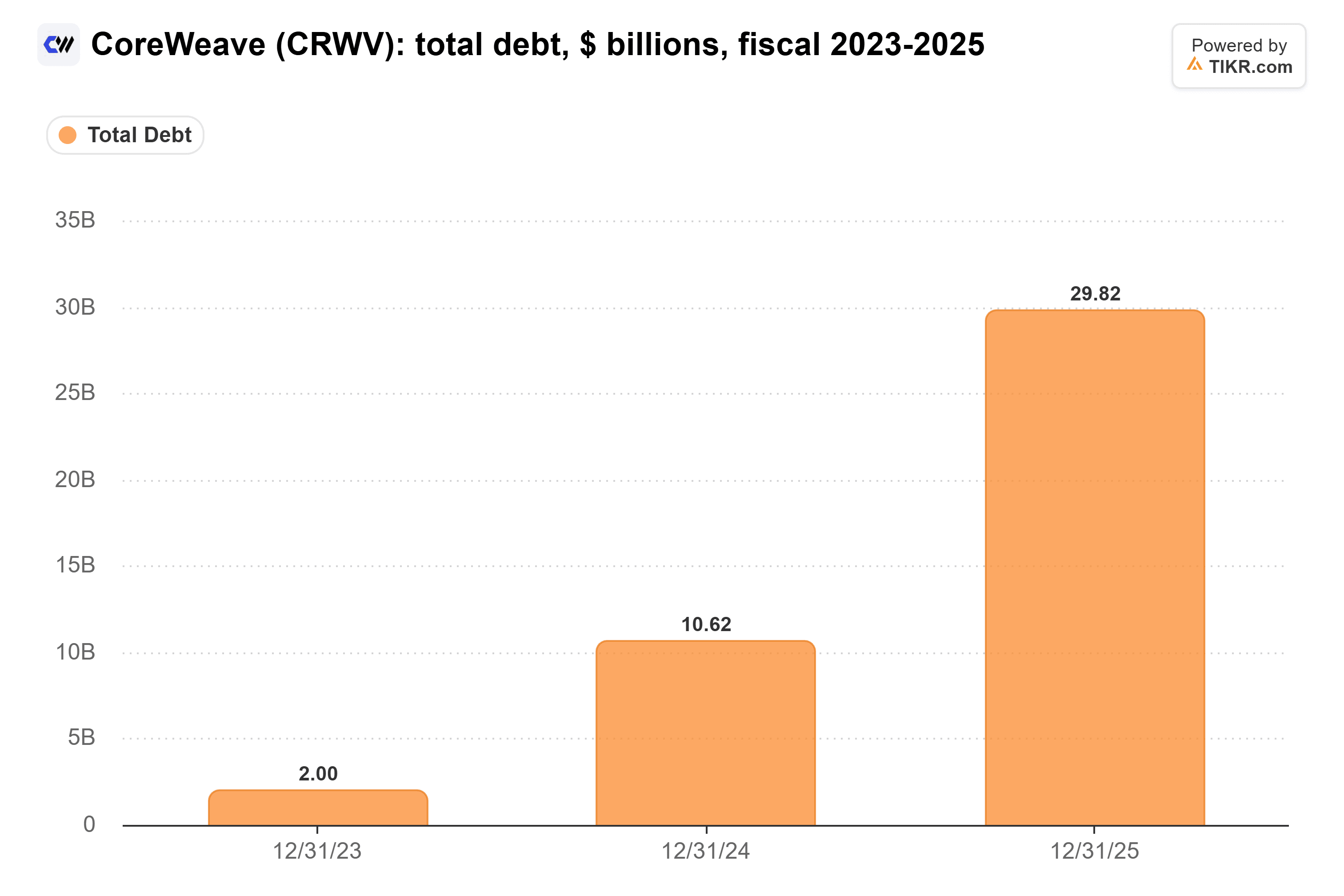
Its borrowings more than doubled in the first nine months of 2026, to $46.9 billion at Sept. 30.
The demand is real. CoreWeave reports a $132.5 billion backlog, and CEO Michael Intrator expects about $9 billion in customer prepayments and deposits over the next three months. That’s the kind of upfront cash Huang asked for. CoreWeave says it will fund the rest of its build-out with operating cash flow and financing backed by customer contracts.
Bad News for CoreWeave, Fine for Nvidia
CoreWeave, Nebius and Iren each rose 8% to 10% after hours on Nov. 17. I read that as relief that Nvidia didn’t cut them off, not a change in the math. Nvidia’s guide suggests its chips sell either way, while CoreWeave’s build-out still depends on financing. I’ll be watching whether CoreWeave collects the roughly $9 billion in prepayments and deposits it expects within three months, and whether Nvidia’s days sales outstanding keeps climbing. It rose to 64 from 60, which Nvidia put down to Rubin shipment timing and longer payment terms for certain investment-grade customers.
So What Is CoreWeave Stock Actually Worth?
TIKR lets you forecast the future price of any stock in less than a minute. Just enter a few assumptions into TIKR’s valuation model and see what CoreWeave could be worth. Start from Wall Street consensus estimates, or adjust the inputs to reflect your own view of the business. It’s free to use.
Disclaimer:
Please note that the articles on TIKR are not intended to serve as investment or financial advice from TIKR or our content team, nor are they recommendations to buy or sell any stocks. We create our content based on TIKR Terminal’s investment data and analysts’ estimates. Our analysis might not include recent company news or important updates. TIKR has no position in any of the stocks mentioned. Thank you for reading, and happy investing!