Key Takeaways
- Intel shareholders sued on Nov. 13, saying the company hid its PC slump before the stock fell nearly 29% on Oct. 30.
- Dan Niles says Intel costs more than NVIDIA and AMD while growing far slower.
- At about 43x forward earnings, Intel trades at three times NVIDIA’s 14x.
- The next test is whether outside customers commit to Intel’s 14A process by mid-2027.
Intel (INTC) shareholders are taking the company to court.
A Michigan pension fund filed a proposed class action on Nov. 13 in San Jose, California, according to Reuters. It says Intel hid how bad its PC slump was until a weak outlook sent the stock down nearly 29% on Oct. 30.
Over the weekend, an investor on X asked Dan Niles, founder of Niles Investment Management, whether Intel had hit bottom. His answer compared it with NVIDIA (NVDA) and Advanced Micro Devices (AMD):
“Unlike $NVDA trading at 11x CY27 PE for projected 70% revenue growth or AMD at 30x for projected 80%+ revenue growth, $INTC trades at 34x PE for just 11% estimated revenue growth. Given Intel’s recent guidance that was well below consensus, it is hard to know where the bottom is.”
So Intel is the priciest of the three, and the slowest grower by a mile.
The Suit Matters Less Than Intel’s Guidance
The suit’s allegations are unproven, so I wouldn’t trade Intel on the filing alone. The slump behind it matters more. Intel guided fourth-quarter revenue about $1.6 billion below consensus, and CFO David Zinsner said in the third-quarter release that the PC slowdown should last at least through the first half of 2027. Intel’s client segment is still its largest by revenue: $8.1 billion last quarter, against $7.3 billion from data centers.
TIKR Tracks 49 Analysts on Intel. How Many Say “Buy”?
See the full breakdown of Buy, Hold, and Sell ratings on Intel, along with Wall Street’s revenue and earnings estimates, all in one place. More than 500,000 investors use TIKR to research stocks like this one. See Intel’s Analyst Ratings
Intel Is the Expensive One
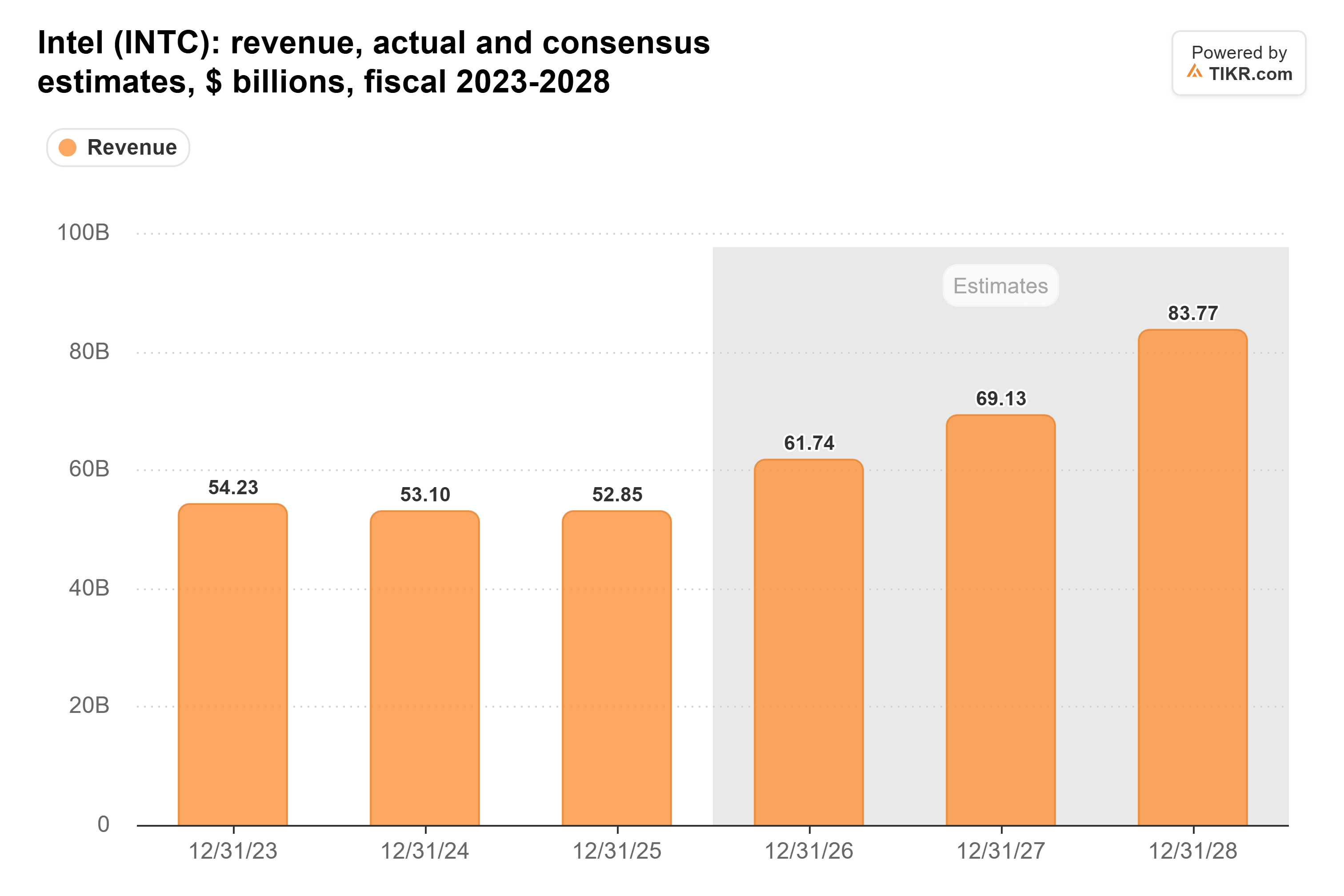
Analysts expect Intel’s revenue to grow about 12%, from $61.7 billion in 2026 to $69.1 billion in 2027, close to Niles’s figure.
At its Nov. 13 close of $59.66, Intel traded at about 43x next-twelve-months earnings. On 2027 estimates alone, it’s about 33x, roughly Niles’s number.
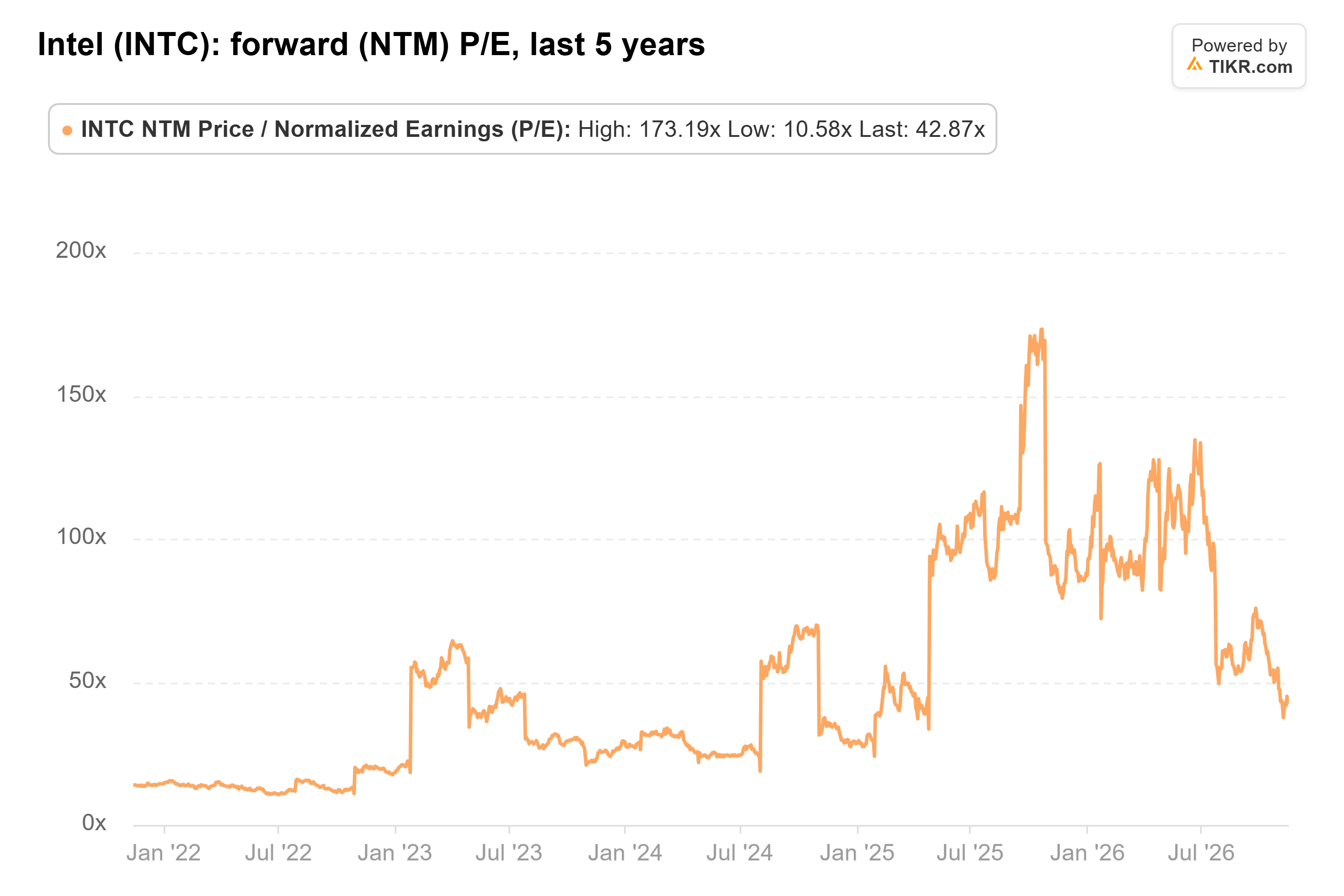
That’s below Intel’s five-year average of 50x, but Intel set that average while barely earning anything. From 2014 through 2022, as a mature chipmaker, it traded between 10x and 18x.
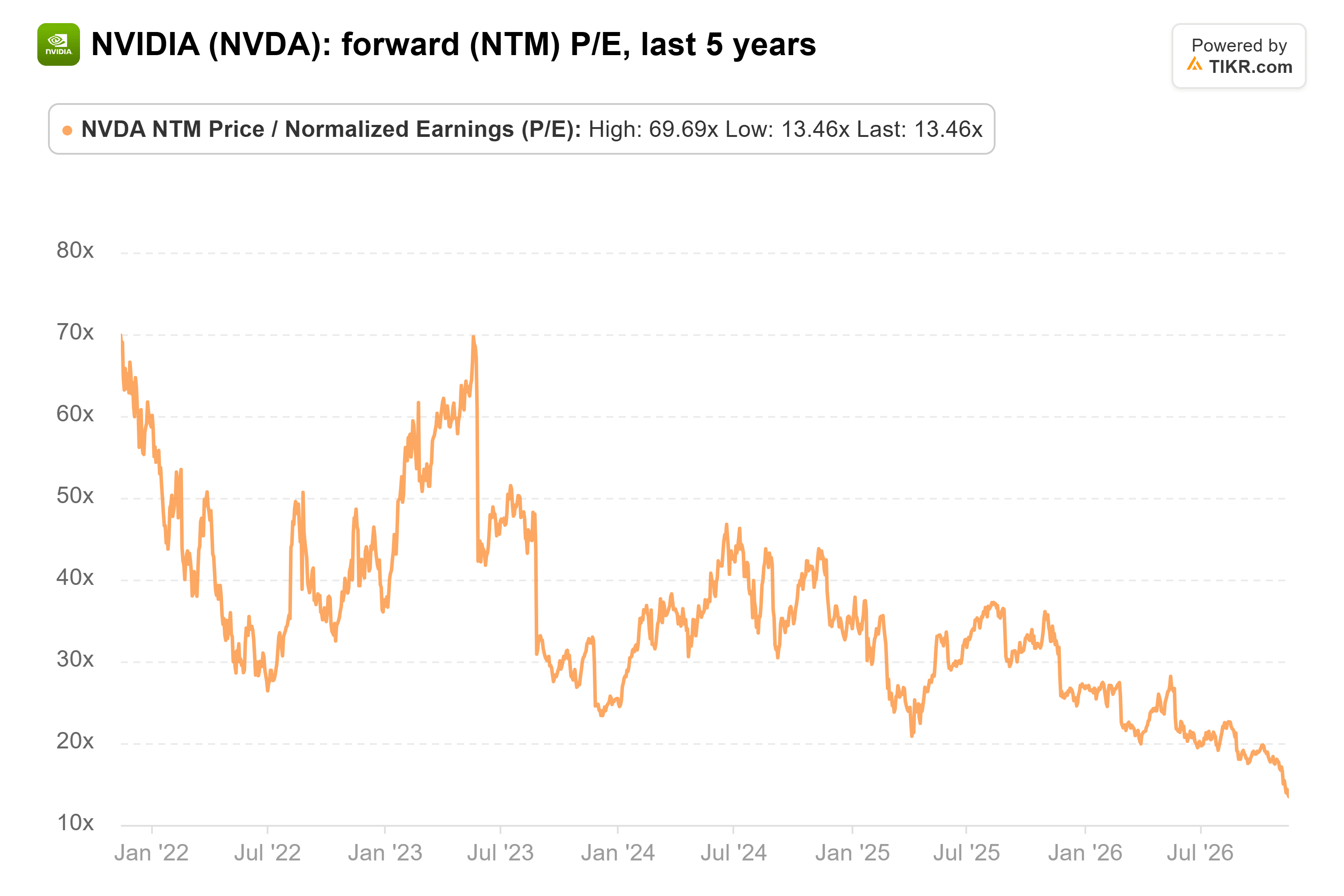
NVIDIA sits at 14x, a five-year low against a 36x average. Part of that is new: NVIDIA announced on Nov. 12 that Jensen Huang had resigned as CEO, and it reports earnings on Nov. 17.
Intel’s Earnings Are Still Near the Bottom
Intel’s foundry lost $10.3 billion in 2025 on $17.8 billion of revenue, so every dollar of loss it cuts lifts operating income. Analysts expect normalized EPS to climb from $0.42 in 2025 to $2.99 in 2028.
Servers could get it there. Zinsner expects industry server CPU units to grow more than 30% in both 2026 and 2027. But Intel can’t make enough, and AMD’s data center revenue rose 97% last quarter on record EPYC CPU and Instinct GPU sales.
The 2027 EPS estimate has fallen to $1.79, from $2.11 before the report. Even on 2028 earnings, Intel trades at about 20x, above its old range.
Intel Still Has to Earn This Price
At 43x, Intel is charging up front for a turnaround its PC business just stepped back from. I’d rather own NVIDIA at 14x, CEO search and all, and wait for Intel to fill its fabs with outside customers. Management expects 14A design commitments by mid-2027. If the server shortage runs into 2028, as Zinsner expects, estimates could recover fast and pull Intel’s multiple down with them.
So What Is Intel Stock Actually Worth?
TIKR lets you forecast the future price of any stock in less than a minute. Just enter a few assumptions into TIKR’s valuation model and see what Intel could be worth. Start from Wall Street consensus estimates, or adjust the inputs to reflect your own view of the business. It’s free to use.
Disclaimer:
Please note that the articles on TIKR are not intended to serve as investment or financial advice from TIKR or our content team, nor are they recommendations to buy or sell any stocks. We create our content based on TIKR Terminal’s investment data and analysts’ estimates. Our analysis might not include recent company news or important updates. TIKR has no position in any of the stocks mentioned. Thank you for reading, and happy investing!