Key Takeaways
- Philip Morris International raised its quarterly dividend 8.8% to $1.60 a share in September, and GSK raised its third-quarter dividend to 17p from 16p.
- GSK paid out 39% of its free cash flow over the 12 months to June 30, 2026, and Philip Morris International paid out 68% over the 12 months to Sept. 30.
- Philip Morris International cut its 2026 earnings guidance because of rising costs, and GSK’s vaccine sales fell in the third quarter.
- GSK trades at 9.9x forward earnings, and Philip Morris International trades at 21x.
Philip Morris International (PM) has a dividend record most companies would envy. Management said on the third-quarter call: “In September, we raised our dividend for the 19th consecutive year to $6.40 per share, with another increase of almost 9%.”
GSK (GSK) can’t say that. Its dividends paid fell from £4.00 billion in fiscal 2021 to £2.25 billion in fiscal 2023, and then climbed back to £2.56 billion in fiscal 2025. Even so, GSK yields 4.0% today, and Philip Morris International yields 3.4%.
If I could only own one of these for the next 20 years, which would it be?
| Metric | GSK (GSK) | Philip Morris International (PM) |
|---|---|---|
| Dividend yield | 4.0% | 3.4% |
| Dividend growth, fiscal 2020-2025 | -12.0% a year | 3.5% a year |
| Cash dividend payout ratio (TTM) | 39% | 68% |
| Net debt/EBITDA | 1.8x | 2.0x |
| Interest coverage | 14.7x | 12.2x |
| Forward P/E | 9.9x | 21x |
Source: TIKR. Cash dividend payout ratios cover the 12 months to June 30, 2026 (GSK) and Sept. 30, 2026 (Philip Morris International).
6 safe dividend stocks paying retirees 6%+ yields
There are over 100 stocks paying 6%+ annual dividends today.
But after an extensive investment review leveraging TIKR’s proprietary data, we now believe only six of them are truly safe for retirees.
They’re all yours as part of our new investment report. Learn more about how to get access right here.
GSK’s dividend has plenty of room
GSK’s business is growing again. Third-quarter sales rose 5% at constant exchange rates to £8.9 billion, and Specialty Medicines grew 15%. On Nov. 17, the FDA granted accelerated approval to Nelkarmi for advanced ALK-positive lung cancer.
GSK said in October that net debt was 1.8x core EBITDA after its Nuvalent acquisition. GSK paid out a well-covered 39% of its free cash flow over the 12 months to June 30, 2026. Free cash flow has also topped dividends paid in every fiscal year since 2016:
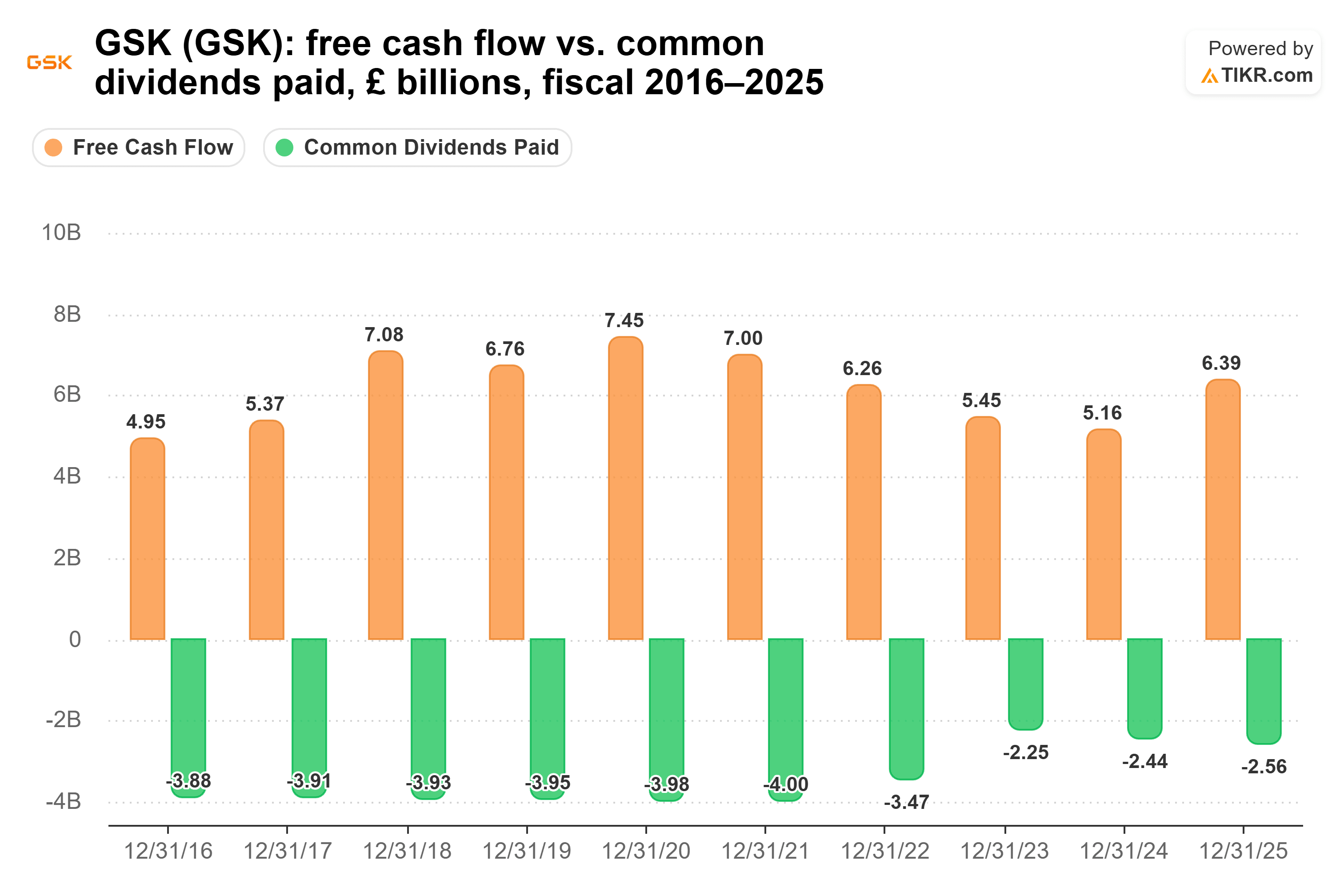
The cushion has grown since the cut. GSK’s payout ratio fell from 57.1% in fiscal 2021 to 40.1% in fiscal 2025. On Oct. 28, GSK reaffirmed its dividend policy and said it expects to pay 70p a share for 2026. GSK sets its dividend in pounds, so a US holder’s check also moves with the exchange rate.
The main risk is vaccines: sales fell 2% in the third quarter, mostly because of Shingrix destocking in China.
Philip Morris International pays out most of its cash
Philip Morris International has the record, and its business keeps shifting toward smoke-free products. IQOS, ZYN and its other smoke-free products made up more than 40% of third-quarter net revenue. Net revenue rose 5.5% to $11.4 billion, and operating income rose 14.1%.
On Oct. 21, though, it cut its 2026 adjusted EPS guidance to $8.29-$8.44 from $8.35-$8.50, citing rising costs from the Middle East and Ukraine conflicts and heavier US spending behind ZYN. It also said it won’t buy back stock this year, and the dividend needs that cash.
Philip Morris International paid out 68% of its free cash flow over the 12 months to Sept. 30, 2026. That leaves far less room than GSK has, and the cushion has been thinner in past years:
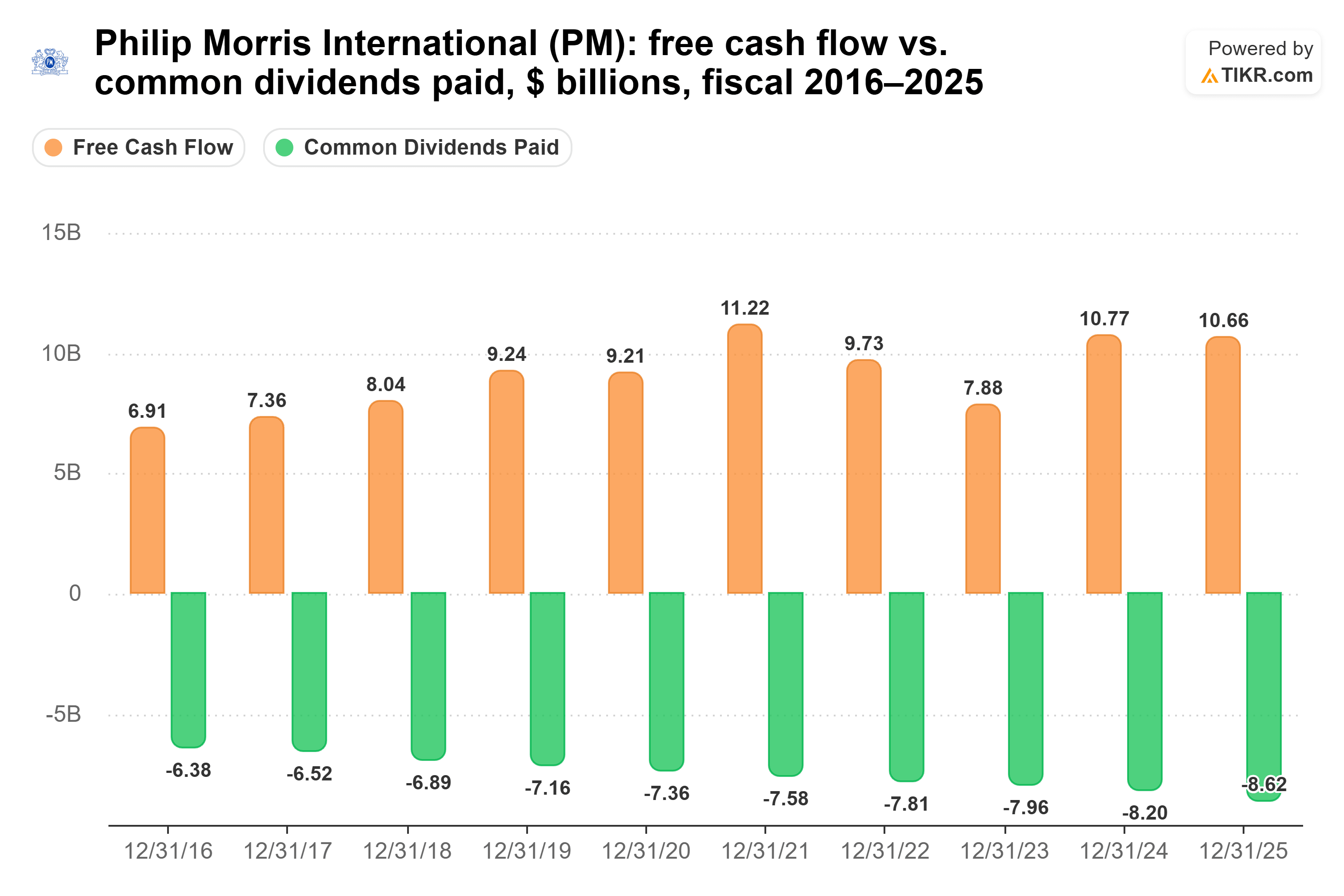
In fiscal 2023, dividends paid of $7.96 billion were more than free cash flow of $7.88 billion. The payout ratio was still a risky 80.9% in fiscal 2025. On the call, management cited “an unwavering commitment to our progressive dividend policy,” and 19 straight raises back that up. With this little room, future raises have to come from growth.
So which dividend wins?
GSK gets my dividend dollars for the next 20 years. Over that long a stretch, I want the check with the most room under it, and GSK’s has far more, with a little less debt.
GSK’s dividend per share shrank 12.0% a year from fiscal 2020 to fiscal 2025, but that stretch includes the cut. GSK’s dividends paid rose 4.9% in fiscal 2025, and Philip Morris International’s dividend rose 4%. At those rates, $10,000 in GSK pays about $13,100 over 20 years, and the same amount in Philip Morris International pays about $10,600.
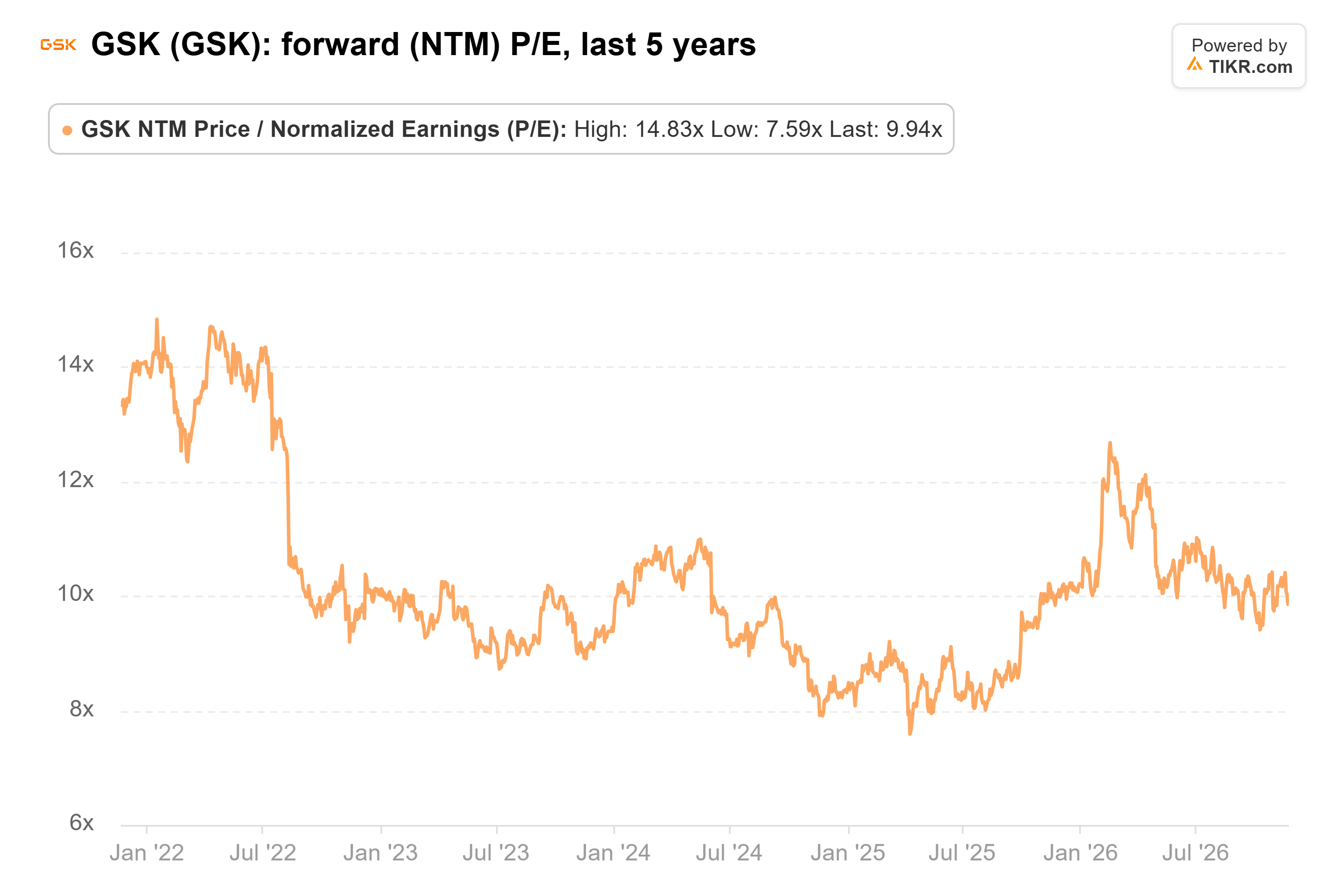
I don’t have to pay up for GSK, either. It trades at 9.9x forward earnings, slightly below its five-year average of 10.3x:
Philip Morris International trades at 21x.
That’s not to say Philip Morris International’s dividend is in danger. Nineteen straight raises is a record management will work very hard to keep, and its smoke-free business keeps growing. Over 20 years, though, I’d rather own the dividend with room to spare, and buy it at the cheaper price.
Of course, GSK has cut its dividend before. I’ll be watching whether vaccine sales recover and whether 2026’s dividend lands at the 70p GSK expects.
Forget GSK: 6 safe 6%+ dividend yields you can buy right now
Dividends can hold the key to enormous wealth. But only if you buy the right ones.
Picking the right high-yield dividend stock can be the difference between a dream retirement…and scraping by every month, waiting for the next Social Security check to clear.
We’ve identified six stocks yielding 6%+ that we believe every retiree should know about right now. (And GSK isn’t one of them.)
Disclaimer:
Please note that the articles on TIKR are not intended to serve as investment or financial advice from TIKR or our content team, nor are they recommendations to buy or sell any stocks. We create our content based on TIKR Terminal’s investment data and analysts’ estimates. Our analysis might not include recent company news or important updates. TIKR has no position in any of the stocks mentioned. Thank you for reading, and happy investing!