Key Takeaways
- Of the 460 big funds that have filed 13Fs for the quarter ended Sept. 30, 27 sold UnitedHealth, George Soros’ fund among them, while 12 bought.
- The biggest single move was a buy, a new stake worth about $453 million, and some money moved within managed care: that buyer cut CVS Health, and one seller bought Elevance Health.
- Analysts expect UnitedHealth to earn $27.04 a share in 2028, close to 2024’s $27.66, as its medical costs come back under control.
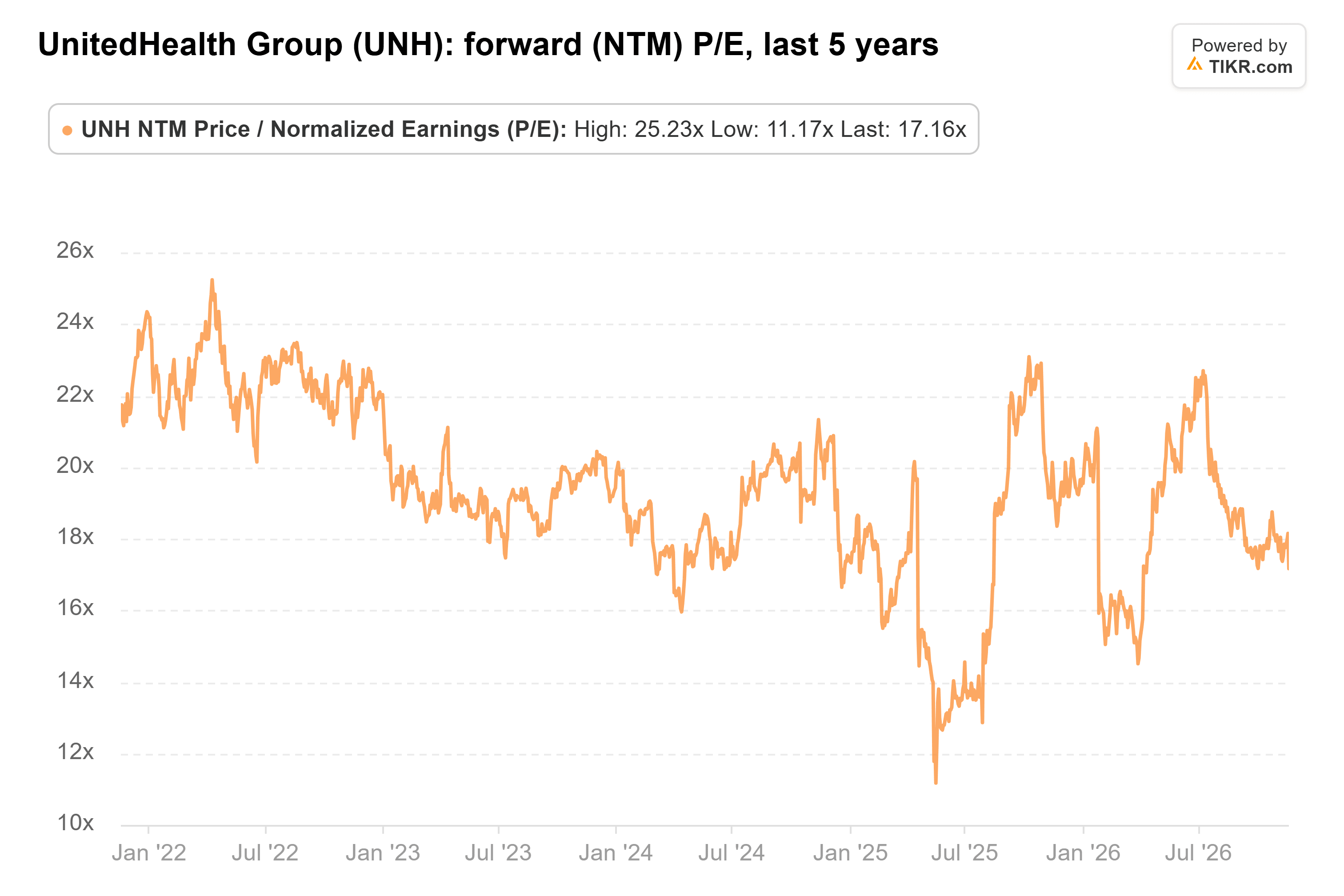
- At 17x forward earnings, below its five-year average of 19x, the stock can reach the $476 average target on earnings growth alone, so the buyers have the better case unless Washington changes Medicare Advantage’s economics.
Twenty-seven big funds sold UnitedHealth (UNH) last quarter, more than twice as many as bought it, and George Soros’ fund was one of them.
Those counts cover the 460 big funds that have filed 13Fs for the quarter ended Sept. 30: funds readers know, plus any holding $1 billion or more of US stocks, with quant and index funds left out. The 27 sellers sold out or cut their stakes by 20% or more. The 12 buyers opened a stake or added 20% or more. And 77 funds held it at the quarter’s end.
Soros’ sale was a rounding error
Soros gives the sellers their most famous name, but Soros Fund Management barely moved. Its 13F, filed Nov. 13, shows it cut its stake 54% to 1,774 shares, a sale worth about $775,000 at quarter-end prices. That barely registers at a fund whose 13F holds $6.48 billion of US stocks, and UnitedHealth is now its 201st-biggest position. Plenty of the other sales were trims too. Mondrian Investment Partners, a $49 billion firm, cut its stake 41% in its 13F filed Oct. 23 and still held 218,096 shares worth $80 million, 1.5% of its 13F stocks.
TIKR tracks 26 analysts on UnitedHealth. How many say “Buy”?
See the full breakdown of Buy, Hold, and Sell ratings on UnitedHealth, along with Wall Street’s revenue and earnings estimates, all in one place. More than 500,000 investors use TIKR to research stocks like this one. See UnitedHealth’s Analyst Ratings
Some of the selling stayed in managed care
The biggest sale came with a swap. Meridiem Capital Partners, a $2.4 billion firm, sold all 211,050 of its UnitedHealth shares, its 13F filed Nov. 16 shows. That was about $88 million at quarter-end prices, and 4.0% of its 13F stocks the quarter before. In the same quarter it opened a stake in Elevance Health (ELV): 96,663 shares worth $38 million, 1.6% of its 13F stocks.
Ilex Capital Partners, whose 13F holds $5.15 billion of US stocks, got out of both. Its 13F, filed Nov. 13, shows it sold all 132,227 UnitedHealth shares, about $55 million, and all 113,556 of its Elevance shares. Since Sept. 30, Elevance is up 12% and UnitedHealth is up 6%.
The biggest check went to the buyers
GQG Partners, which manages $164 billion, made the quarter’s biggest move on either side. Its 13F, filed Nov. 13, shows a new stake of 1.23 million shares, about $453 million at quarter-end prices and 0.8% of its 13F stocks. That one buy dwarfs Meridiem’s $88 million exit. GQG also cut its CVS Health (CVS) stake 65% in the quarter, to 2.81 million shares worth $241 million, and CVS has since unveiled a plan to split in two.
Pentwater Capital Management, a $19 billion firm, raised its share count 664% to 135,625 shares worth $50 million. Its 13F, filed Nov. 16, also lists call options with a notional value of $638 million and put options with a notional value of $250 million, so the shares are only part of its position. Distillate Capital Partners, a $2.1 billion firm, added 84% to 114,479 shares, which made UnitedHealth its third-biggest holding at 2.0% of its 13F stocks. And Lee Ainslie’s Maverick Capital opened a small stake of 5,092 shares, about $2 million.
UnitedHealth is up 6% from its Sept. 30 close to its last close of $389.68. That’s the stock’s move alone, since a 13F doesn’t show what any fund paid.
Do the numbers back the buyers?
Analysts expect UnitedHealth’s earnings to climb back toward their 2024 peak:
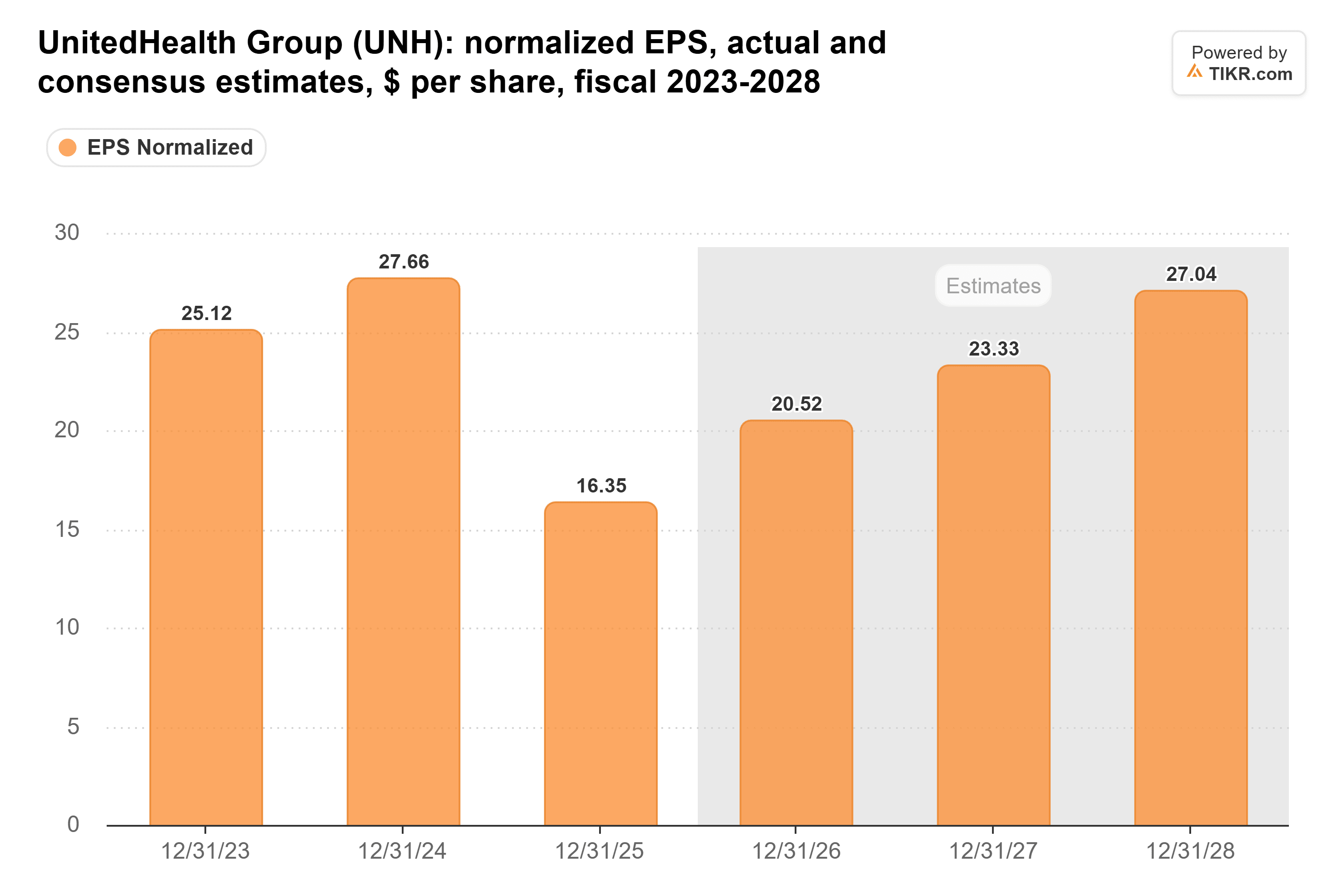
Normalized EPS fell to $16.35 in 2025 from $27.66 in 2024, as medical costs rose to 89.1% of premiums from 85.5%. Analysts now expect $20.52 this year and $27.04 in 2028, and their 2027 estimate has risen to $23.33 from $20.93 at the end of June. The cost repair looks real. The third quarter’s medical care ratio was 88.4%, against 89.9% a year earlier, and still 89.1% without a $610 million reserve release.
UnitedHealth trades at 17x forward earnings, below its five-year average of 19x:
The 26 analysts who cover the stock have raised their average target to $476, from $387 a year ago:

That’s 22% above the last close. By my math, $476 is about 18x 2028’s $27.04 consensus, still below the stock’s five-year average. So the target needs no re-rating, only for the estimates to hold.
I’m with the buyers
The way I see it, the buyers have the better case: costs are coming down, estimates are rising, and the stock can reach the Street’s target on earnings growth alone. The sellers’ best argument is Washington. CMS premiums made up 44% of UnitedHealth’s 2025 revenue, and Sen. Elizabeth Warren has taken aim at the company since Democrats won Congress.
Management has promised its 2027 outlook before year-end. If it guides at or above the $23.33 analysts expect, the buyers look right. Below $23.17, which is 13% growth from this year’s floor of at least $20.50 and the low end of management’s long-term target, I’d side with the sellers. The funds’ next 13Fs, due in mid-February, will show who held on.
So what is UnitedHealth stock actually worth?
TIKR lets you forecast the future price of any stock in less than a minute. Just enter a few assumptions into TIKR’s valuation model and see what UnitedHealth could be worth. Start from Wall Street consensus estimates, or adjust the inputs to reflect your own view of the business. It’s free to use.
Disclaimer:
Please note that the articles on TIKR are not intended to serve as investment or financial advice from TIKR or our content team, nor are they recommendations to buy or sell any stocks. We create our content based on TIKR Terminal’s investment data and analysts’ estimates. Our analysis might not include recent company news or important updates. TIKR has no position in any of the stocks mentioned. Thank you for reading, and happy investing!