Key Takeaways
- Uber shares are 24% below their high of a year ago, and Evercore ISI kept its Outperform rating and $150 price target after the third-quarter report, 111% above the Nov. 9 close.
- The slide followed a robotaxi scare and a pending $14.8 billion Delivery Hero deal, to be funded with cash and new debt. The third quarter lifted the stock, but Mobility came in below Uber’s own expectations.
- Evercore’s $150 works out to 37x forward earnings. Uber hasn’t ended a quarter at that multiple since at least early 2023, and earnings estimates have edged down.
- A rebound looks likely, but the Street’s $99 average target is the more realistic place for it to land within a year.
Uber Technologies (UBER) has fallen 24% from its high of a year ago, and Evercore ISI’s Mark Mahaney still thinks the stock can more than double. He kept his Outperform rating and $150 price target after Uber’s Nov. 4 third-quarter report.
Robotaxis, debt and a driver shortage
In June, TechCrunch reported that Uber and Waymo had ended their robotaxi partnership in Phoenix. In July, Uber confirmed that Waymo plans to launch its own app in Austin and Atlanta in January 2028, ending Uber’s exclusive access there, and the stock fell more than 4%. That same month, Uber agreed to buy Delivery Hero in a pending $14.8 billion deal, to be funded with cash and new debt, and its long-term debt reached $15.7 billion at Sept. 30.
Then Uber reported a mixed third quarter on Nov. 4: non-GAAP EPS rose 35% to $0.88, and the stock rose 4.9% that day. But Mobility revenue fell 2% to $7.5 billion, even as Mobility bookings grew 18%, because of business model changes in the U.K.
CEO Dara Khosrowshahi said on the call that Mobility “came in below our expectations as a result of driver supply not keeping pace with strong consumer demand in several international markets.” Uber also guided fourth-quarter non-GAAP EPS to 0.95-0.99, below analysts’ estimates.
Evercore hasn’t budged
Mahaney’s $150 is the highest target on the Street, and it has been for more than a year. At the Nov. 9 close of $71.17, up 3.8% on the day, it implies 111% upside, even as Barclays and KeyBanc cut their targets after the report. Bulls can point to a record $10.4 billion of trailing-12-month free cash flow, and Uber expects about 700 fully driverless vehicles on its network by year-end.
TIKR tracks 51 analysts on Uber. How many say “Buy”?
See the full breakdown of Buy, Hold, and Sell ratings on Uber, along with Wall Street’s revenue and earnings estimates, all in one place. More than 500,000 investors use TIKR to research stocks like this one. See Uber’s Analyst Ratings
Does $150 add up?
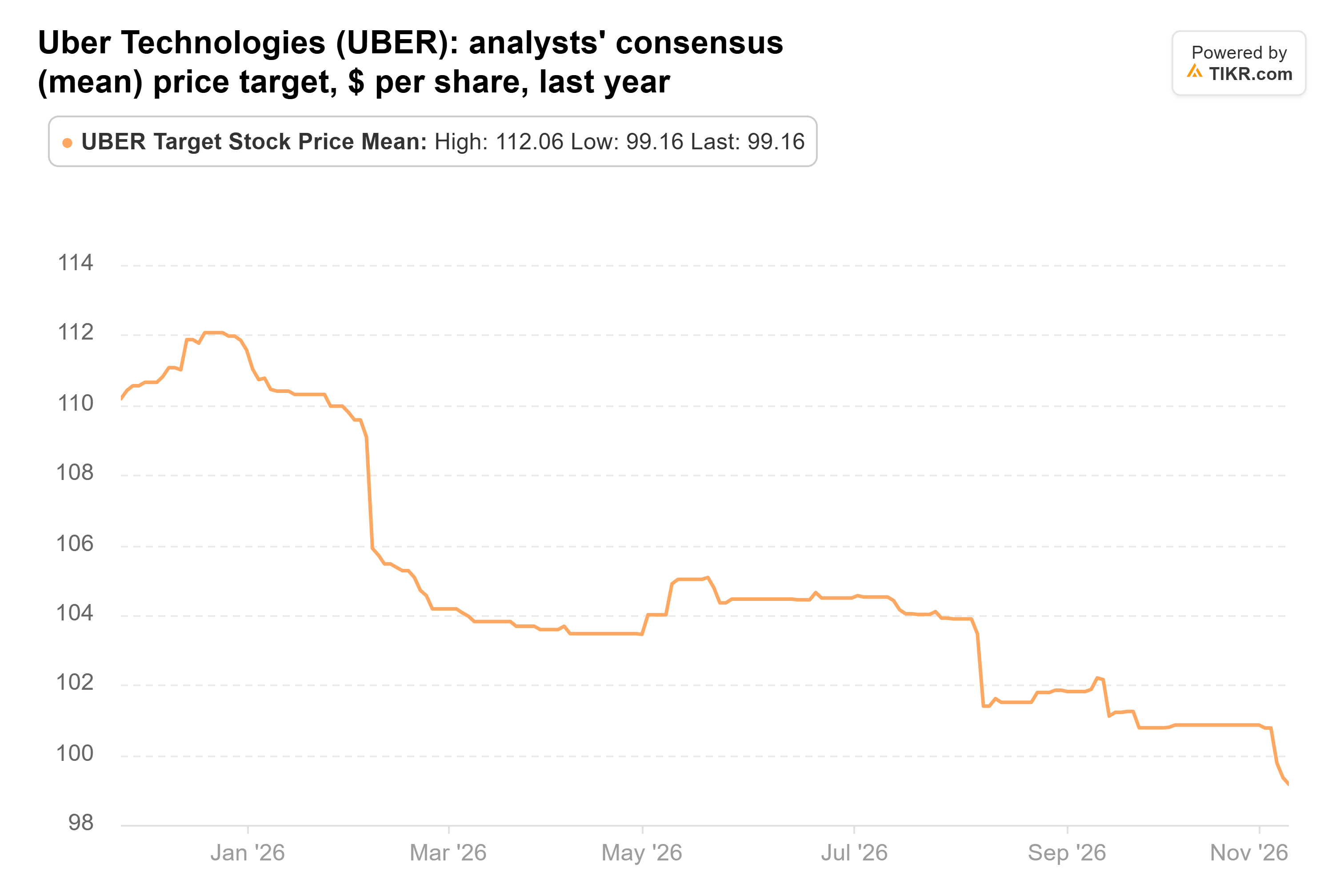
Uber’s average price target has fallen to $99 from $110 a year ago. That’s still 39% above the price, and the 46 targets among the 51 analysts covering Uber range from $70 to $150.
Analysts still expect normalized EPS to more than double, from $2.45 in fiscal 2025 to $5.50 in fiscal 2028.
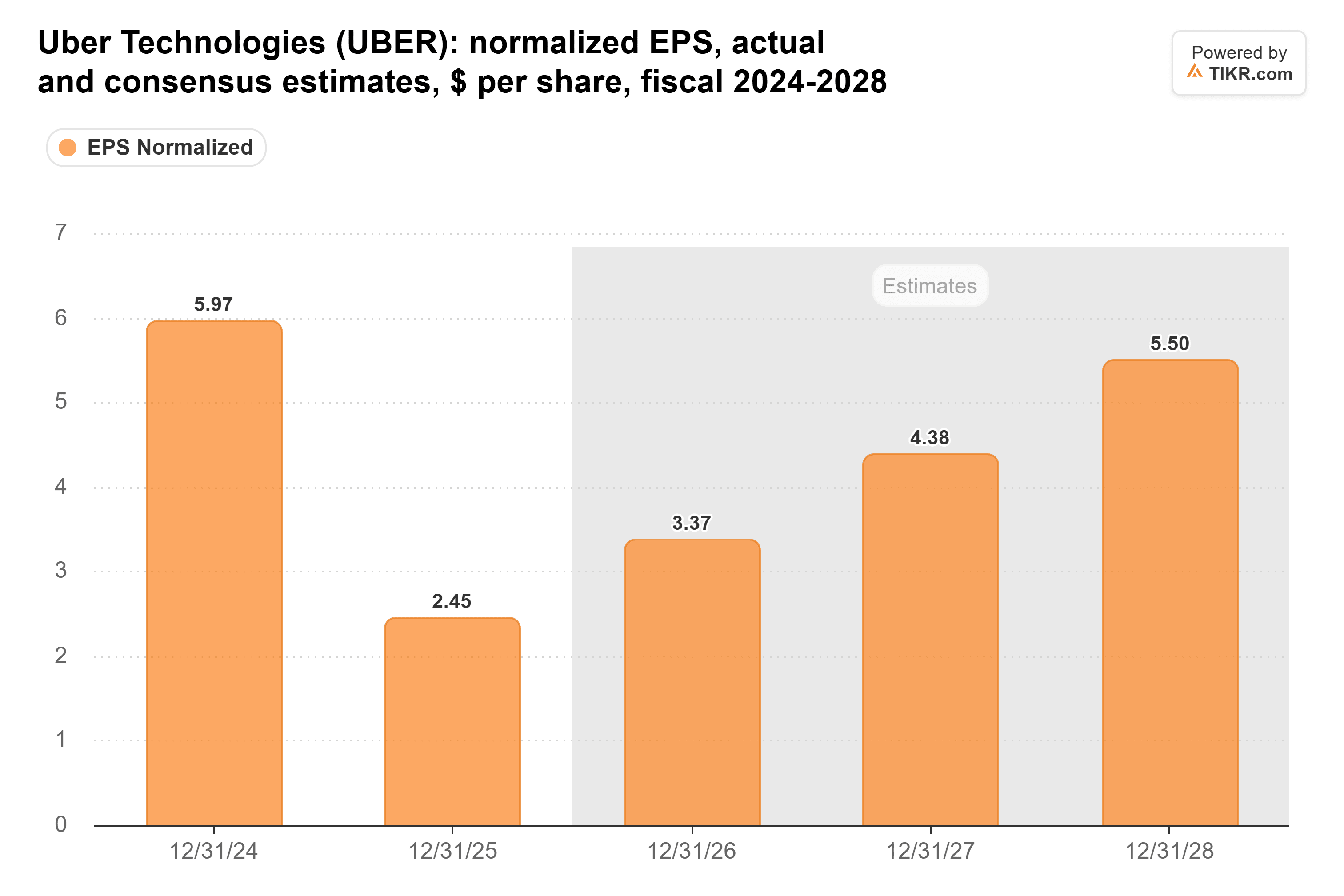
The 2027 estimate has edged down over the past three months. Analysts have little reason to raise it until the driver-supply improvement Uber saw in October shows up in its results.
Uber traded at about 17x forward earnings at the Nov. 9 close, below its three-year average of 25x. Evercore’s $150 is 37x the $4.08 a share analysts expect over the next twelve months, a multiple Uber hasn’t ended a quarter at since at least early 2023 (its peak was 35x in March 2024).
A rebound, just a smaller one
The biggest risk is robotaxis: if Waymo and other strong fleets keep their rides on their own apps, Uber’s most profitable business has less room to grow. Still, Uber looks set to win back a good part of its slide, with last quarter’s non-GAAP EPS up 35% and the stock below its usual multiple. But $150 needs a multiple investors haven’t paid for Uber in years, while estimates slip, so the Street’s $99 looks like the likelier landing within a year. Uber’s fourth-quarter report early next year is the next test: EPS at the top of its 0.95-0.99 range, with Mobility bookings growth picking up from the third quarter’s 18%, would make the case for a bigger rebound much stronger.
So what is Uber stock actually worth?
TIKR lets you forecast the future price of any stock in less than a minute. Just enter a few assumptions into TIKR’s valuation model and see what Uber could be worth. Start from Wall Street consensus estimates, or adjust the inputs to reflect your own view of the business. It’s free to use.
Disclaimer:
Please note that the articles on TIKR are not intended to serve as investment or financial advice from TIKR or our content team, nor are they recommendations to buy or sell any stocks. We create our content based on TIKR Terminal’s investment data and analysts’ estimates. Our analysis might not include recent company news or important updates. TIKR has no position in any of the stocks mentioned. Thank you for reading, and happy investing!