Key Takeaways
- Dan Ives called China and the Southeast Asia loophole a “containable” 15% to 20% of Nvidia’s revenue.
- Even after losing a fifth of its earnings, Nvidia would trade at about 13x, against a five-year average of 35x.
- Super Micro is caught in the shipping halt, and unbuilt data centers would hit Vertiv’s orders.
- The bigger risk is Congress widening export rules, which would reach AMD too.
Nvidia (NVDA) can’t get China out of the headlines. On Nov. 26, the Financial Times reported that Nvidia told server makers, Super Micro Computer (SMCI) among them, to stop shipping its AI servers to Malaysia, Singapore, Thailand and Indonesia. A US rule requiring licenses for advanced AI chips bound for those four countries and Brazil took effect a week earlier.
Data centers that never get built won’t need power and cooling gear from Vertiv (VRT), and wider rules would hit Advanced Micro Devices (AMD), which billed 22.4% of its 2025 revenue to China and Hong Kong.
On Nov. 27, Bloomberg reported that Blackwell chips turned up at a Shanghai data center tied to Megaspeed, which it calls Nvidia’s largest Southeast Asian customer. The US recently blacklisted Megaspeed, and its former CEO, Alice Huang, is at the center of the scandal that led Jensen Huang to resign on Nov. 12 (Nvidia’s board reinstated him on Nov. 23).
Dan Ives, a partner at Yorkville Ives, isn’t rattled:
“China and the Asia loophole remain a containable 15% to 20% of revenue at most in our view.”
That’s a lot of revenue to call containable. His stress test (20% of data centers never built, the loophole revenue shut off and financing curtailed by 25%) still leaves him bullish.
TIKR Tracks 63 Analysts on Nvidia. How Many Say “Buy”?
See the full breakdown of Buy, Hold, and Sell ratings on Nvidia, along with Wall Street’s revenue and earnings estimates, all in one place. More than 500,000 investors use TIKR to research stocks like this one. See Nvidia’s Analyst Ratings
Take a Fifth Off, and Nvidia Is Still Cheap
Analysts expect Nvidia’s revenue to climb from $216 billion in the year ended January 2026 to $726 billion in the year ending January 2028:
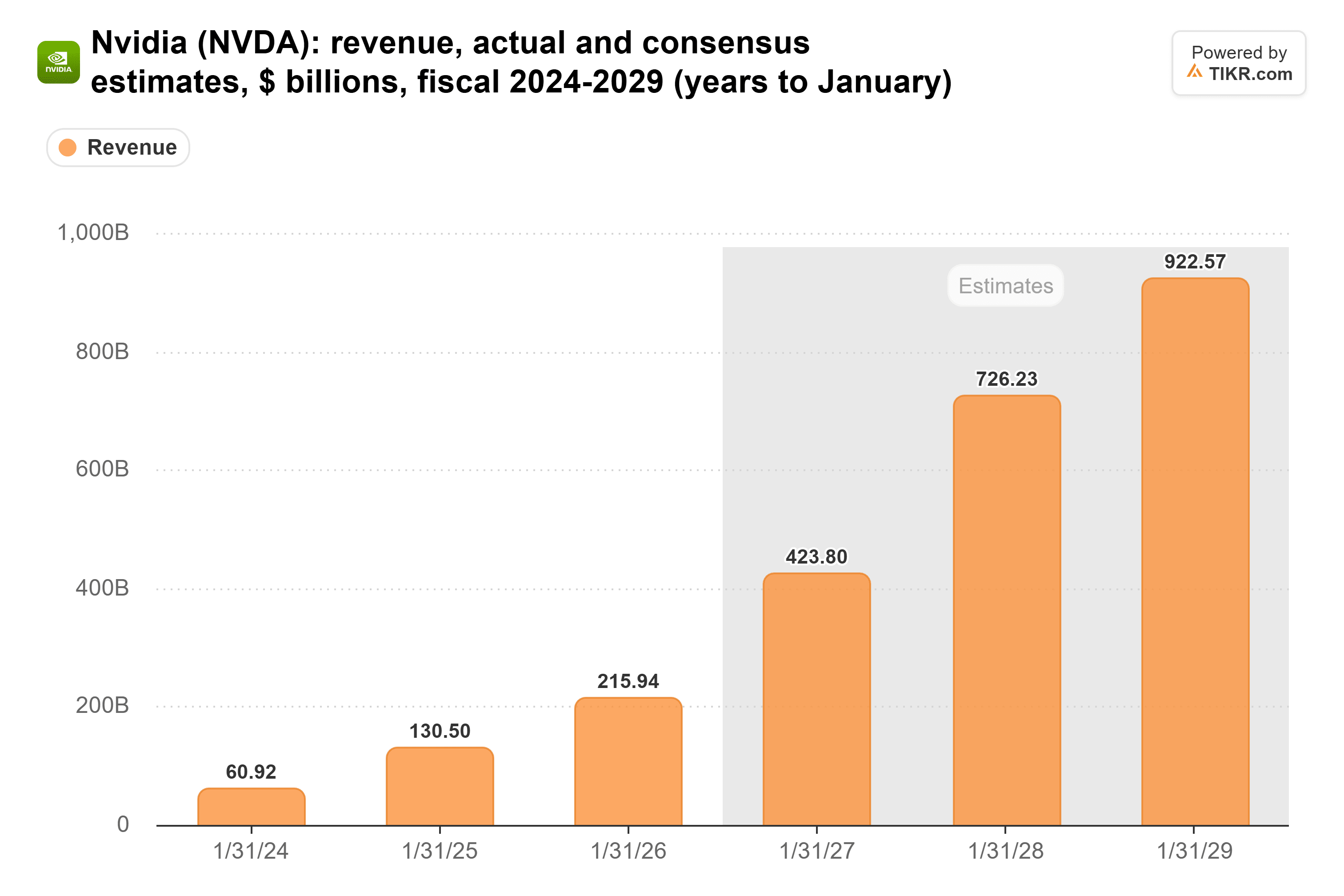
On the Nov. 17 call, Colette Kress, then interim CEO, raised that year’s growth outlook to about 75% while still assessing the new curbs. The halt came later. Take Ives’s full 20% off that $726 billion, and Nvidia would still sell about $581 billion.
Nvidia trades at about 10x forward earnings, against a five-year average of 35x:
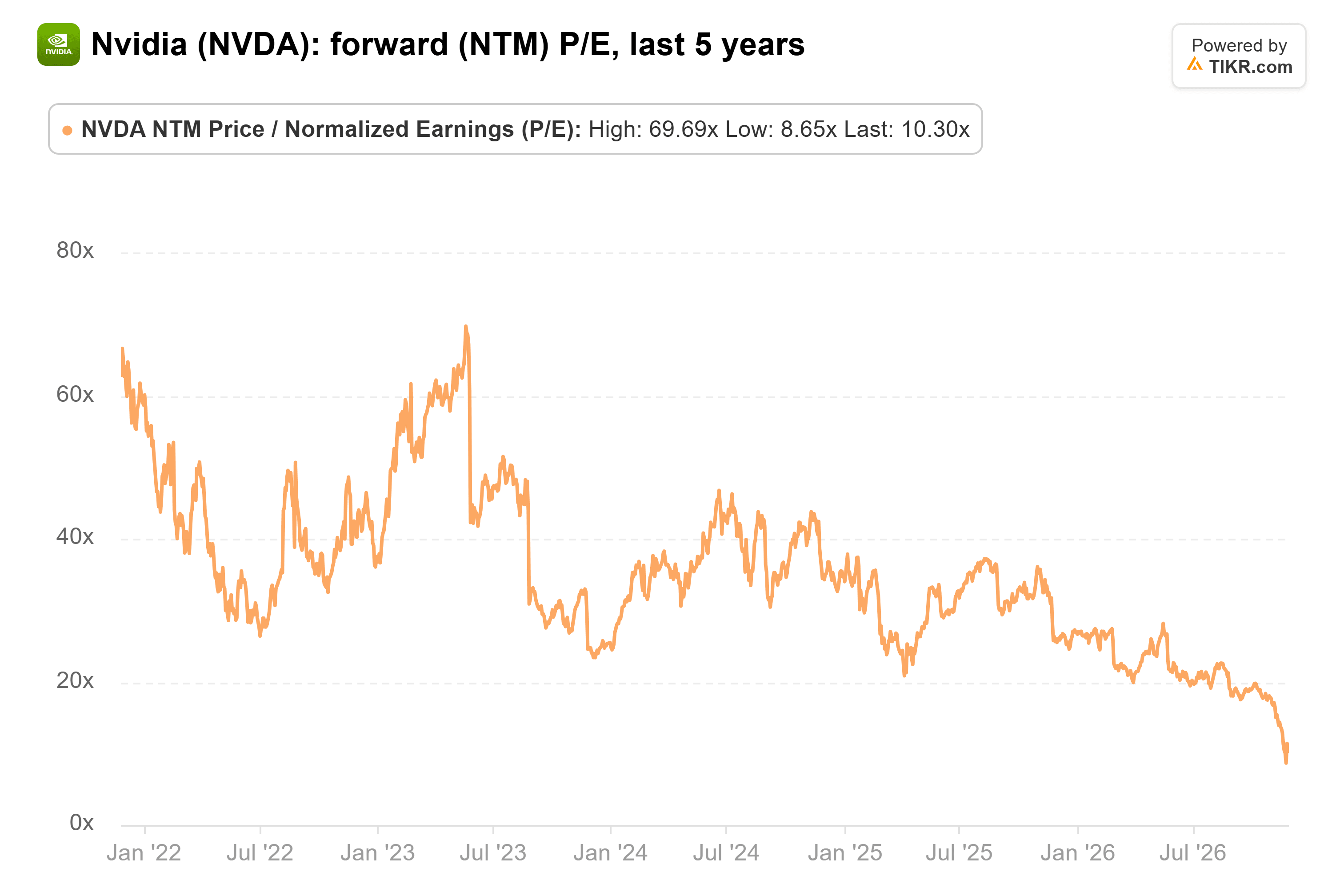
Lose a fifth of earnings with that revenue, and it’s about 13x, under half the average.
Super Micro and Vertiv Are in the Stress Test Too
On Nov. 3, Super Micro guided to $72 billion to $82 billion of sales for its year ending June 2027. At 3.7x forward earnings, the market doubts that. Its early-February report should show whether the halt costs orders or delays them.
Vertiv is a cleaner test of Ives’s unbuilt data centers. Its Asia-Pacific sales rose 50% in the third quarter, but lenders have paused billions in loans for Asian data center projects since the rule.
Congress Is the Bigger Risk for Nvidia
Former acting White House chief of staff Mick Mulvaney and former Senator Heidi Heitkamp told CNBC Huang will likely face pushback from both parties at his closed-door Dec. 1 interview with three House committees. The new rule covers advanced AI chips by type, not maker, so wider rules would hit AMD’s Instinct chips too. AMD also billed 12.4% of 2025 revenue to Singapore, though both figures include PCs the rules don’t touch. At 27x forward earnings, AMD has less cushion.
At 10x, Nvidia is priced as if Ives’s worst case has happened. But if Washington widens the license rule beyond those five countries, his 20% stops being a ceiling.
So What Is Nvidia Stock Actually Worth?
TIKR lets you forecast the future price of any stock in less than a minute. Just enter a few assumptions into TIKR’s valuation model and see what Nvidia could be worth. Start from Wall Street consensus estimates, or adjust the inputs to reflect your own view of the business. It’s free to use.
Disclaimer:
Please note that the articles on TIKR are not intended to serve as investment or financial advice from TIKR or our content team, nor are they recommendations to buy or sell any stocks. We create our content based on TIKR Terminal’s investment data and analysts’ estimates. Our analysis might not include recent company news or important updates. TIKR has no position in any of the stocks mentioned. Thank you for reading, and happy investing!