
Key Takeaways
- Oracle sold $20 billion of stock and bonds days after capping new capital-market funding at that amount through fiscal 2030.
- Bloomberg reported that Microsoft is winding down a 2023 deal to rent AI computing from Oracle on older Nvidia chips.
- Cloud infrastructure revenue rose 121% last quarter, but free cash flow was negative $5 billion as data center spending ran ahead.
- Oracle’s fiscal second-quarter report, expected in December, must show cloud revenue growth of 65% to 71% to match guidance.
Oracle (ORCL) has crammed a quarter’s worth of news into two weeks. On November 2, it priced $20 billion of new stock and bonds. Four days later, Bloomberg reported that Microsoft (MSFT) is winding down a deal to rent AI computing from Oracle.
Then the mood flipped. Strong results from CoreWeave (CRWV) sparked a rally in AI cloud stocks on November 11, and Oracle rose with the group. It is also preparing to offer chips from Alphabet (GOOGL) in its cloud starting in 2027.
Before that bounce, Oracle sat among AI cloud names down 32% to 48% this year. The open question is whether its funding plan and $664 billion backlog hold up as big buyers rethink their AI capacity.
Funding capped, then fully tapped
Oracle set this up at its October 28 investor day. It capped new capital-market funding through fiscal 2030 at $20 billion, excluding refinancing.
Five days later, it used the whole cap in one go:
- 86.2 million new shares at $116 each, for about $9.9 billion in net proceeds
- $10 billion of senior notes
- Both deals closed on November 4
That clears a funding overhang. However, it also adds dilution and fresh interest costs to a balance sheet already carrying heavy debt…
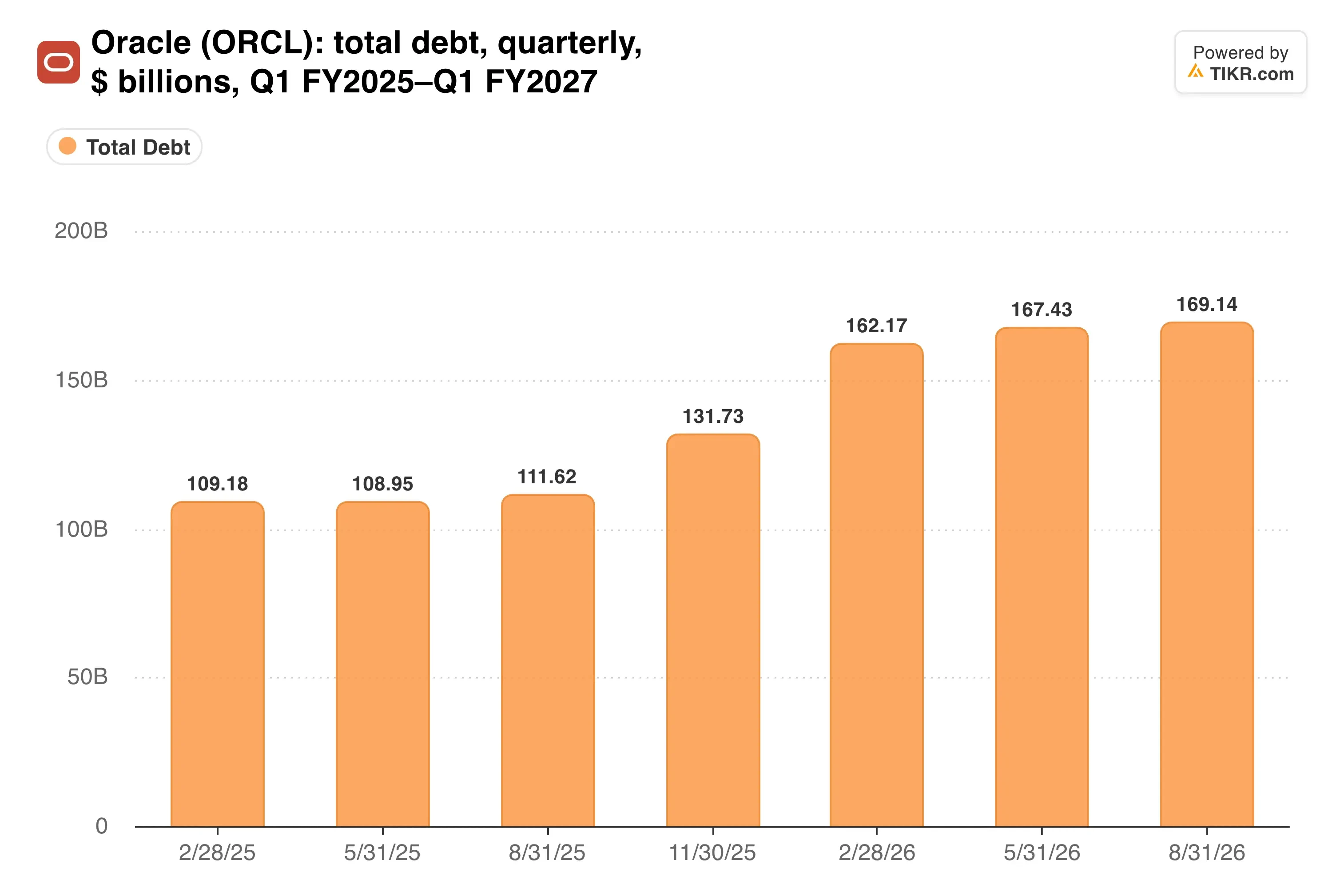
Then came Microsoft. According to Bloomberg, the company has been switching off rented Oracle capacity since it declined to renew. The 2023 deal ran AI features in Bing on an older generation of Nvidia chips.
Oracle answered fast, and a spokesperson told Reuters that demand for its AI infrastructure “remains strong, including for earlier-generation GPUs.”
TIKR tracks 43 analysts on Oracle. How many say “Buy”?
See the full breakdown of Buy, Hold, and Sell ratings on Oracle, along with Wall Street’s revenue and earnings estimates, all in one place. More than 500,000 investors use TIKR to research stocks like this one. See Oracle’s Analyst Ratings
The backlog still carries the case
Oracle never disclosed the Microsoft deal’s terms. Yet its newer signings tell a fuller story. In the fiscal first quarter ended August 31, it booked more than $30 billion of new AI cloud contracts. Remaining performance obligations reached $664 billion, up $209 billion from a year earlier.
That backlog is already showing up in revenue. Total sales rose 30% to $19.3 billion, beating Wall Street estimates, CNBC reported. Cloud infrastructure revenue jumped 121% to $7.4 billion, while cloud applications grew 10% to $4.2 billion.
Where does the top line go from here?
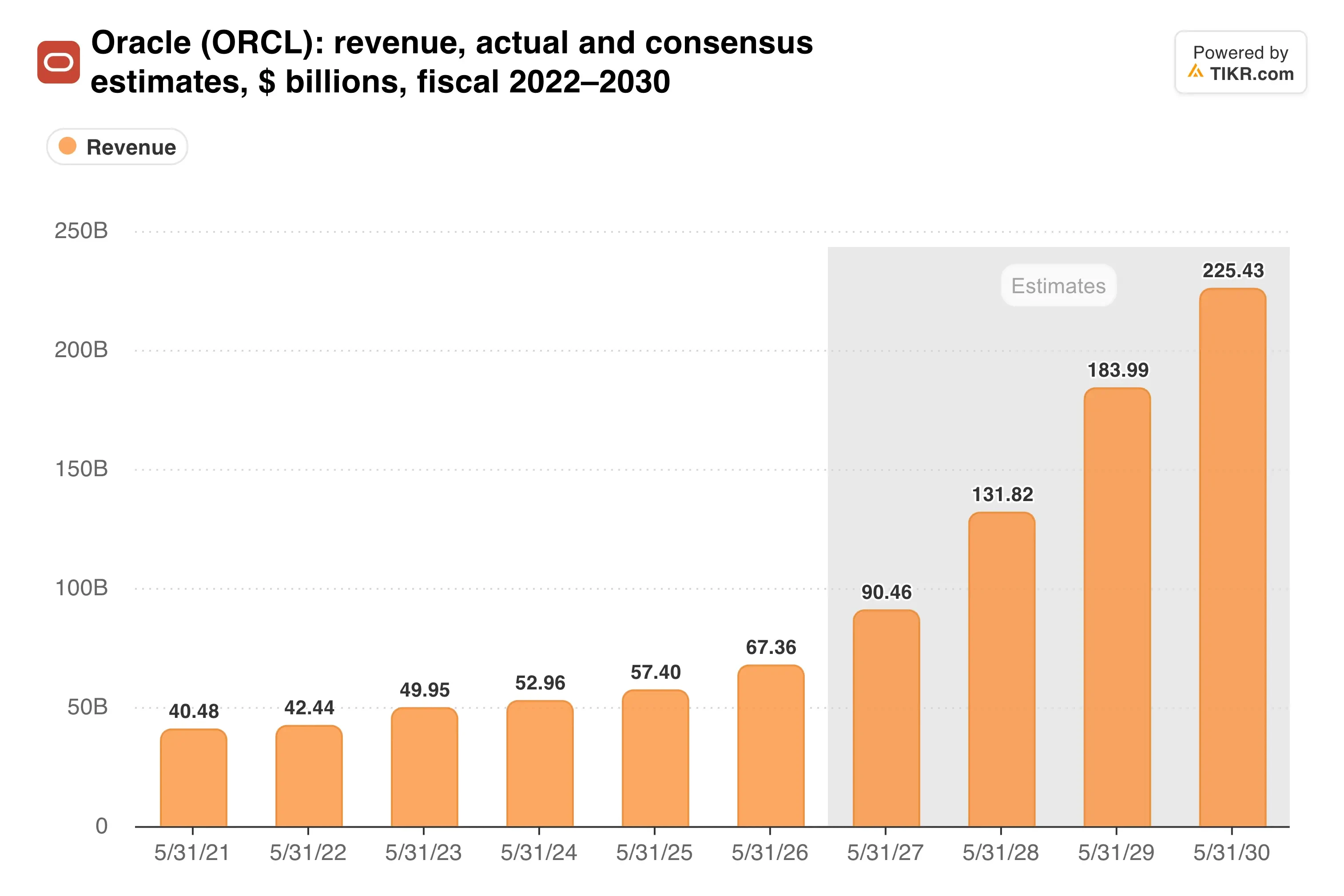
Oracle guides for at least $90 billion in fiscal 2027 revenue and targets $225 billion or more by fiscal 2030.
CoreWeave’s report mattered because both companies rent out AI computing at scale. Shares of CoreWeave jumped more than 20% on November 11, while Reuters had Oracle among AI cloud stocks gaining 6% to 14%. Alphabet’s TPUs add another chip option, since OCI will be the first hyperscale cloud outside Google to offer them.
Cash burn sets the clock
Paying for all this is the hard part. Operating cash flow hit a record $23 billion last quarter, up 184%. Yet free cash flow was still negative $5 billion as data center spending ran ahead.
Oracle has at least put a date on when that turns.
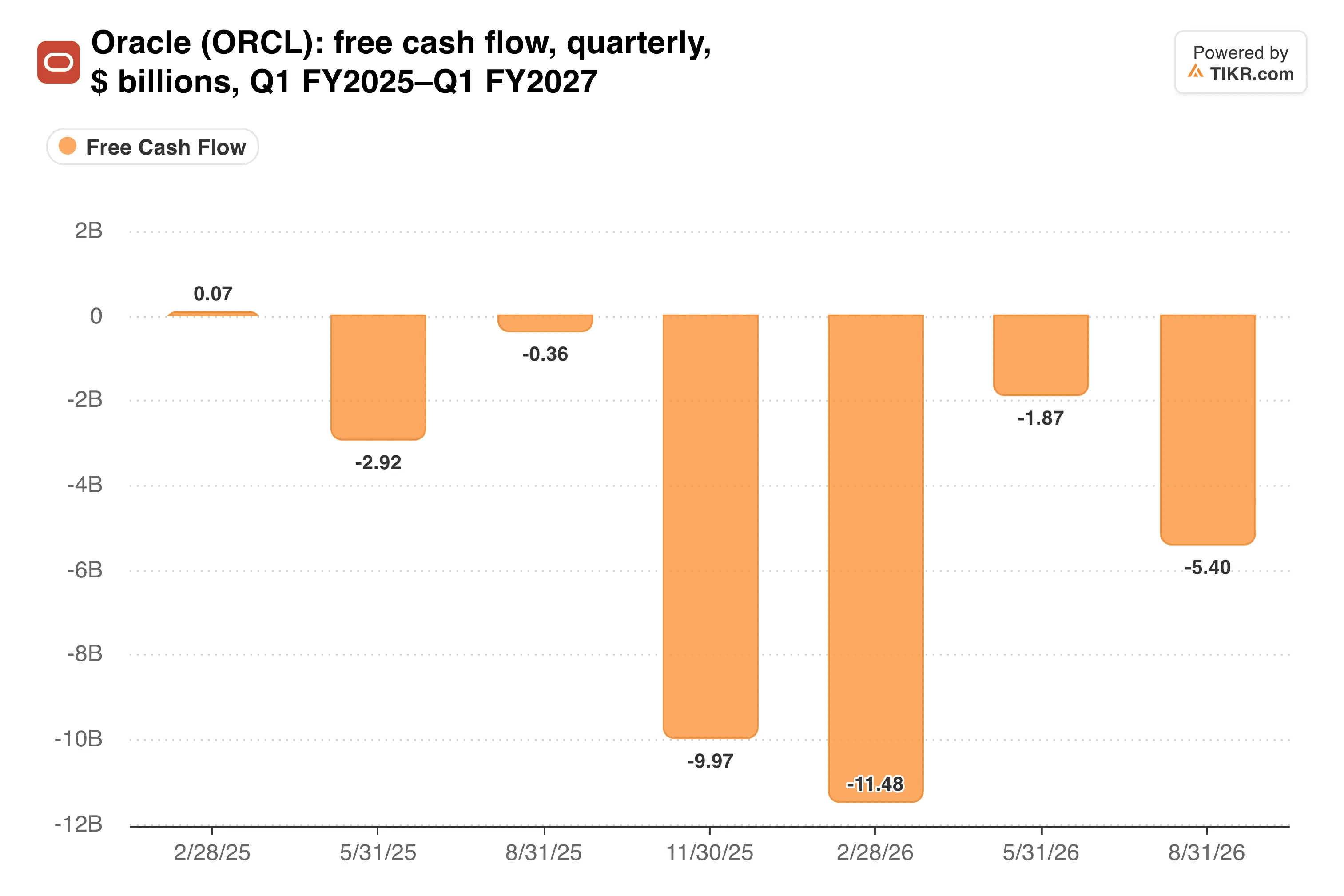
Management expects positive free cash flow in the second half of fiscal 2028, then a $30 billion target in fiscal 2029.
My take: The Microsoft exit looks like older hardware rolling off, and Oracle says buyers still want those chips. Meanwhile, the funding cap puts a ceiling on dilution. But Oracle spent the entire cap five days after setting it. Any overrun now has to come from customers or cash flow, so I’d treat the stock as a bet on execution.
The next checkpoint is the fiscal second-quarter report, expected in December. Oracle guided for revenue growth of 30% to 34%, cloud growth of 65% to 71% and non-GAAP EPS of $1.85 to $1.93. A result inside that range would show the lost Microsoft capacity isn’t leaving a hole.
So what is Oracle stock actually worth?
TIKR lets you forecast the future price of any stock in less than a minute. Just enter a few assumptions into TIKR’s valuation model and see what Oracle could be worth. Start from Wall Street consensus estimates, or adjust the inputs to reflect your own view of the business. It’s free to use.
Disclaimer:
Please note that the articles on TIKR are not intended to serve as investment or financial advice from TIKR or our content team, nor are they recommendations to buy or sell any stocks. We create our content based on TIKR Terminal’s investment data and analysts’ estimates. Our analysis might not include recent company news or important updates. TIKR has no position in any stocks mentioned. Thank you for reading, and happy investing!