Key Takeaways
- Citi cut its Alibaba price target to $160 from $193 on Nov. 20 and kept its Buy rating, a day after a September-quarter report in which adjusted earnings missed estimates.
- At $160, Alibaba would trade at about 18x fiscal 2028 earnings estimates, against 10x forward earnings today and a five-year average of 13x.
- CEO Eddie Wu says new U.S. chip rules could slow cloud growth to 30% to 45% next fiscal year. Rival Baidu’s AI cloud revenue grew 94% last quarter.
- With earnings estimates still slipping, Citi’s target looks too optimistic, and the December-quarter report is the next test.
Alibaba (BABA) fell 2.7% to $81.08 on Friday, Nov. 20, its lowest close in a year and 54% below its January high. The same day, Citi’s Alicia Yap kept her Buy rating and cut her price target to $160 from $193, still 97% above the stock.
Citi called Alibaba’s lower cloud outlook “pragmatic” given new export rules and blamed the cut on lower valuations across the sector, according to TheFly. Three days before Alibaba reported, Baidu (BIDU) said its AI Cloud Infra revenue grew 94% to RMB 8.2 billion (about $1.2 billion), about one-seventh the size of Alibaba’s cloud business.
Alibaba Is Paying for the AI Build-Out
Capex rose to RMB 126.1 billion (about $18.8 billion) in fiscal 2026, the year ended March 2026, from RMB 86.0 billion (about $12.8 billion) a year earlier. Free cash flow turned to a RMB 46.6 billion (about $7.0 billion) outflow, and in August Alibaba sold HK$80 billion (about $10.2 billion) of new shares.
In the Nov. 19 report, adjusted earnings rose 86% to RMB 8.10 (about $1.21) per ADS but missed estimates, and free cash flow was an outflow of RMB 34.5 billion (about $5.1 billion). Cloud revenue grew 53%. On the call, Wu pointed to new U.S. rules that cut into the offshore chips Alibaba rents and said Alibaba might target cloud growth of 30% to 45% in the fiscal year ending March 2028, rebounding to 50% or more in calendar 2028.
Barclays, Jefferies and Baird cut their targets too, Baird to $128 from $160, but all three kept bullish ratings.
Does Alibaba’s $160 Add Up?
Analysts expect earnings to climb back to about fiscal 2024’s level by fiscal 2028.
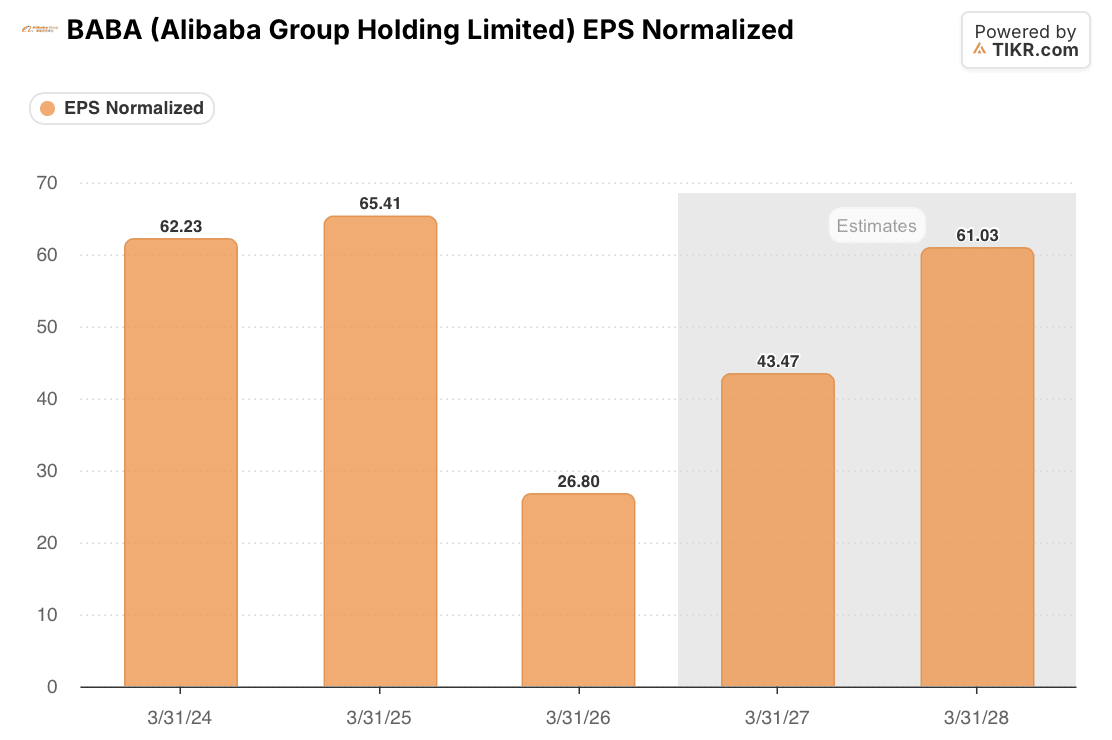
Those estimates are slipping, though. The fiscal 2027 consensus has fallen to RMB 43.47 (about $6.48) per ADS from RMB 44.45 (about $6.63) in late October, and fiscal 2028’s to RMB 61.03 (about $9.10) from RMB 62.05 (about $9.26).
TIKR Tracks 41 Analysts on Alibaba. How Many Say “Buy”?
See the full breakdown of Buy, Hold, and Sell ratings on Alibaba, along with Wall Street’s revenue and earnings estimates, all in one place. More than 500,000 investors use TIKR to research stocks like this one. See Alibaba’s Analyst Ratings
The stock trades at 10x forward earnings, below its five-year average of 13x. Baidu traded at 17x on Nov. 19.

Citi’s $160 works out to about 18x fiscal 2028 estimates. A year from now, nearly two-thirds of the forward window falls in fiscal 2029, but it would take earnings growth of about 57% that year to bring $160 down to the 13x average.
Too Big an Ask for Alibaba Right Now
Alibaba also faces a new securities class action tied to its export-control troubles.
At 10x, the stock looks cheap enough to bounce. But short of that 57% jump, $160 needs the stock to re-rate above its five-year average while estimates drift lower. I think Citi’s target is too optimistic for the next 12 months.
The December-quarter report, due early next year, is the next test. If cloud growth stays near this quarter’s 53% and the free cash flow outflow comes in smaller than RMB 34.5 billion, $160 would look a lot more reasonable.
So What Is Alibaba Stock Actually Worth?
TIKR lets you forecast the future price of any stock in less than a minute. Just enter a few assumptions into TIKR’s valuation model and see what Alibaba could be worth. Start from Wall Street consensus estimates, or adjust the inputs to reflect your own view of the business. It’s free to use.
Disclaimer:
Please note that the articles on TIKR are not intended to serve as investment or financial advice from TIKR or our content team, nor are they recommendations to buy or sell any stocks. We create our content based on TIKR Terminal’s investment data and analysts’ estimates. Our analysis might not include recent company news or important updates. TIKR has no position in any of the stocks mentioned. Thank you for reading, and happy investing!