Key Takeaways
- Eversource Energy yields 4.4% and Chevron yields 3.4%, and both raised their dividends 5.8% a year from fiscal 2020 to fiscal 2025.
- At those rates, $10,000 in Eversource pays about $5,799 over the next 10 years, about $1,360 more than the same amount in Chevron.
- Chevron paid out 41% of its free cash flow as dividends over the 12 months to Sept. 30, 2026, and its net debt is 0.4x EBITDA, against 5.8x at Eversource.
- Eversource has paid out 60% to 63% of its normalized EPS every year for a decade, and a FERC decision on its transmission returns is due to take effect Nov. 30.
Chevron (CVX) nearly tripled its third-quarter profit to $9.9 billion. Days later, Eversource Energy (ES) reported third-quarter earnings that fell from a year ago.
If you’re buying a dividend to hold for a decade, one quarter matters less than whether the check keeps growing. Both companies raised their dividends 5.8% a year from fiscal 2020 to fiscal 2025, but Eversource yields 4.4% to Chevron’s 3.4%, and Chevron carries far less debt for its earnings.
So if you could hold only one for the next 10 years, which should it be?
| Metric | Chevron (CVX) | Eversource Energy (ES) |
|---|---|---|
| Dividend yield | 3.4% | 4.4% |
| Annual dividend | $7.12 | $3.15 |
| Dividend growth, fiscal 2020-2025 | 5.8% a year | 5.8% a year |
| Coverage, last reported | Cash dividend payout ratio, TTM: 41% | Payout ratio of normalized EPS, fiscal 2025: 63% |
| Net debt/EBITDA | 0.4x | 5.8x |
| Interest coverage (EBIT/interest) | 25.1x | 2.3x |
| Forward P/E | 11x | 14x |
6 safe dividend stocks paying retirees 6%+ yields
There are over 100 stocks paying 6%+ annual dividends today.
But after an extensive investment review leveraging TIKR’s proprietary data, we now believe only six of them are truly safe for retirees.
They’re all yours as part of our new investment report. Learn more about how to get access right here.
Chevron’s cover rises and falls with oil
Chevron’s latest quarter shows what the business can earn when prices cooperate. Free cash flow reached $12.0 billion in the third quarter of 2026, up from $4.9 billion a year earlier, and over the 12 months to Sept. 30, 2026, dividends took a well-covered 41% of free cash flow.
The last decade was bumpier. Free cash flow fell short of the dividend in fiscal 2016 and fiscal 2020, and the cash dividend payout ratio climbed from 29% in fiscal 2022 to 77% in fiscal 2025:
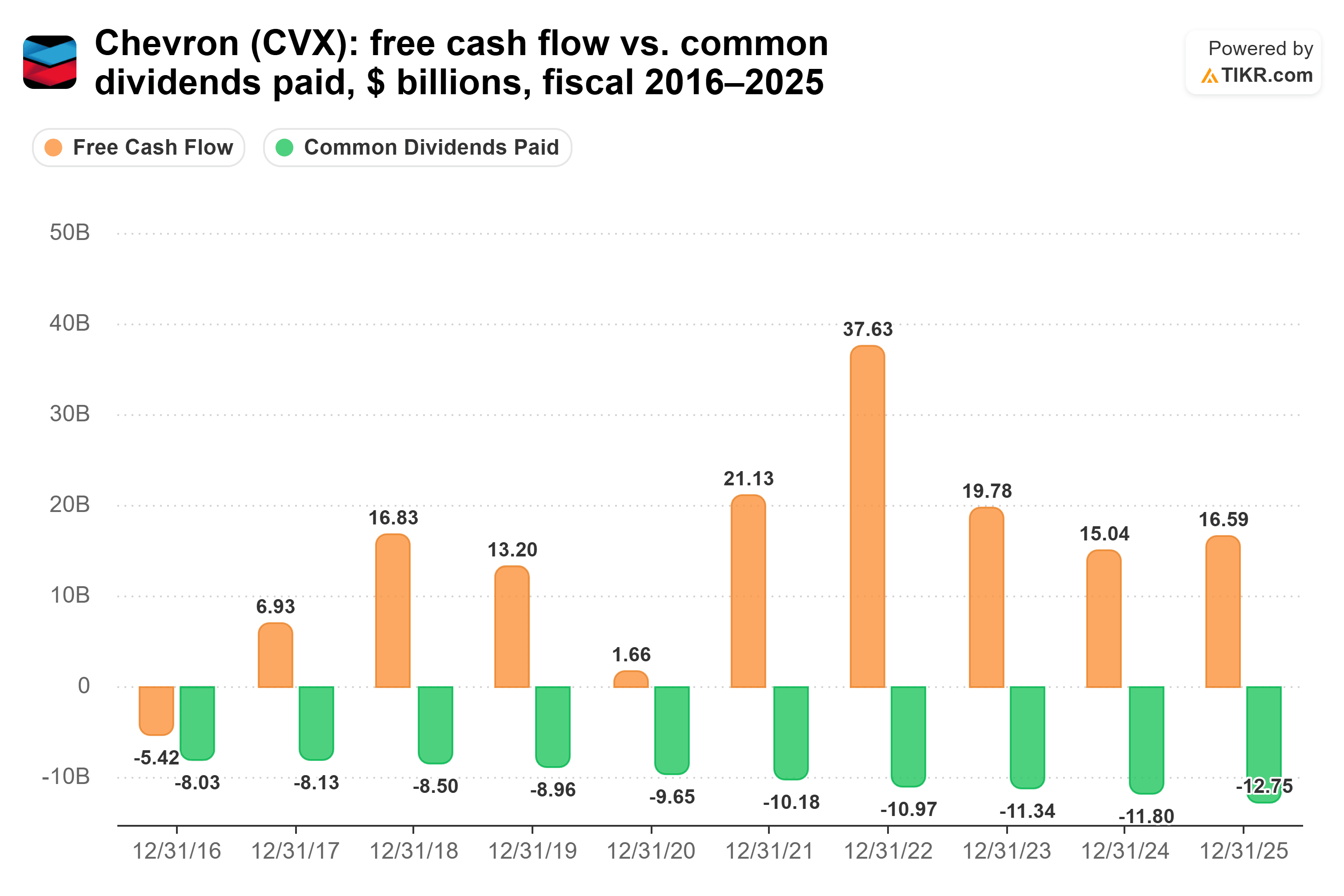
Chevron kept raising its dividend through those years anyway. On the third-quarter call, CFO Eimear Bonner said the first priority for its cash is “to grow the dividend consistently,” and management added, “We’ve done that for 39 consecutive years.”
Its balance sheet carried it through the bad years, and it still could, since net debt is just 0.4x EBITDA. The risk is the one every oil company carries: Chevron’s cash moves with commodity prices.
Eversource’s cover barely moves
Chevron’s cover swings with oil, but Eversource’s has barely moved in a decade. Like other regulated utilities, Eversource funds its building with new debt and stock, so we judge it on its payout ratio of normalized EPS. That ratio stayed between 60% and 63% every year from fiscal 2016 to fiscal 2025:
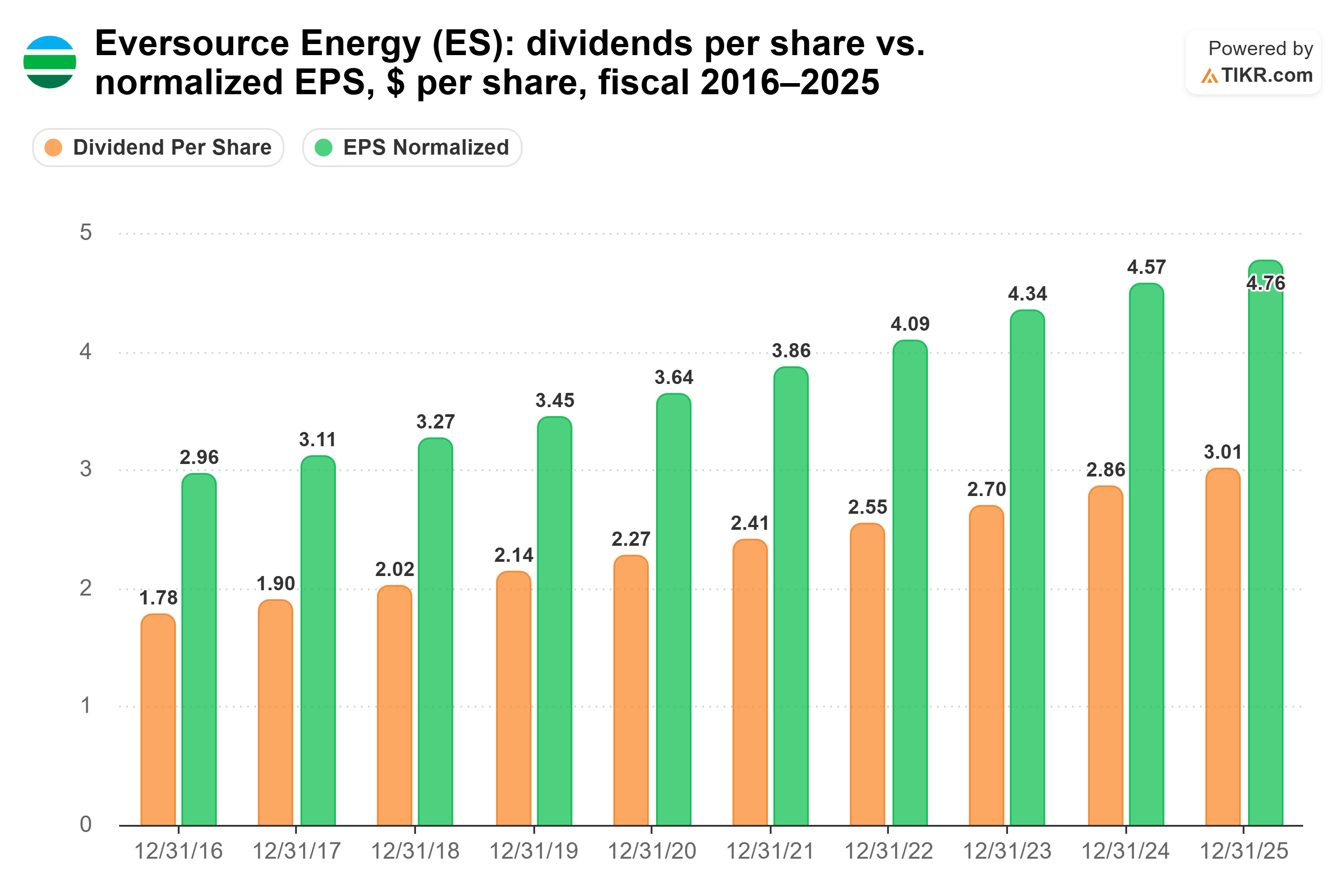
Normalized EPS rose every year on the chart, from $2.96 to $4.76 a share, and the dividend climbed with it, from $1.78 to $3.01. A 10-year holder can plan around growth like that.
The third quarter was softer: non-GAAP EPS fell to $0.92 from $1.19 a year earlier, partly because Eversource sold its Aquarion water business on June 30, 2026. Management narrowed its 2026 guidance to $4.62-$4.70 a share. The main risk is transmission, where FERC cut the allowed return on equity to 9.57% from 10.57%. Eversource has asked for 11.39%, with a decision expected to take effect Nov. 30, 2026.
So which dividend wins?
If I could hold only one of these for the next 10 years, it’d be Eversource. At the 5.8% both have grown at, $10,000 in Eversource pays $444 this year and about $738 in year 10, a 7.4% yield on the original $10,000. The same amount in Chevron pays $340 now and about $565 in year 10. Over the decade, that’s about $5,799 from Eversource and about $4,439 from Chevron.
I’d only take the bigger check if the raises can keep coming, and Eversource’s raises have matched its earnings for a decade. The price is debt, which has run between 6.1x and 7.3x EBITDA since fiscal 2021, though it has come down since fiscal 2024:
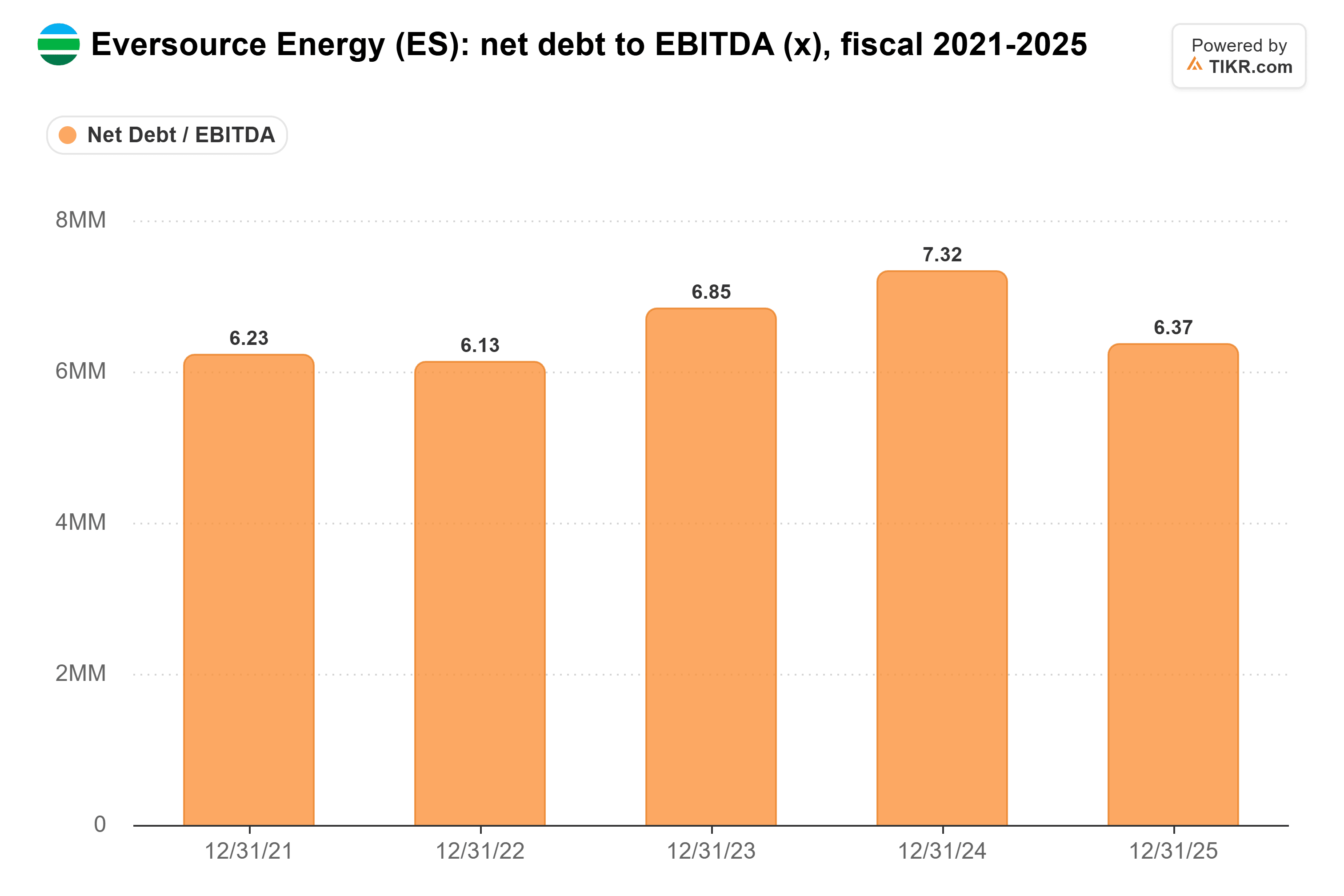
Over the last 12 months, net debt is 5.8x EBITDA, and interest coverage of 2.3x leaves far less room than Chevron’s 25.1x.
That’s Chevron’s case, and it’s a good one: its balance sheet could carry the dividend through another year like fiscal 2020, and today’s payout is well covered. It’s just that Eversource’s dividend comes from earnings that have risen every year for a decade, and it pays more along the way.
Of course, Eversource’s 2026 guidance sits below the $4.76 a share it earned in fiscal 2025. FERC’s ruling on its transmission return is the next thing that could change my answer.
Forget Eversource Energy: 6 safe 6%+ dividend yields you can buy right now
Dividends can hold the key to enormous wealth. But only if you buy the right ones.
Picking the right high-yield dividend stock can be the difference between a dream retirement…and scraping by every month, waiting for the next Social Security check to clear.
We’ve identified six stocks yielding 6%+ that we believe every retiree should know about right now. (And Eversource Energy isn’t one of them.)
Disclaimer:
Please note that the articles on TIKR are not intended to serve as investment or financial advice from TIKR or our content team, nor are they recommendations to buy or sell any stocks. We create our content based on TIKR Terminal’s investment data and analysts’ estimates. Our analysis might not include recent company news or important updates. TIKR has no position in any of the stocks mentioned. Thank you for reading, and happy investing!