Key Takeaways
- General Mills yields 7.2% and BP yields 4.6%, so $10,000 in General Mills pays $720 a year in dividends, against $460 from BP.
- Over each company’s latest twelve months, General Mills paid out 85% of its free cash flow in dividends, against 31% at BP.
- General Mills plans to hold its dividend flat while it pays down debt, and Piper Sandler warned on Nov. 12 of a possible cut.
- BP held its dividend flat on Oct. 30 while it sells assets and puts spare cash toward debt and its Deepwater Horizon liabilities.
General Mills (GIS) yields 7.2% today. On Nov. 12, Piper Sandler downgraded it to Neutral and warned that the dividend could be cut.
BP (BP) yields a smaller 4.6%. But it has spent the past few weeks selling assets and paying down debt, and its dividend takes a far smaller share of its free cash flow.
So which is the better high-yield dividend stock?
| Metric | BP (BP) | General Mills (GIS) |
|---|---|---|
| Dividend yield | 4.6% | 7.2% |
| 5-year dividend growth | 0.6% a year (fiscal 2020-2025) | 3.9% a year (fiscal 2021-2026) |
| Cash dividend payout ratio (TTM) | 31% (to June 30, 2026) | 85% (to Aug. 30, 2026) |
| Net debt/EBITDA (LTM) | 0.5x | 3.7x |
| Interest coverage (LTM) | 6.0x | 4.9x |
6 safe dividend stocks paying retirees 6%+ yields
There are over 100 stocks paying 6%+ annual dividends today.
But after an extensive investment review leveraging TIKR’s proprietary data, we now believe only six of them are truly safe for retirees.
They’re all yours as part of our new investment report. Learn more about how to get access right here.
BP’s dividend comes first
Free cash flow has covered BP’s dividend every year since fiscal 2021. Over that time, free cash flow fell from $28.9 billion in fiscal 2022 to $11.3 billion in fiscal 2025, so the payout ratio rose from 15.1% to 44.9%:
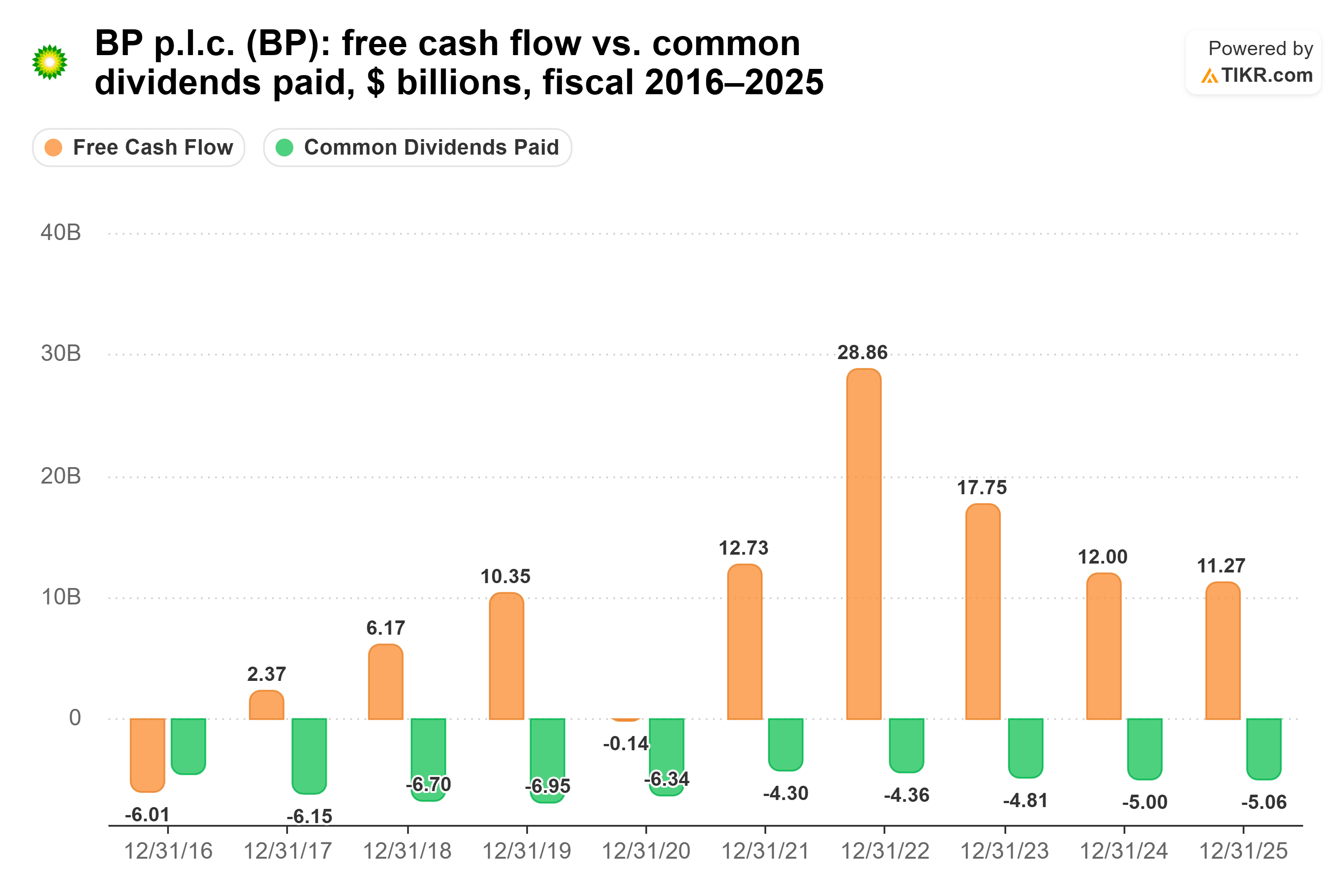
Over the twelve months to June 30, 2026, BP paid $5.06 billion of dividends from $16.14 billion of free cash flow, a well-covered 31%. Net debt fell to $13.87 billion, from $22.3 billion at the end of the second quarter. On Nov. 2, BP closed the sale of 65% of Castrol for $6 billion after tax, earmarked for debt.
“So the dividend is the first call on capital,” CEO Meg O’Neill said on BP’s third-quarter call. Even so, BP held its quarterly dividend at 8.660 cents a share. Spare cash goes first “to address our remaining Deepwater Horizon liabilities in full,” as O’Neill put it. The oil cycle is the risk: BP’s free cash flow was negative in fiscal 2016 and fiscal 2020.
General Mills has frozen its dividend
General Mills is in the opposite spot: a bigger check, and a much thinner cushion. It has paid $0.61 a share each quarter since mid-2025, and the board declared the same again on Sept. 29. From fiscal 2021 to fiscal 2026, free cash flow fell from $2.45 billion to $1.63 billion, the lowest on this chart. Over the same years, dividends paid rose from $1.25 billion to $1.32 billion:
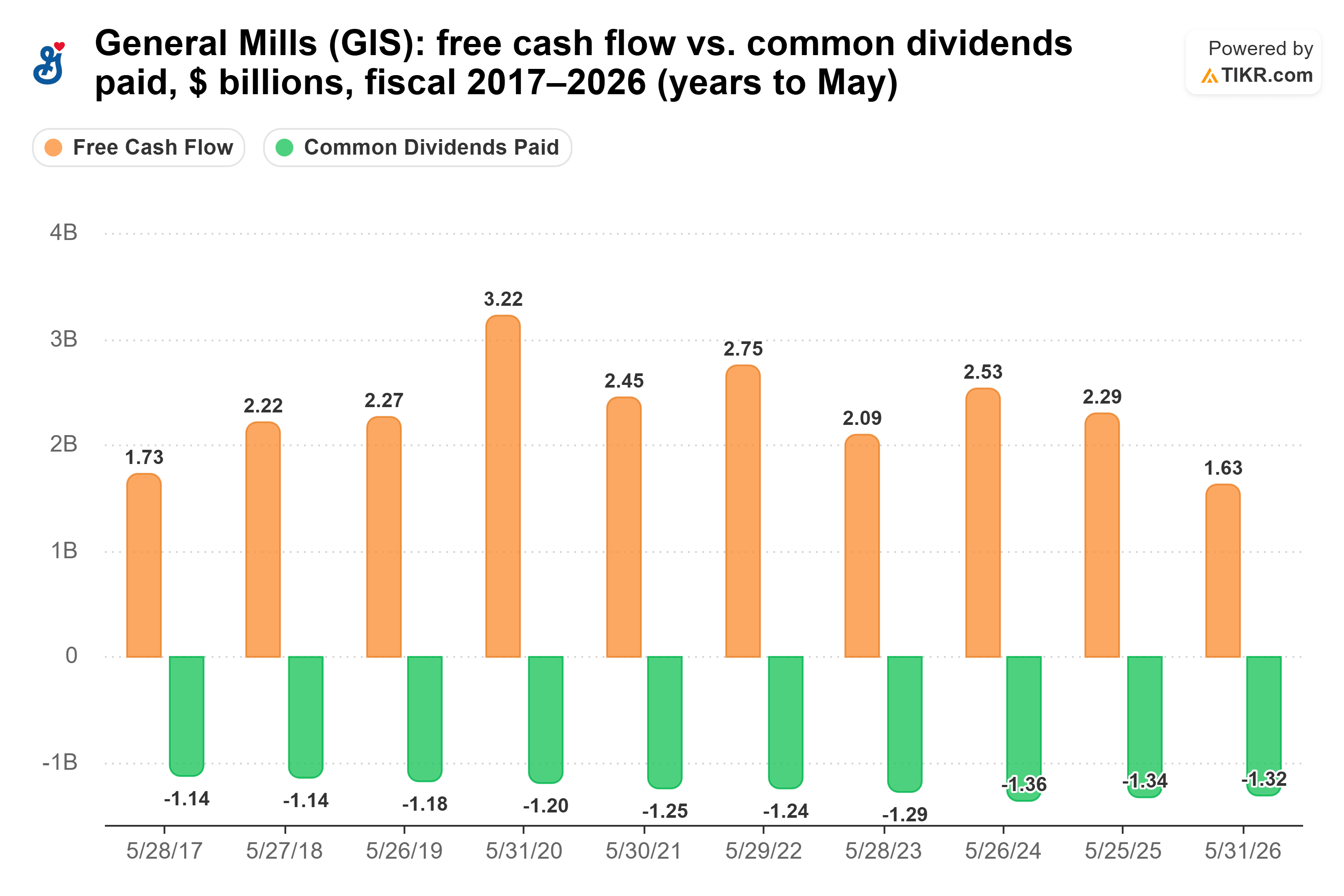
That’s a cash dividend payout ratio of 80.9% for fiscal 2026, up from 45.3% in fiscal 2022. Over the twelve months to Aug. 30, 2026, it reached a risky 85%. Organic sales were flat in the quarter ended Aug. 30, 2026: Foodservice and International each grew 4%, while North America Retail fell 3%. For fiscal 2027, General Mills expects adjusted operating profit to fall 8% to 13% in constant currency.
CFO Kofi Bruce said on Sept. 23 that “in the near term, we expect to maintain the current rate per share while we prioritize deleverage.” Piper Sandler sees worse. It warned that a payout ratio of about 80%, against a historical average of about 50%, raises the risk of a cut. By its estimate, a cut of about 35% in fiscal 2028 would bring the ratio back in line.
So which dividend wins?
BP is the better high-yield dividend stock. Its dividend takes 31% of free cash flow, against General Mills’s 85%. Its net debt is 0.5x EBITDA, against 3.7x at General Mills, which is above the company’s own 3x target:
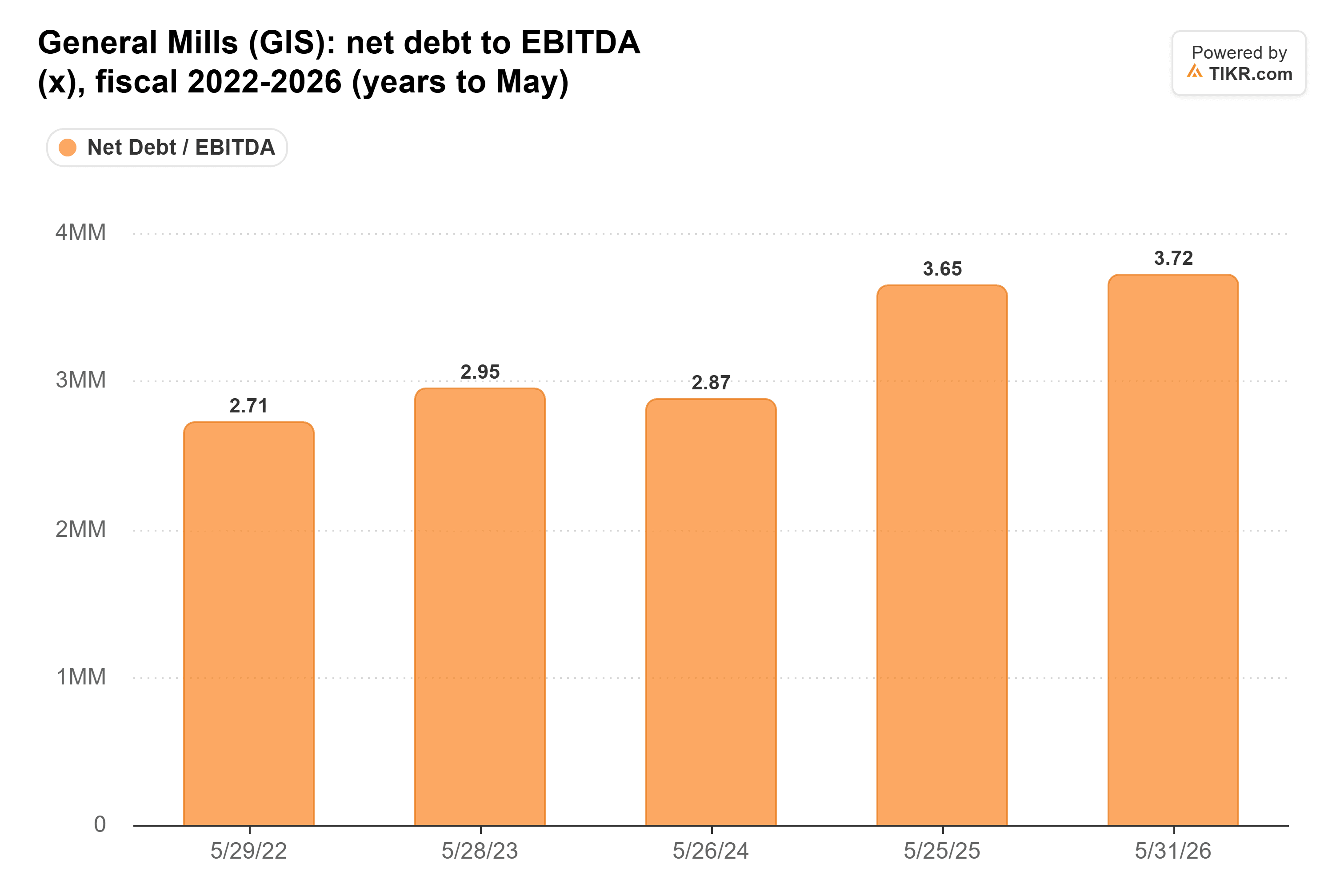
Bruce expects it to take “at least a couple of years” to get back to 3x, so spare cash goes to debt until then.
General Mills does pay more. Today, $10,000 buys $720 a year of dividends, against $460 from BP. But General Mills’s dividend is frozen. At each dividend’s latest pace, BP’s income would pass General Mills’s in about 2036 (BP’s dividend rose 6.5% in fiscal 2025, General Mills’s 1.7% in fiscal 2026).
That doesn’t make General Mills’s dividend doomed. Free cash flow covered it in every year on the chart, Foodservice and International are growing, and management targets at least $750 million of savings in fiscal 2027. It’s just that BP has room to spare if oil prices fall, and General Mills has very little if its retail business keeps slipping.
Of course, BP will lay out its longer-term plan in December. And Dana McNabb, named on Sept. 30 to succeed Jeff Harmening, becomes General Mills’s CEO on Jan. 1, 2027. If she finds a faster way to cut debt, General Mills’s dividend looks a lot safer.
Forget BP: 6 safe 6%+ dividend yields you can buy right now
Dividends can hold the key to enormous wealth. But only if you buy the right ones.
Picking the right high-yield dividend stock can be the difference between a dream retirement…and scraping by every month, waiting for the next Social Security check to clear.
We’ve identified six stocks yielding 6%+ that we believe every retiree should know about right now. (And BP isn’t one of them.)
Disclaimer:
Please note that the articles on TIKR are not intended to serve as investment or financial advice from TIKR or our content team, nor are they recommendations to buy or sell any stocks. We create our content based on TIKR Terminal’s investment data and analysts’ estimates. Our analysis might not include recent company news or important updates. TIKR has no position in any of the stocks mentioned. Thank you for reading, and happy investing!