Key Takeaways
- Apple trades at 37.4x forward earnings, near its 10-year high, after $901 billion of buybacks from 2012 through September 2026.
- At that multiple, $100 of buybacks buys $2.67 of earnings; a Treasury bill pays $3.59 after tax.
- Even with 9.4% EPS growth, the buyback’s earnings yield needs about 3.3 years to pass the bill’s.
- Berkshire Hathaway’s 4.05% earnings yield beats the after-tax bill; Walmart’s 2.35% doesn’t, and its buybacks outran free cash flow.
Apple (AAPL) has returned more than $1 trillion to shareholders since 2012, $850 billion of it through buybacks, CFO Kevan Parekh said on the April earnings call where the board added another $100 billion buyback authorization. For all of fiscal 2026, Apple repurchased $85.8 billion of stock.
Berkshire Hathaway (BRK-B), whose largest stock holding is still Apple, bought back $9.6 billion of its own stock in the third quarter. Walmart (WMT) also bought back stock this fiscal year and trades at an even higher multiple.
On the Nov. 18 episode of We Study Billionaires, co-host Shawn O’Malley put it bluntly:
“Apple is now buying back stock at 40 times earnings, which is something we were sort of allergic to as value investors.”
“Apple’s own cash earns about 4% in treasuries right now,” co-host Daniel Mahncke replied. “So on pure arithmetic, they would probably be better off piling up cash than buying their stock at this price.”
Apple’s Growth Is Solid, but the Price Is Near a Record
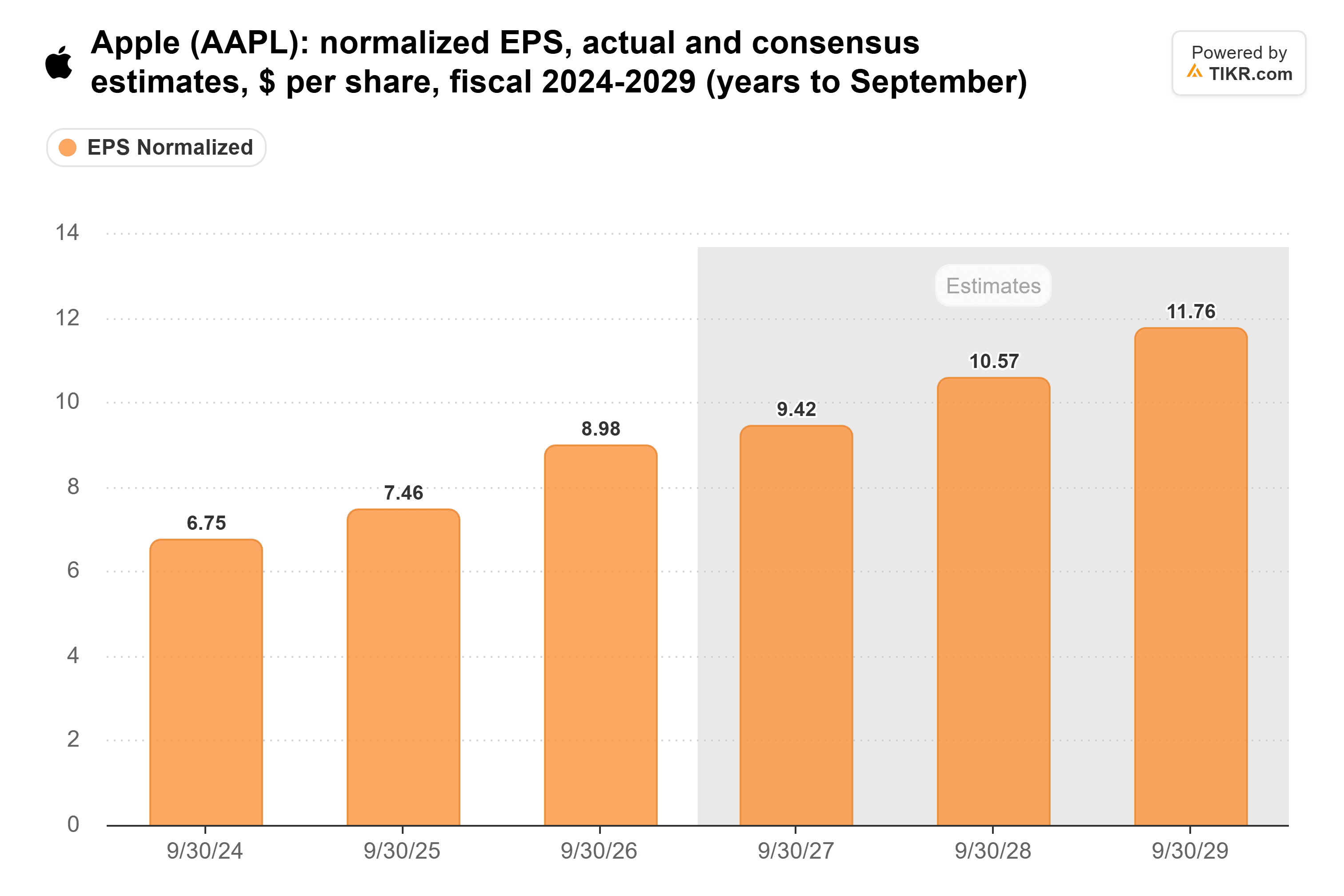
Analysts expect Apple’s normalized EPS to rise from $8.98 in fiscal 2026 to $11.76 in fiscal 2029, about 9.4% a year.
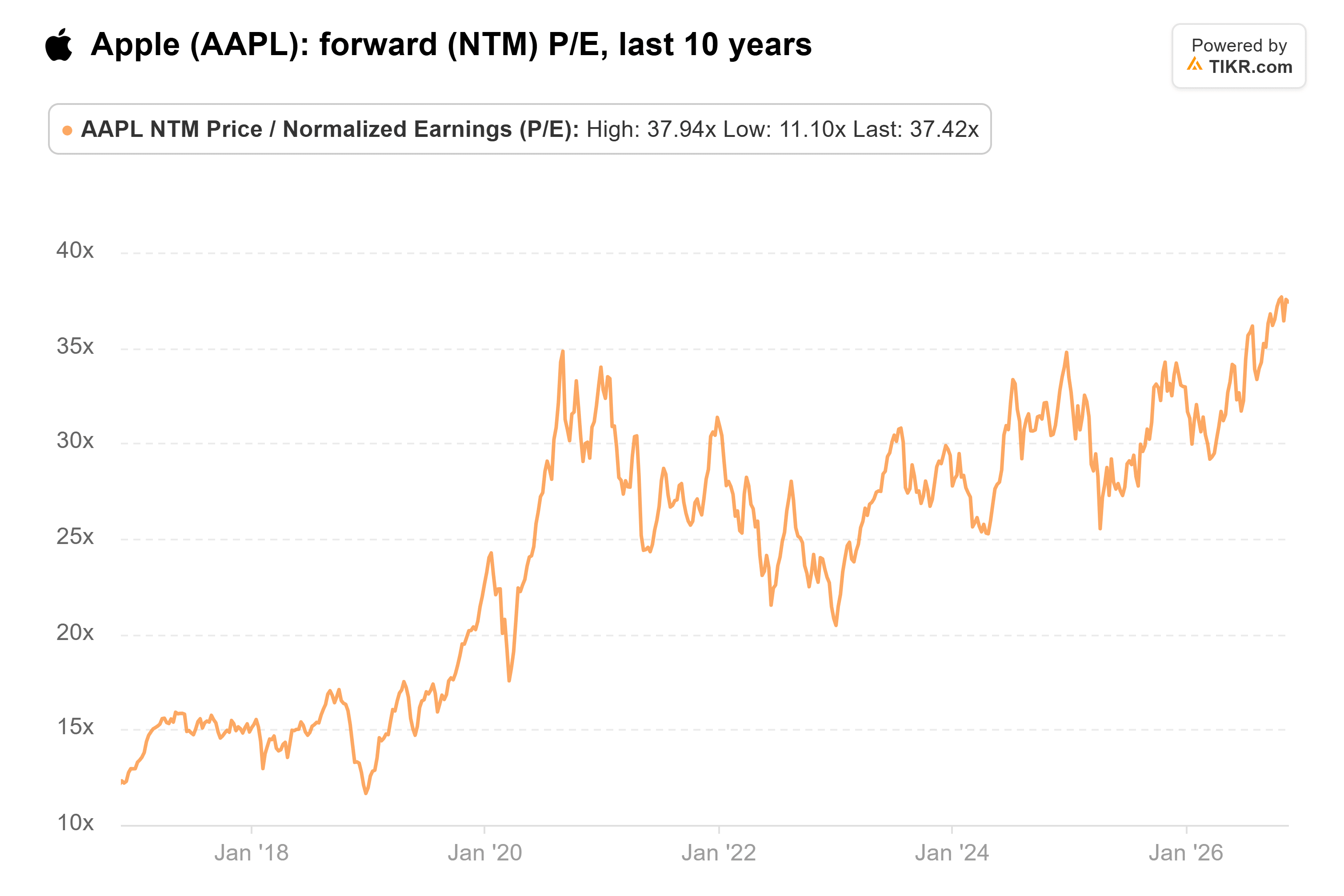
On Nov. 18, Apple traded at 37.4x forward earnings, just under the 10-year high of 37.9x it hit on Oct. 22 and well above its 24.5x average.
Treasury Bills Beat Apple’s Buyback, Even After Tax
At 37.4x, $100 of Apple stock buys about $2.67 of next year’s earnings. Three-month Treasury bills yielded 4.33% on Nov. 17, so the same $100 earns $4.33 a year, or about $3.59 after Apple’s 17.0% fiscal 2026 tax rate.
If bills keep yielding 4.33%, the $2.67 of earnings on a $100 buyback, growing 9.4% a year, takes about 3.3 years to reach the bill’s $3.59 a year after tax.
TIKR Tracks 45 Analysts on Apple. How Many Say “Buy”?
See the full breakdown of Buy, Hold, and Sell ratings on Apple, along with Wall Street’s revenue and earnings estimates, all in one place. More than 500,000 investors use TIKR to research stocks like this one. See Apple’s Analyst Ratings
Apple Has Already Eased Off
On the same April call, Apple dropped its long-standing net-cash-neutral target. Fiscal 2026 buybacks fell $3.5 billion from fiscal 2025’s $89.3 billion, and September-quarter returns of $28 billion matched that quarter’s operating cash flow.
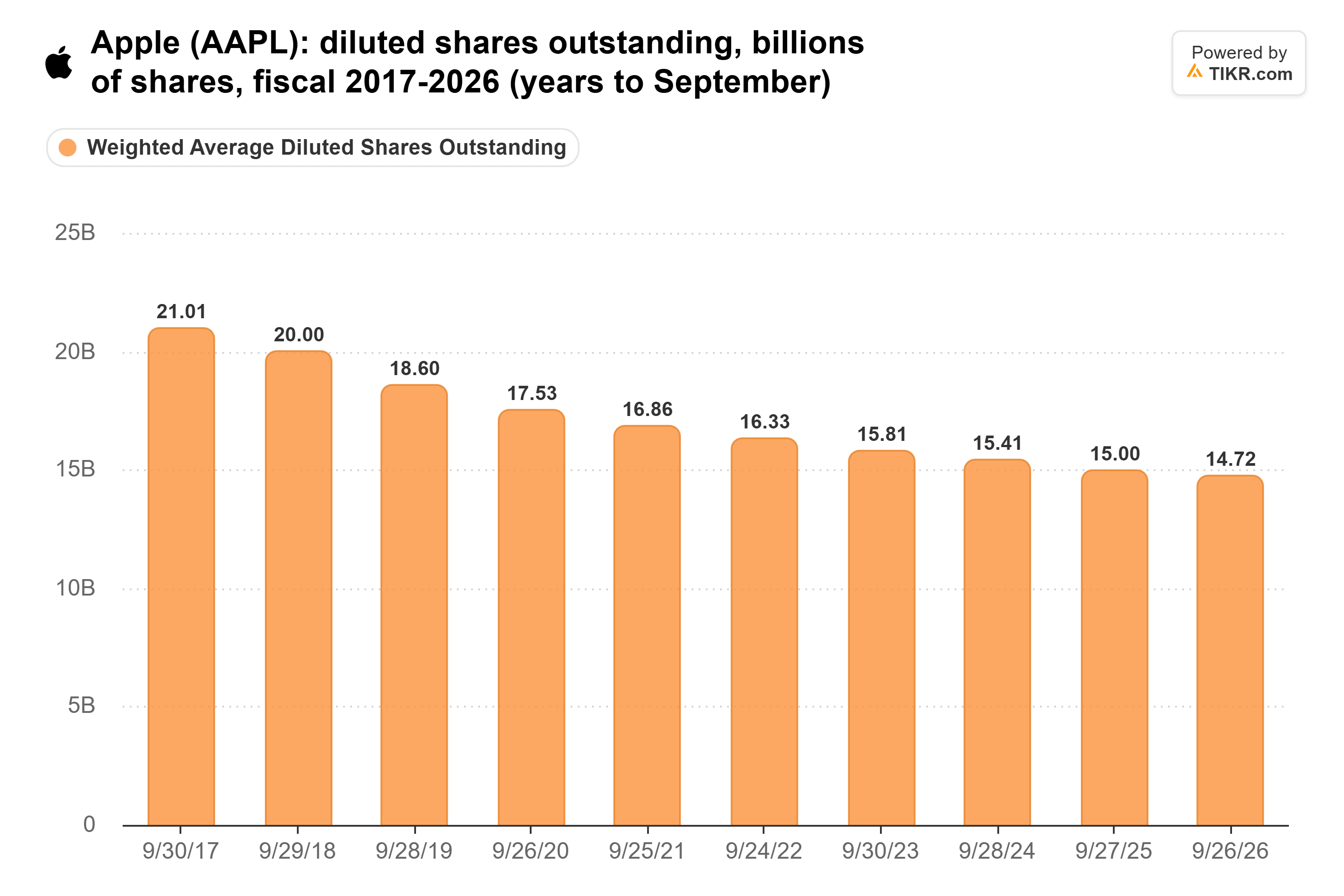
Stock pay still needs covering: Apple issued a net 55.7 million shares to employees in fiscal 2026, about $16.1 billion at its average buyback price. Buybacks have cut the diluted share count from 21.0 billion in fiscal 2017 to 14.7 billion in fiscal 2026, 30% fewer.
Berkshire Clears the Bar, Walmart Doesn’t
At 24.7x forward earnings on Nov. 18, Berkshire’s 4.05% earnings yield beats the after-tax bill, and AP reported its cash pile still grew to $377.4 billion at Sept. 30.
Walmart traded at 42.5x (a 2.35% yield) before it raised its full-year guidance. Over nine months, it spent $7.8 billion on buybacks against $6.8 billion of free cash flow and issued $10.8 billion of long-term debt.
Conclusion
Apple doesn’t need to stop buying. It needs to buy less. Offsetting last year’s stock pay would have cost about $16.1 billion; anything above that bets a 2.67% earnings yield against a 3.59% after-tax bill, yields that only match at about 27.8x forward earnings. Until then, I’d let the cash build. The December-quarter report will show whether buybacks stay near September’s $24.0 billion.
So What Is Apple Stock Actually Worth?
TIKR lets you forecast the future price of any stock in less than a minute. Just enter a few assumptions into TIKR’s valuation model and see what Apple could be worth. Start from Wall Street consensus estimates, or adjust the inputs to reflect your own view of the business. It’s free to use.
Disclaimer:
Please note that the articles on TIKR are not intended to serve as investment or financial advice from TIKR or our content team, nor are they recommendations to buy or sell any stocks. We create our content based on TIKR Terminal’s investment data and analysts’ estimates. Our analysis might not include recent company news or important updates. TIKR has no position in any of the stocks mentioned. Thank you for reading, and happy investing!