Key Takeaways
- Advanced Micro Devices (AMD) stock declined approximately 11% from October 30 to November 6, closing near $449 as semiconductor valuations came under pressure.
- Intel (INTC) warned that PC weakness could extend into 2027, while AMD’s third-quarter data center revenue surged 97% to $8.5 billion.
- AMD expects approximately $17 billion in fourth-quarter revenue, but its premium valuation leaves limited room for weaker earnings growth.
What Happened?
Advanced Micro Devices (AMD) stock dropped approximately 11% from October 30 to November 6, closing near $449 as investors weighed weakening PC demand against AMD’s accelerating AI infrastructure growth.
Intel’s October 29 earnings report added to concerns about semiconductor demand, with fourth-quarter revenue guidance of $15 billion to $16 billion and a warning that PC weakness could continue into 2027.
Intel CFO David Zinsner said, “we see the PC slowdown continuing at least through the first half of next year,” highlighting continued uncertainty across consumer computing markets.
However, AMD’s November 3 earnings report presented a stronger picture of semiconductor demand.
The company reported third-quarter revenue of $13.4 billion, up 45% year over year, while adjusted earnings per share climbed 74% to $2.09.
Data center revenue surged 97% to $8.5 billion, driven by strong demand for AMD Instinct GPUs and EPYC server processors.
AMD also projected approximately $17 billion in fourth-quarter revenue, representing 66% annual growth at the midpoint.
Despite those results, shares remained volatile, falling 17% on November 5 before rebounding 11% on November 6 as investors reassessed semiconductor valuations.
Intel’s PC Warning Is a Smaller Problem for AMD
Intel’s warning remains relevant because AMD still has meaningful exposure to consumer and commercial PC markets.
AMD’s third-quarter client revenue increased 7% to $2.9 billion, although its broader Client and Gaming segment declined 8% to $3.7 billion.
However, data center revenue represented approximately 64% of AMD’s quarterly sales, making AI infrastructure considerably more important to its overall growth.
Intel’s data center and AI revenue increased 78% to $7.3 billion, demonstrating continued enterprise demand for server processors despite weaker PC conditions.
Intel also acknowledged supply constraints affecting its ability to meet strong Xeon demand, potentially creating opportunities for AMD to expand its EPYC server business.
AMD’s growing AI partnerships, including Helios rack-scale systems installed and undergoing testing at Meta, further support its long-term growth prospects.
AMD’s Earnings Outlook Supports Continued Growth
TIKR’s October 30 consensus estimates projected AMD’s normalized earnings per share would increase from $7.62 in 2026 to $15.93 in 2027, more than doubling.
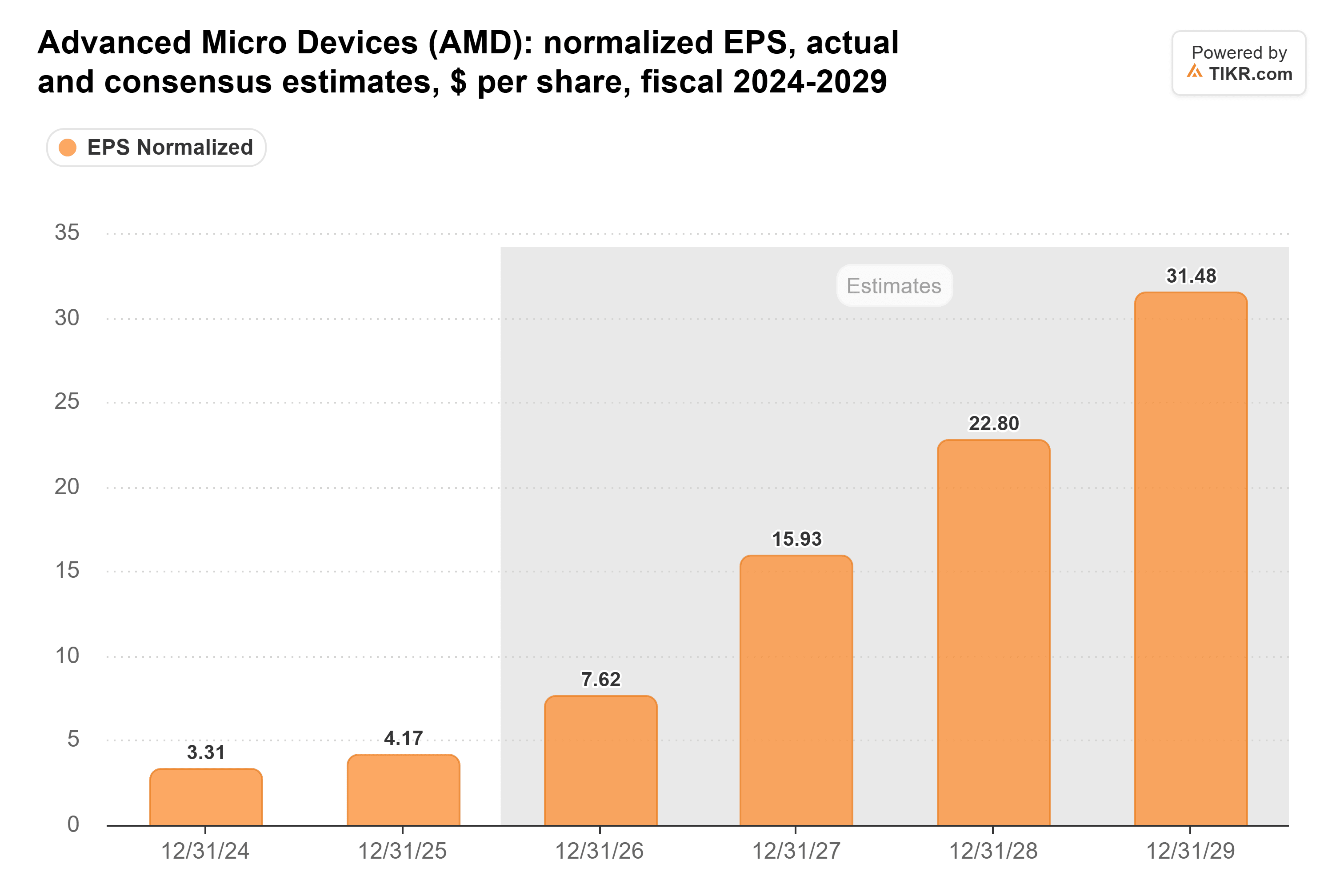
AMD’s latest results support the broader growth thesis, with data center revenue nearly doubling and non-GAAP operating income increasing 75% year over year.
Management’s fourth-quarter revenue outlook of approximately $17 billion also suggests continued momentum heading into 2027.
However, the October 30 earnings forecasts predate AMD’s November 3 results, and updated estimates may differ as analysts reassess AI accelerator demand and profitability.
The biggest question is whether AMD can sustain rapid revenue growth while expanding margins as production scales and competition intensifies.
Is AMD Stock Undervalued or Overvalued?
AMD’s recent decline has improved its valuation, although investors continue paying a premium for its expected earnings growth.
The stock traded at approximately 45x forward earnings on October 30, compared with its five-year average near 35x, before experiencing additional selling pressure.
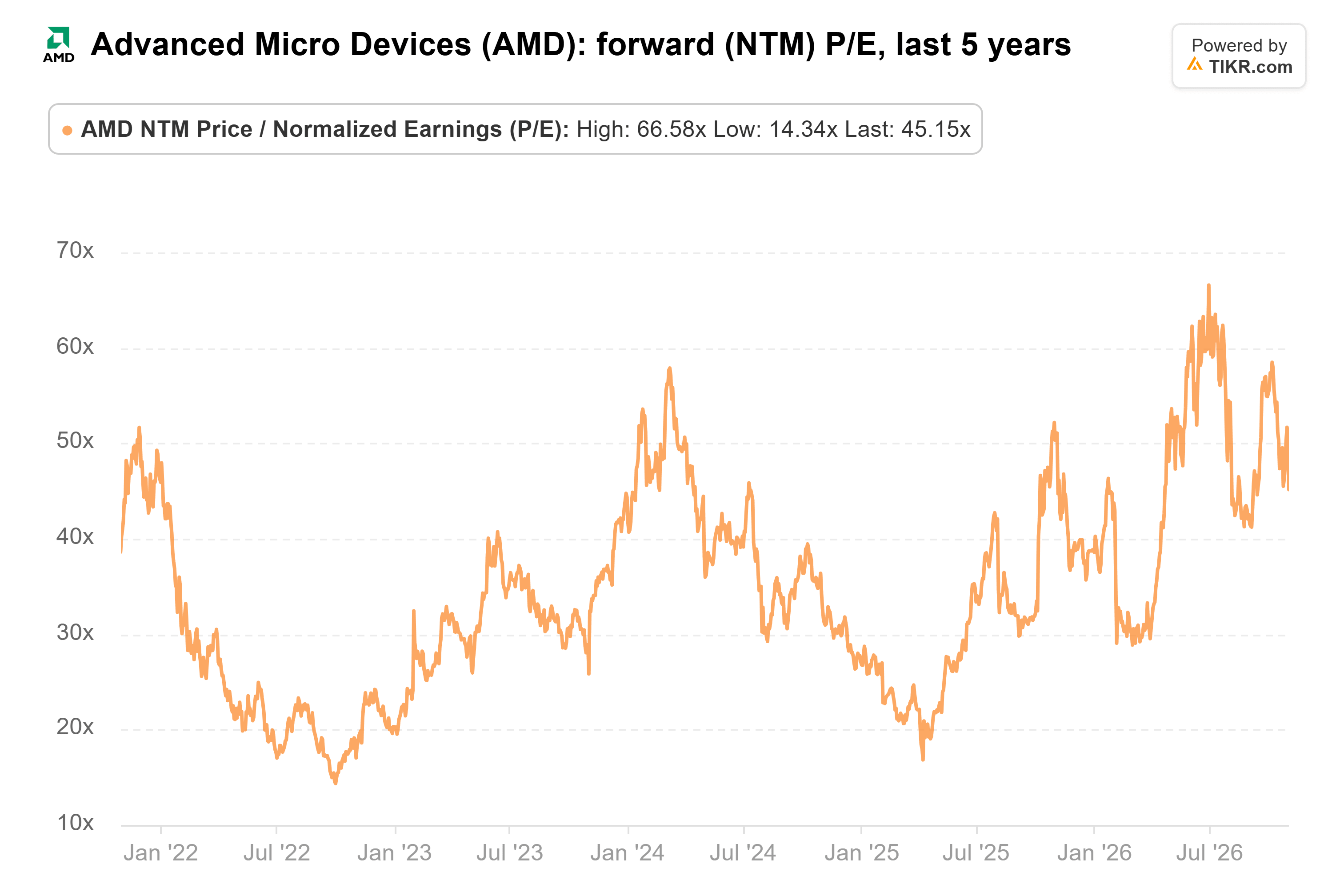
TIKR’s October 31 average analyst price target of approximately $640 implies around 43% upside from AMD’s November 6 closing price, although that target predates the latest earnings announcement.
However, weaker PC demand, supply constraints, and elevated expectations create meaningful downside risks if AMD struggles to maintain its growth trajectory.
AMD appears fairly valued at best relative to its historical earnings multiple. While accelerating AI demand and server market share gains support its long-term growth prospects, the stock’s premium valuation leaves limited room for disappointing earnings or margins.
So what is AMD stock actually worth?
TIKR lets you forecast the future price of any stock in less than a minute. Just enter a few assumptions into TIKR’s valuation model and see what AMD could be worth. Start from Wall Street consensus estimates, or adjust the inputs to reflect your own view of the business. It’s free to use.
Disclaimer:
Please note that the articles on TIKR are not intended to serve as investment or financial advice from TIKR or our content team, nor are they recommendations to buy or sell any stocks. We create our content based on TIKR Terminal’s investment data and analysts’ estimates. Our analysis might not include recent company news or important updates. TIKR has no position in any of the stocks mentioned. Thank you for reading, and happy investing!