Key Takeaways
- A United Launch Alliance Vulcan rocket failed on Sunday and destroyed 40 Amazon Leo satellites on the first of 38 Vulcan launches Amazon has bought.
- Amazon can easily afford new satellites, but Vulcan was supposed to carry more than 1,500 of them, and few other rockets have room for the rest.
- Rocket Lab CEO Peter Beck says launch is extremely constrained, and his company’s Neutron rocket has no open slots until the 2030s.
- SpaceX launches Starlink on its own rockets, so every month Leo waits for a ride widens SpaceX’s lead.
Amazon (AMZN) just found out how hard it is to build a satellite network on someone else’s rockets.
On Sunday, Nov. 15, a Vulcan rocket from United Launch Alliance (ULA), the joint venture of Boeing and Lockheed Martin, failed about 10 minutes after liftoff from Cape Canaveral. It destroyed 40 of Amazon’s Leo internet satellites. It was ULA’s first mission failure since the venture formed in 2006.
The failure also came at a terrible time to need a new ride. Six days earlier, Rocket Lab (RKLB) CEO Peter Beck told investors on the company’s third-quarter call, “Launch is extremely constrained and that is exactly the situation we predicted.”
That’s good news for SpaceX (SPCX), which launches Starlink on its own rockets.
TIKR tracks 62 analysts on Amazon. How many say “Buy”?
See the full breakdown of Buy, Hold, and Sell ratings on Amazon, along with Wall Street’s revenue and earnings estimates, all in one place. More than 500,000 investors use TIKR to research stocks like this one. See Amazon’s Analyst Ratings
Vulcan was supposed to be Leo’s workhorse
Losing 40 satellites barely dents a company Amazon’s size, but losing the rocket hurts a lot more. Sunday’s flight was the first of 38 Vulcan launches Amazon has bought. Vulcan was set to carry more than 1,500 first-generation Leo satellites, more than any other rocket in the program.
ULA said it doesn’t have specific data yet on what went wrong. Sunday’s launch was Vulcan’s first in nine months, after investigations into its side boosters and its BE-4 engines, and another long investigation could keep it on the ground for months.
Amazon’s other rockets can’t do much right now. Blue Origin’s New Glenn, which holds 24 of Amazon’s launch reservations, has been grounded since a launchpad explosion in May, and Blue Origin now targets January 2027 for its return. SpaceX is no longer taking new Falcon 9 bookings, according to Reuters. Amazon does have 10 Falcon 9 flights it hasn’t used yet, and an Ariane 6 is set to carry 36 Leo satellites as early as Nov. 23.
That leaves Leo with just under 400 satellites launched across 14 missions, about 12% of what it needs. Amazon has to deploy and operate all 3,232 first-generation satellites by July 30, 2029. If it falls short, the FCC cuts its license to the number of satellites working on that date.
The next open slots are in the 2030s
Beck wasn’t talking about Amazon, but Rocket Lab’s own order book shows how tight launch has become. Rocket Lab signed eight Neutron missions last quarter for more than $515 million, several at a base price of $70 million a launch, and Neutron hasn’t even flown yet. Beck said Neutron’s first 16 launches are booked “and the next available slots are in the 2030s.”
Analysts expect Rocket Lab’s revenue to nearly triple, from $602 million in 2025 to about $1.76 billion in 2028, a stretch that includes Neutron’s first flights:
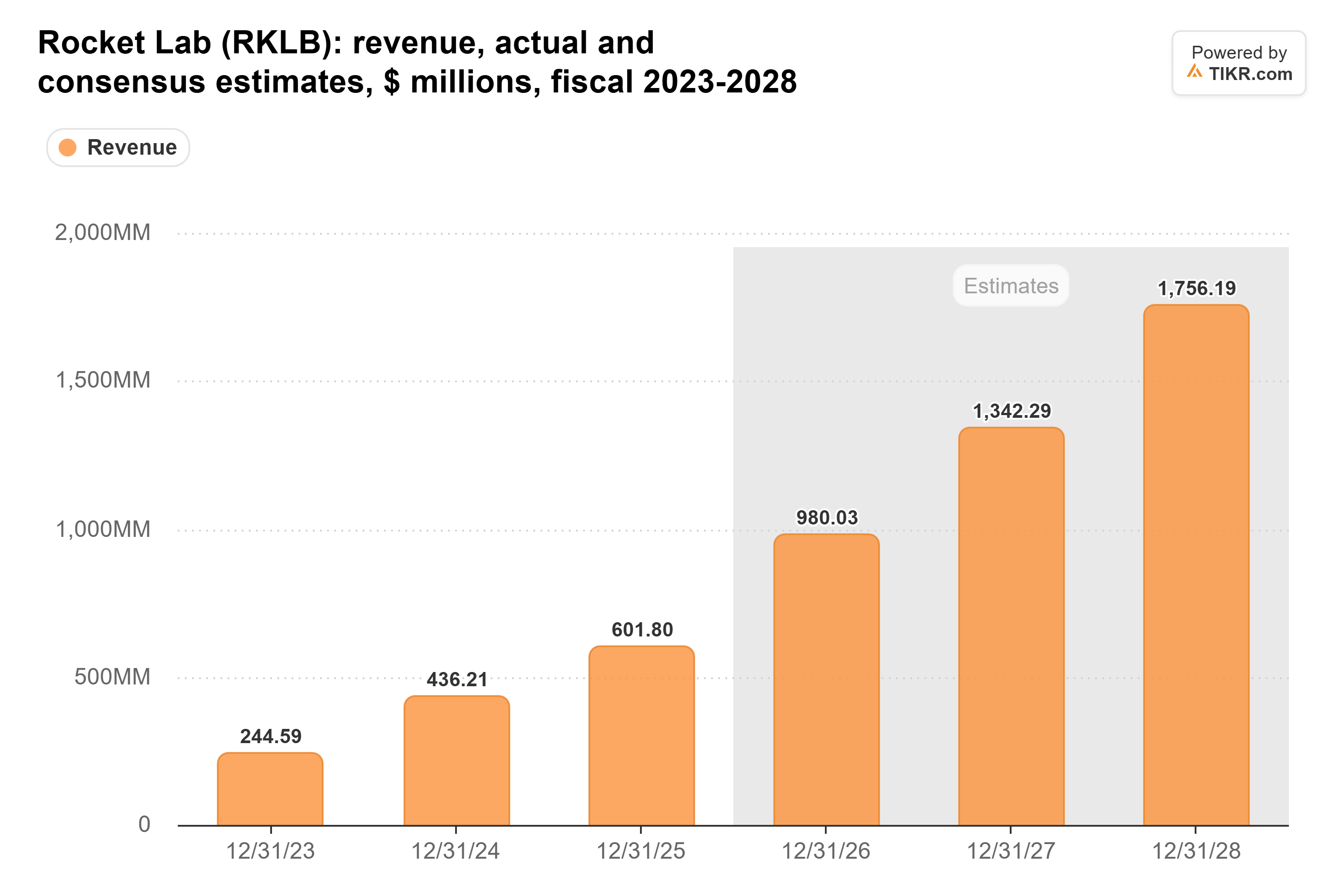
(Most of Rocket Lab’s revenue today comes from its space systems business: $214.8 million of last quarter’s record $267.8 million.)
SpaceX doesn’t have to wait in line
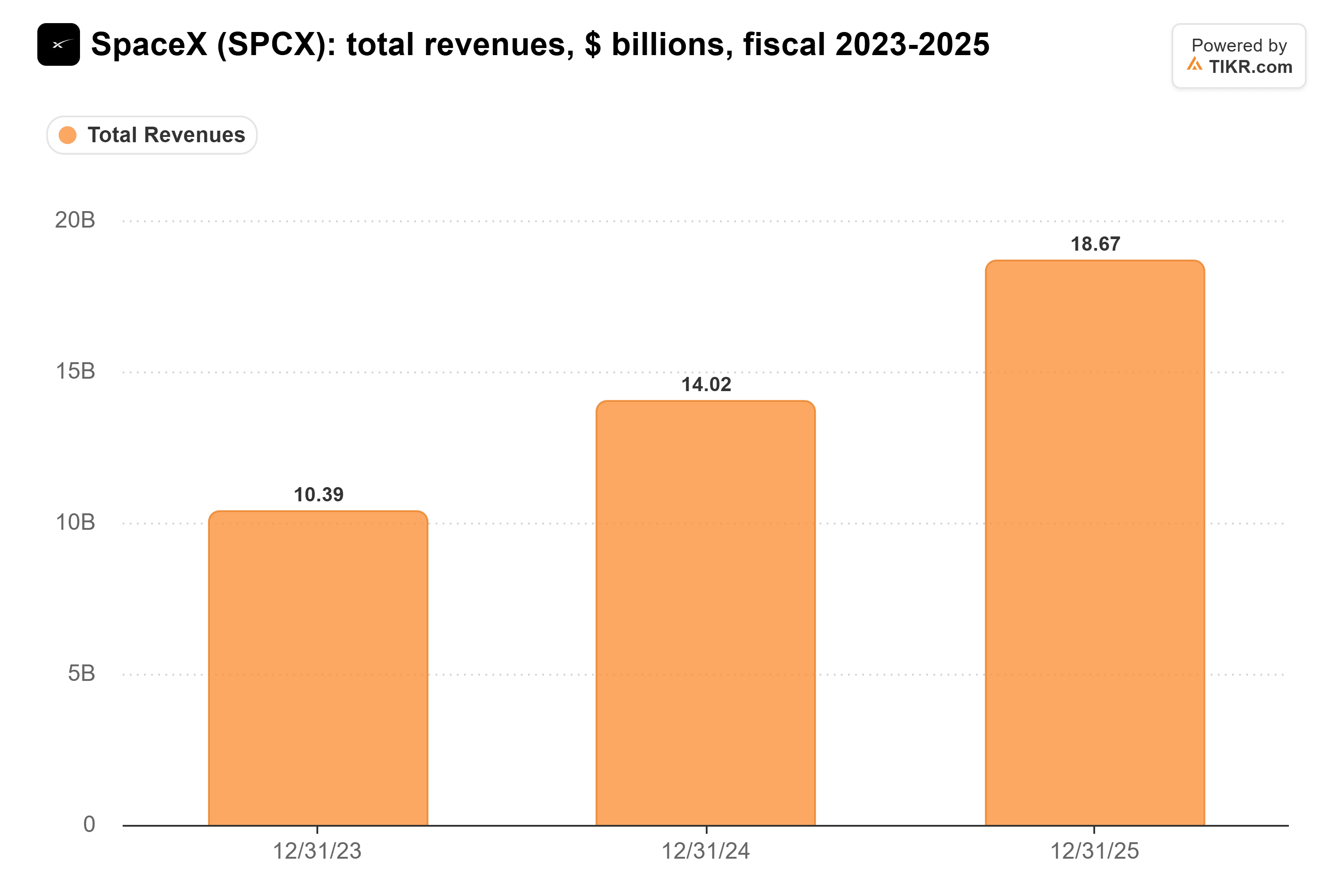
SpaceX doesn’t have Amazon’s problem, since it launches its own satellites. Starlink already has more than 11,000 satellites and millions of customers worldwide. SpaceX’s revenue grew from $10.4 billion in 2023 to $18.7 billion in 2025:
SpaceX even makes money from its rival’s catch-up effort. It flew 72 Amazon satellites on three Falcon 9 missions in 2025, and Amazon has since bought 10 more flights. And now that SpaceX has caught Starship from orbit for the first time, it’s closer to moving Starlink onto its bigger rocket.
Money isn’t Amazon’s problem
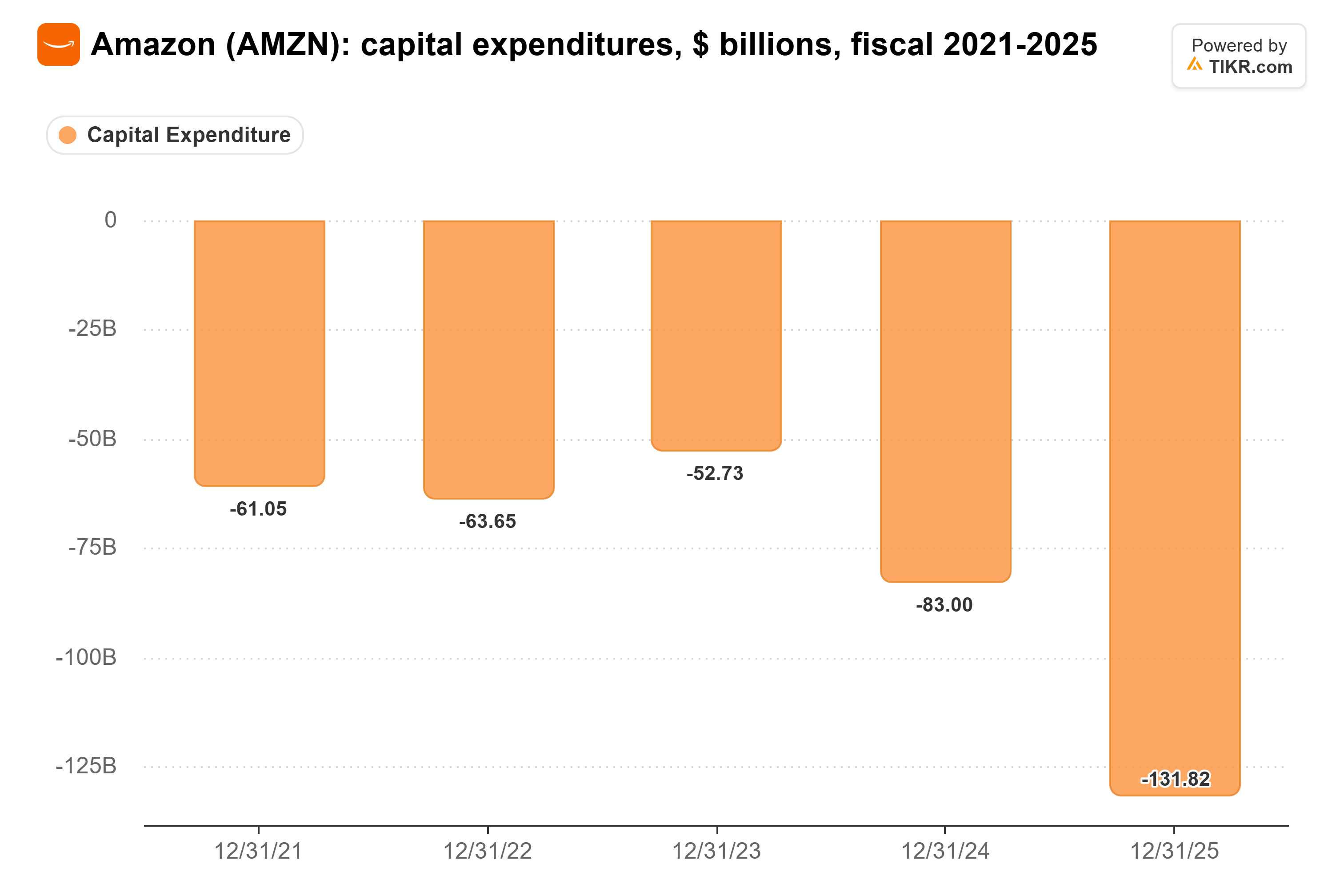
Amazon can certainly pay for new satellites, and for rides on other rockets. It spent $132 billion on capital expenditures in 2025, and management expects about $220 billion of cash capex this year:
More rockets could open up for hire, too. Tim Farrar, a satellite communications and wireless spectrum consultant, said on X that Musk should promise outside customers enough Falcon 9 launches, maybe 50 or more a year, for as long as necessary. He sees room for it, with a big if: “There could be 100+ launches available for third parties in 2027 if tempo was maintained and Starlink stops launching on F9 in early 2027. But I don’t expect tempo to be maintained.”
Either way, that’s Musk’s call. Amazon can pay whatever it takes, but the spare launches it needs most belong to its biggest rival. And Vulcan won’t fly again until ULA knows what went wrong.
Advantage, SpaceX
For Amazon, the satellites are the cheap part of this setback. Every month Vulcan sits on the ground, Starlink keeps signing up customers while Leo waits for a ride, and the 2029 deadline doesn’t move. That widens SpaceX’s lead, since Starlink launches on SpaceX’s own schedule and Leo launches on everyone else’s.
Of course, a quick answer from ULA or a clean Ariane 6 flight would shorten the delay. What ULA finds is the next thing to watch.
So what is SpaceX stock actually worth?
TIKR lets you forecast the future price of any stock in less than a minute. Just enter a few assumptions into TIKR’s valuation model and see what SpaceX could be worth. Start from Wall Street consensus estimates, or adjust the inputs to reflect your own view of the business. It’s free to use.
Disclaimer:
Please note that the articles on TIKR are not intended to serve as investment or financial advice from TIKR or our content team, nor are they recommendations to buy or sell any stocks. We create our content based on TIKR Terminal’s investment data and analysts’ estimates. Our analysis might not include recent company news or important updates. TIKR has no position in any of the stocks mentioned. Thank you for reading, and happy investing!