Key Takeaways
- The Fed counts more than $680 billion of AI computing debt issued this year, five times 2023’s total.
- The New York Times reported one of six lenders in Nvidia’s $500 billion program discussed quitting.
- Borrowers like Oracle look more exposed than cash-rich Meta.
- Nvidia’s Nov. 17 report tests how much credit its customers can get.
The Federal Reserve put a number on the AI debt boom on Friday, Nov. 13. The same day, The New York Times reported that one of six lenders in a plan by Nvidia (NVDA) to mobilize more than $500 billion of outside financing was discussing dropping out.
Credit, not demand, now looks like the tighter limit on the AI build-out. That hurts builders that borrow, like Oracle (ORCL), far more than builders that pay from cash, like Meta Platforms (META).
Goldman Sachs (GS) is one of the six, though the Times didn’t name the one wavering. “No loans have closed,” it reported. A day earlier, Bloomberg reported customers and partners wanted Nvidia to offer a bigger backstop.
Five Times 2023’s Debt, and More Off the Books
The Fed’s financial stability report puts debt issued for data centers and advanced computing at more than $680 billion as of October, up from $130 billion in all of 2023. CNBC’s Steve Liesman, reading out the report on Closing Bell, called that “up five-fold from 2023.” Seven big AI spenders, Nvidia, Oracle and Meta among them, also have more than $3 trillion of undiscounted leases yet to start, take-or-pay contracts and guarantees on top of their debt.
The Fed also flagged circular financing: chipmakers and big tech guaranteeing and investing in smaller, riskier customers. Nvidia fits: it has invested or committed nearly $50 billion to frontier AI labs and guarantees up to $105 billion of OpenAI’s Ohio campus lease.
Oracle Borrows to Build. Meta Mostly Doesn’t Have To
Oracle’s total debt went from $75.9 billion in fiscal 2022 to $167 billion in fiscal 2026 (year to May).
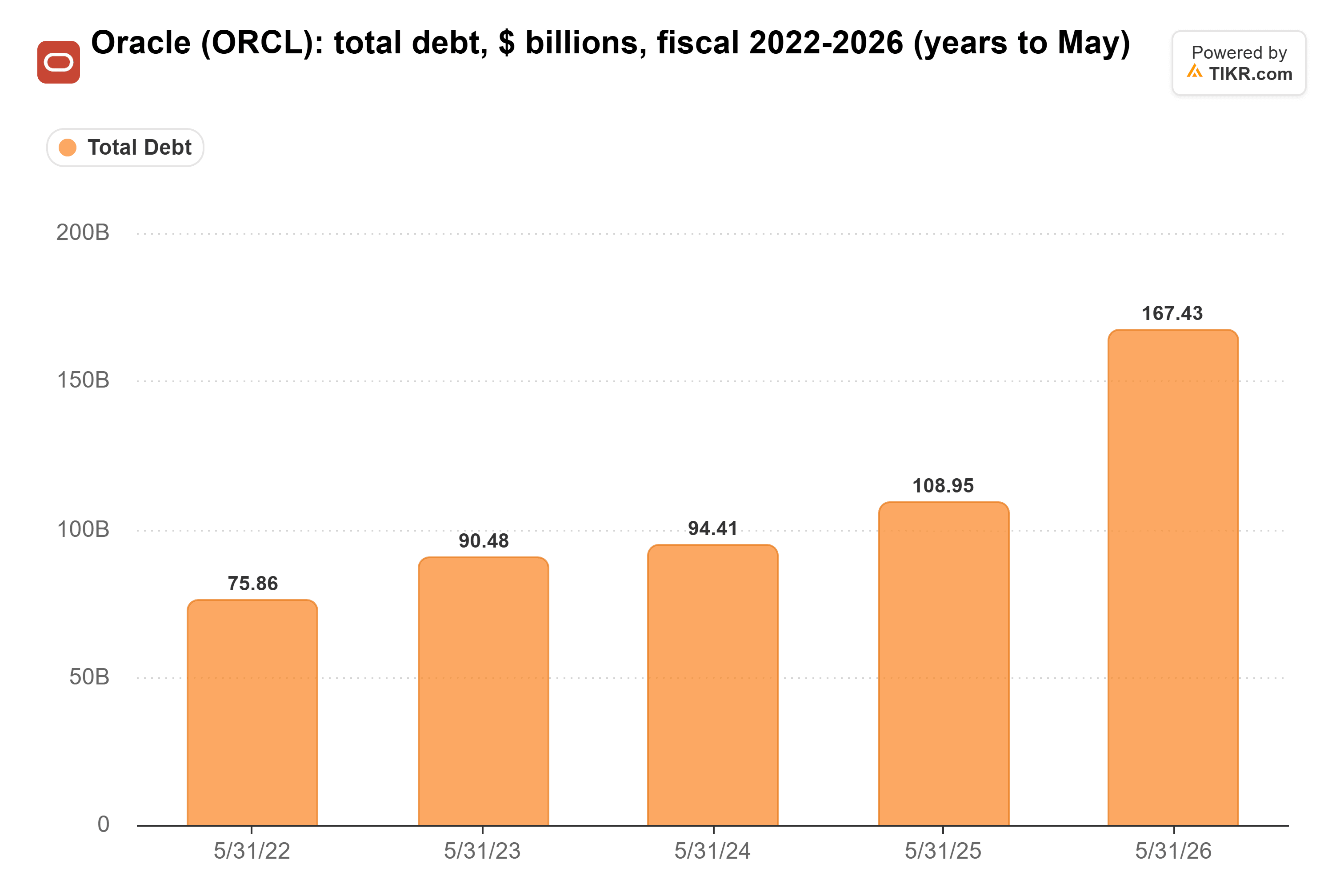
Fiscal 2026 capex of $55.7 billion left free cash flow at negative $23.7 billion, and it plans to raise about $40 billion of debt and equity this fiscal year.
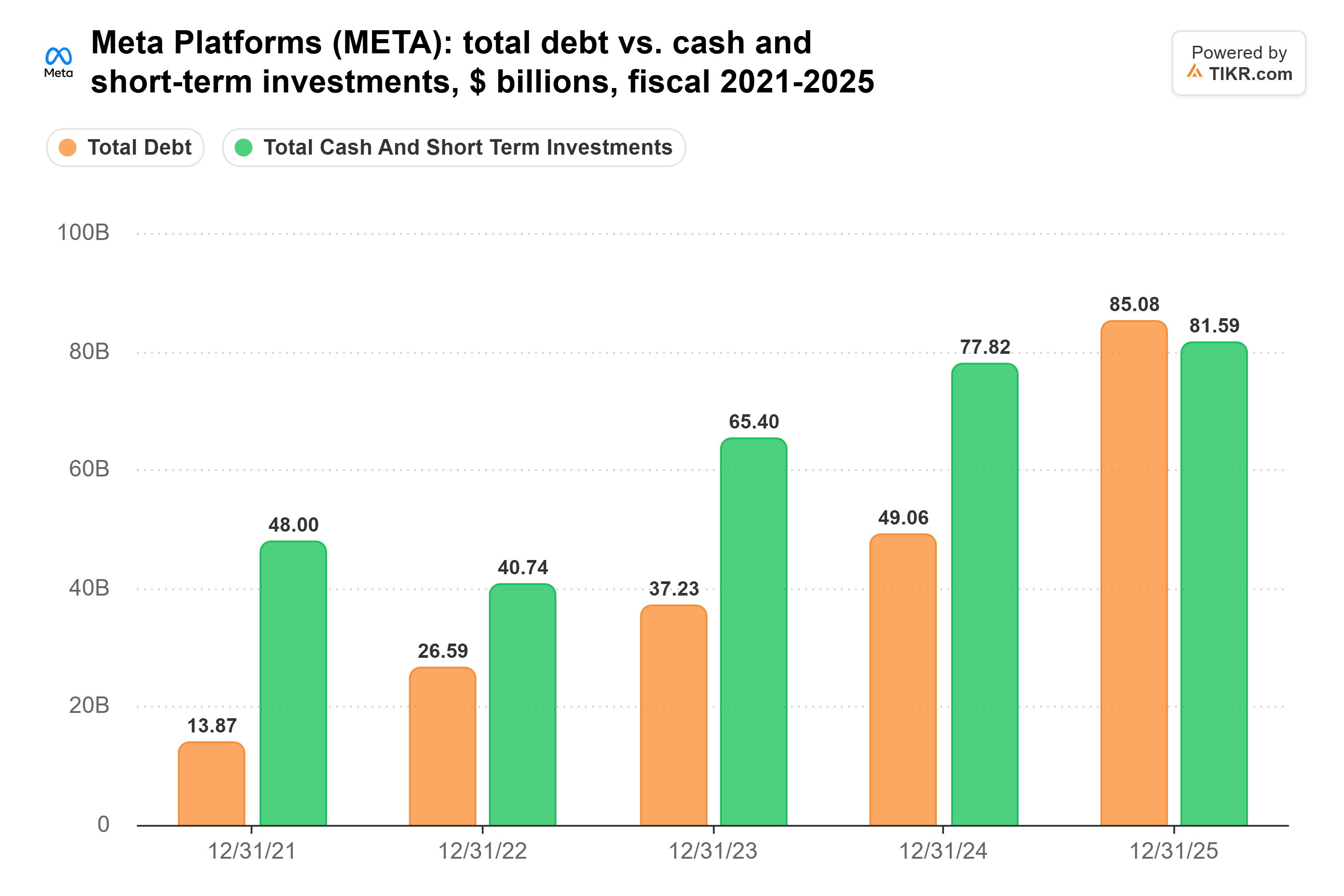
Meta’s debt also jumped, from $49.1 billion at the end of 2024 to $85.1 billion a year later. But it held $81.6 billion of cash and marketable securities and produced $43.6 billion of free cash flow after $72.2 billion of capex.
TIKR Tracks 62 Analysts on Nvidia. How Many Say “Buy”?
See the full breakdown of Buy, Hold, and Sell ratings on Nvidia, along with Wall Street’s revenue and earnings estimates, all in one place. More than 500,000 investors use TIKR to research stocks like this one. See Nvidia’s Analyst Ratings
The Bond Market Is Open, at a Price
Bloomberg Intelligence’s Robert Schiffman still expects “hundreds of billions of dollars of bond deals next year,” he said on the Bloomberg Intelligence podcast on Nov. 12, if rates don’t scare buyers off. That week, the 10-year Treasury yield rose about 30 basis points to 5.15% after Fed Governor Christopher Waller opened the door to a half-point hike.
That holds for Meta, not for the smaller labs and clouds Nvidia’s program was meant to fund. Lenders were already turning reluctant on AI debt before this week.
Nvidia’s Cash Is Fine. Its Customers’ Credit Is the Question
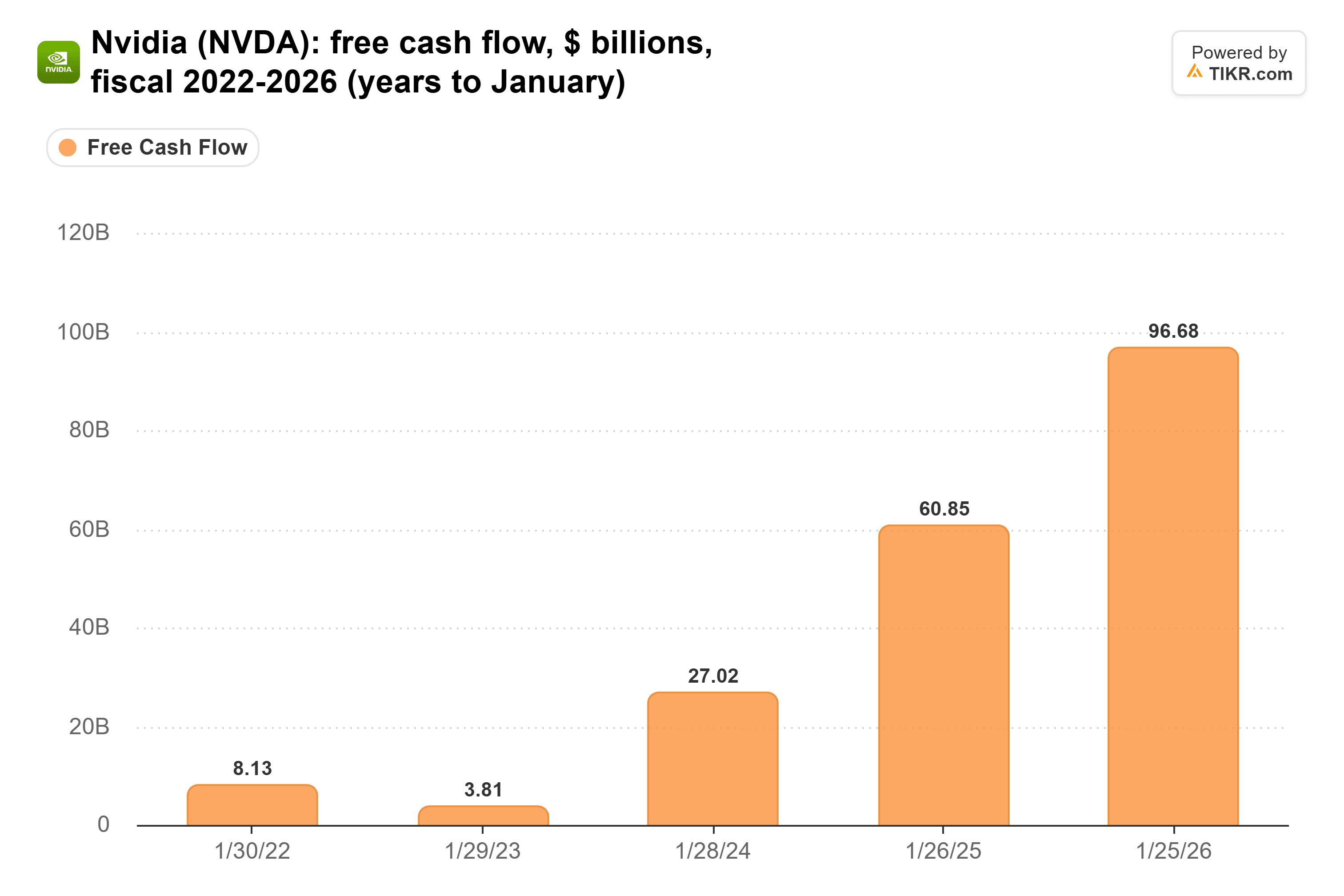
Nvidia’s own free cash flow rose from $8.13 billion in fiscal 2022 to $96.7 billion in fiscal 2026 (year to January).
On the August call, CFO Colette Kress said AI labs backed by Nvidia’s balance sheet could make up roughly a quarter of next year’s business. If lenders step back, Nvidia carries more of that credit itself or sells less.
That makes the Nov. 17 report, Nvidia’s first since Kress became interim CEO, as much about credit as chips. Receivables hit $63.1 billion on July 26, and days sales outstanding rose to 60 from 45 as Nvidia gave some investment-grade customers longer payment terms. If that climbs while the program closes no loans, Nvidia is carrying more customer credit itself.
So What Is NVIDIA Stock Actually Worth?
TIKR lets you forecast the future price of any stock in less than a minute. Just enter a few assumptions into TIKR’s valuation model and see what NVIDIA could be worth. Start from Wall Street consensus estimates, or adjust the inputs to reflect your own view of the business. It’s free to use.
Disclaimer:
Please note that the articles on TIKR are not intended to serve as investment or financial advice from TIKR or our content team, nor are they recommendations to buy or sell any stocks. We create our content based on TIKR Terminal’s investment data and analysts’ estimates. Our analysis might not include recent company news or important updates. TIKR has no position in any of the stocks mentioned. Thank you for reading, and happy investing!