Key Takeaways
- Micron fell 13.89% on Nov. 20 and rebounded 19.04% on Nov. 23, but Emad Mostaque says small, efficient AI models are very bearish for memory and for Nvidia.
- Mostaque calls the next two to three years safe. That puts the risk on fiscal 2029, where analysts expect $207.50 of normalized EPS.
- Micron’s gross margin has swung from 2.7% to 80.7% in three years. Rambus sells into the same server demand and traded at about 18x forward earnings at Friday’s close.
- The counterargument is that cheaper AI gets used more. Micron’s Dec. 17 report is the next check on how much of its revenue is under contract.
Micron Technology (MU) fell 13.89% on Friday, Nov. 20, in a broad AI chip selloff. It rebounded 19.04% on Monday, Nov. 23, as chip stocks rallied after Nvidia (NVDA) reinstated Jensen Huang as CEO.
Between those two sessions, on Moonshots with Peter Diamandis, Emad Mostaque made a longer-term case against memory. Mostaque is the founder of Intelligent Internet and former CEO of Stability AI. He said, “the final models that actually solve this are gonna be the small models, small models that feel big.”
His conclusion? “That is very bearish for RAM, along with the other things. It’s very bearish for NVIDIA.”
That reaches past Micron to Nvidia and to Rambus (RMBS), whose memory interface chips sit on the DDR5 modules inside AI and data-center servers.
Two to three safe years
“I think the next two years, three years are safe,” Mostaque said. “And then it’s going to roll off incredibly quickly.”
That matches what Micron has booked. On its Sept. 30 call, management said over 75% of its 2027 output is already committed. It estimates its 26 multi-year customer agreements cover over 35% of revenue through 2030. Customers also handed Micron $12.75 billion of deposits in fiscal 2026, and nearly all of that money is scheduled to be repaid between 2029 and 2031, around when Mostaque’s safe window ends.
Analysts expect Micron’s normalized EPS to keep climbing beyond the years it has booked, then level off:
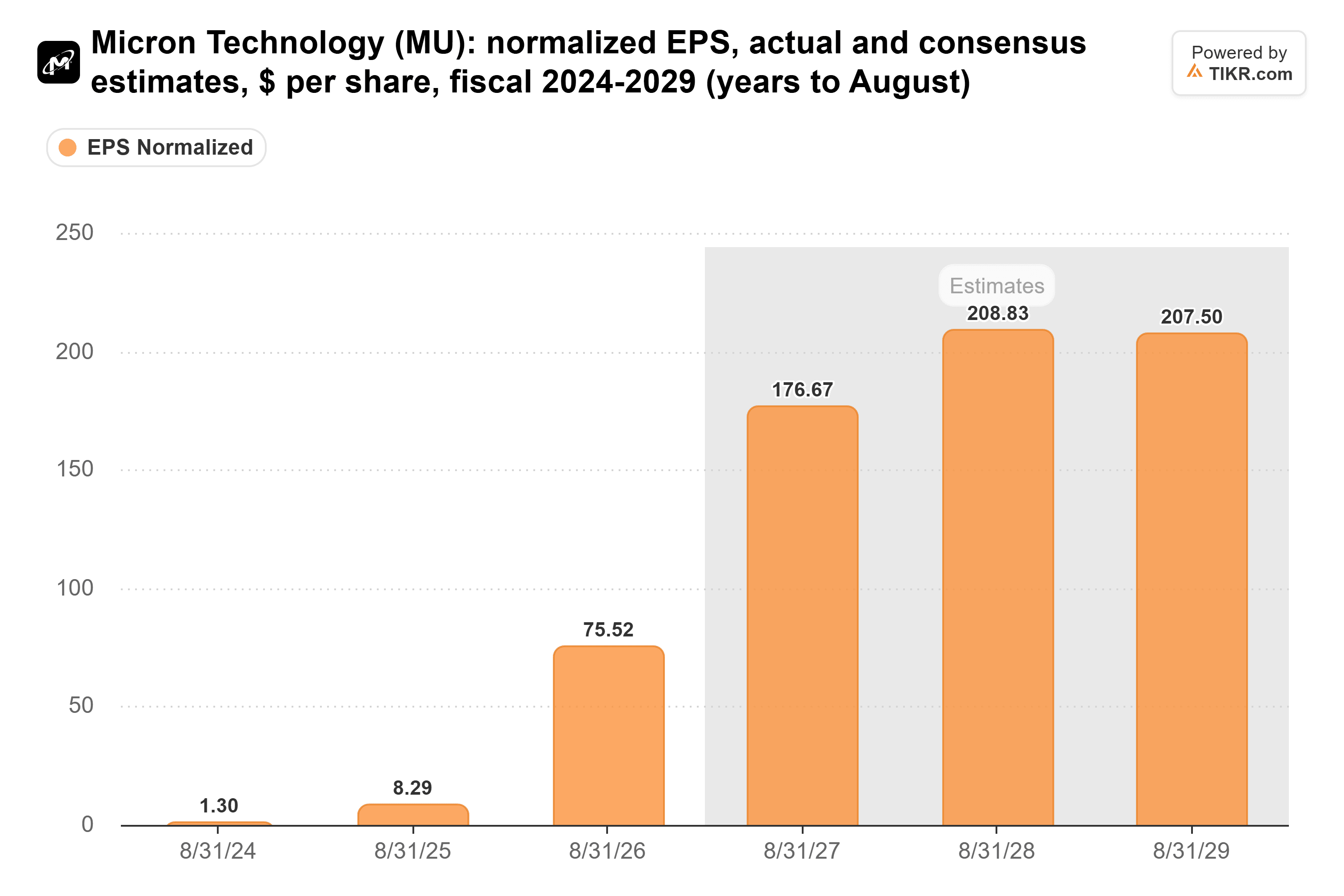
That’s $207.50 a share for fiscal 2029, about 2.7x the $75.52 Micron earned in fiscal 2026. If Mostaque is right, that’s the estimate that comes down first.
TIKR tracks 49 analysts on Micron. How many say “Buy”?
See the full breakdown of Buy, Hold, and Sell ratings on Micron, along with Wall Street’s revenue and earnings estimates, all in one place. More than 500,000 investors use TIKR to research stocks like this one. See Micron’s Analyst Ratings
Memory profits swing hard
Micron’s earnings run on price. In fiscal 2026, revenue rose $95.8 billion while cost of goods sold rose just $3.2 billion, and DRAM prices rose about 180%. So when demand falls behind supply, margins fall fast:
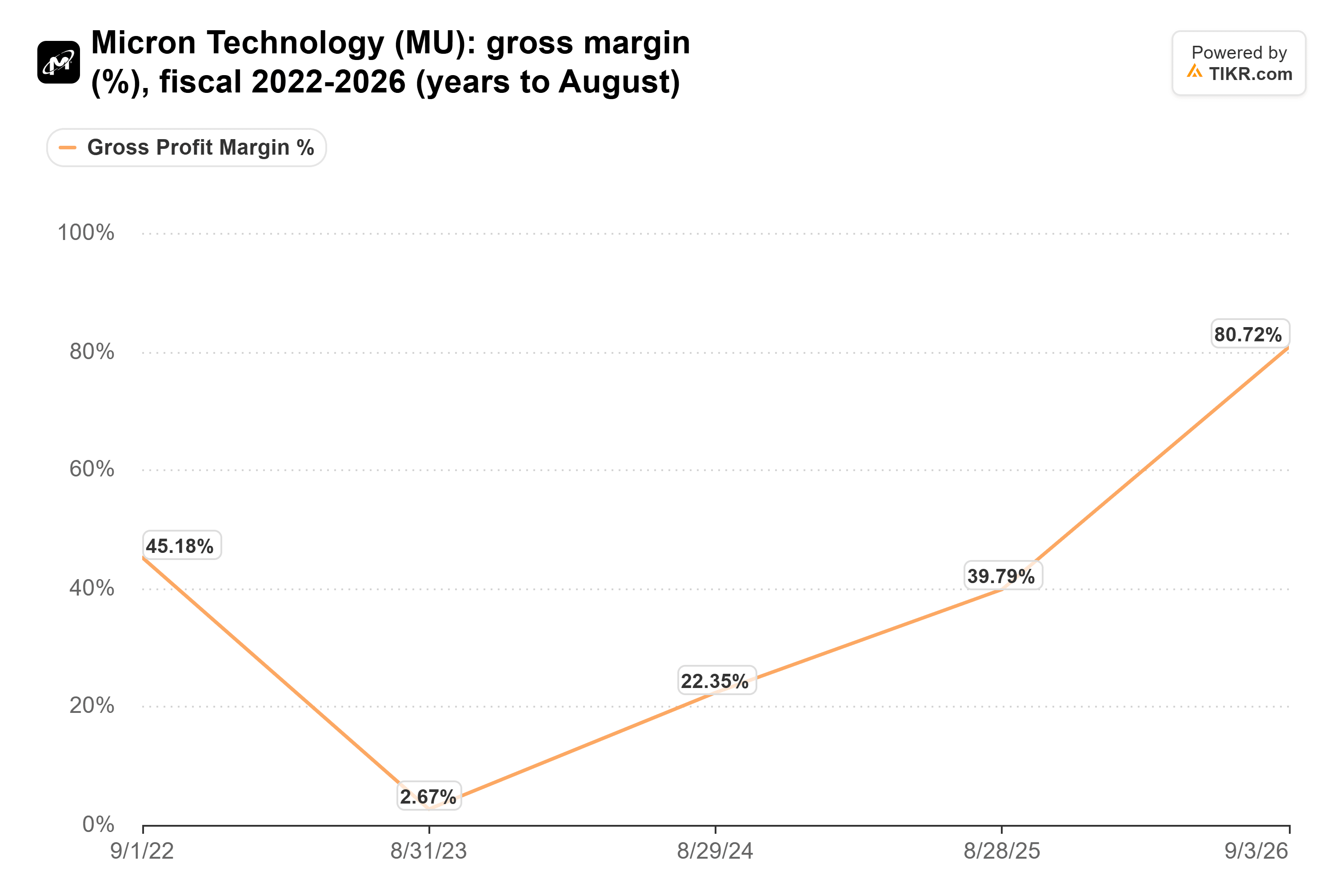
Micron’s GAAP gross margin fell from 45.2% in fiscal 2022 to 2.7% in fiscal 2023, then climbed back to 80.7% in fiscal 2026. After the last peak, GAAP EPS fell 79%, from $11.51 in fiscal 2018 to $2.37 in fiscal 2020.
The market isn’t taking fiscal 2029 on faith. At Friday’s close, Micron traded at 3.4x next-12-months normalized earnings, below even its quarter-end readings of 3.7x to 5.3x in 2017 and 2018, just before that last drop. Monday’s rebound lifted it to around 4x, back inside that old range.
Investors are far less worried about Rambus. Its product revenue hit a record $114.3 million in the third quarter, up 22% from a year before. At about 18x forward earnings as of Friday’s close, Rambus is priced for growth that a post-2028 slowdown in memory-heavy servers would put at risk.
Cheaper AI has meant more AI so far
The strongest answer to Mostaque is that cheaper AI tends to get used more, not less. Mostaque himself still sees a big market for consumer compute, and frontier labs that want giant Vera Rubin systems from Nvidia.
Nvidia closed up 31.48% on Nov. 23 after its board voted unanimously to bring Huang back as president and CEO. That rally was about leadership, not memory demand. On Mostaque’s read, though, Huang is back running a company that needs AI to keep wanting bigger chips after 2028.
Small models are a real risk to Micron’s fiscal 2029, but if cheaper AI keeps bringing more AI use, demand for memory should hold up.
Micron reports its fiscal first quarter on Dec. 17, and the figure to watch is contract coverage. If it moves toward the roughly half of revenue management has said the agreements could eventually cover, more of the years after Mostaque’s safe window will be locked in before any drop in demand.
So what is Micron stock actually worth?
TIKR lets you forecast the future price of any stock in less than a minute. Just enter a few assumptions into TIKR’s valuation model and see what Micron could be worth. Start from Wall Street consensus estimates, or adjust the inputs to reflect your own view of the business. It’s free to use.
Disclaimer:
Please note that the articles on TIKR are not intended to serve as investment or financial advice from TIKR or our content team, nor are they recommendations to buy or sell any stocks. We create our content based on TIKR Terminal’s investment data and analysts’ estimates. Our analysis might not include recent company news or important updates. TIKR has no position in any of the stocks mentioned. Thank you for reading, and happy investing!