Key Takeaways
- Shopify closed at $132.31 on Nov. 24, 26% below its October high, three weeks after third-quarter merchandise volume fell short of estimates.
- Piper Sandler reiterated its Overweight rating and $172 target that day, 30% above the stock, pointing to more large brands adopting the AI-shopping standard Shopify developed with Google.
- Shop Pay volume grew 50% last quarter against 6% for PayPal’s total payment volume, and Affirm raised its full-year outlook.
- Piper’s $172 is 53x 2028 earnings estimates, roughly the multiple the stock already pays for 2027, so the upside rests on those estimates holding.
Shopify (SHOP) closed at $132.31 on Nov. 24, 26% below its Oct. 12 high, after a third quarter that fell just short. That same day, Piper Sandler reiterated its Overweight rating and $172 price target, 30% above the close.
Piper’s case is that more big brands are adopting the Universal Commerce Protocol (UCP), the AI-shopping standard Shopify developed with Google. Its tracker has UCP on about 15% of the top 2,500 e-commerce sites, up from about 14% in September, and recent Fortune 1000 additions include PayPal (PYPL), whose checkout button competes with Shop Pay. Shop Pay volume grew 50% in the third quarter, against 6% for PayPal’s total payment volume. Affirm (AFRM), which runs Shop Pay Installments, grew volume 34% to $14.4 billion in the quarter to Sept. 30 and raised its full-year outlook the same week Shopify reported.
Shopify’s Good Quarter Wasn’t Good Enough
On Nov. 3, Shopify reported revenue up 32% to $3.74 billion, roughly in line with estimates. Gross merchandise volume was the problem: $119.15 billion against the $120.08 billion analysts expected. Jefferies called the quarter “robust, but shy of lofty expectations.”
The outlook didn’t help either. Shopify guided fourth-quarter revenue growth to the low thirties, but gross profit growth only to the high twenties. Subscription gross margin also fell to 79% from about 82%, which CFO Jeff Hoffmeister tied mostly to added AI spending on Sidekick, Shopify’s merchant assistant.
TIKR Tracks 54 Analysts on Shopify. How Many Say “Buy”?
See the full breakdown of Buy, Hold, and Sell ratings on Shopify, along with Wall Street’s revenue and earnings estimates, all in one place. More than 500,000 investors use TIKR to research stocks like this one. See Shopify’s Analyst Ratings
Piper’s $172 Still Sits Below the Street
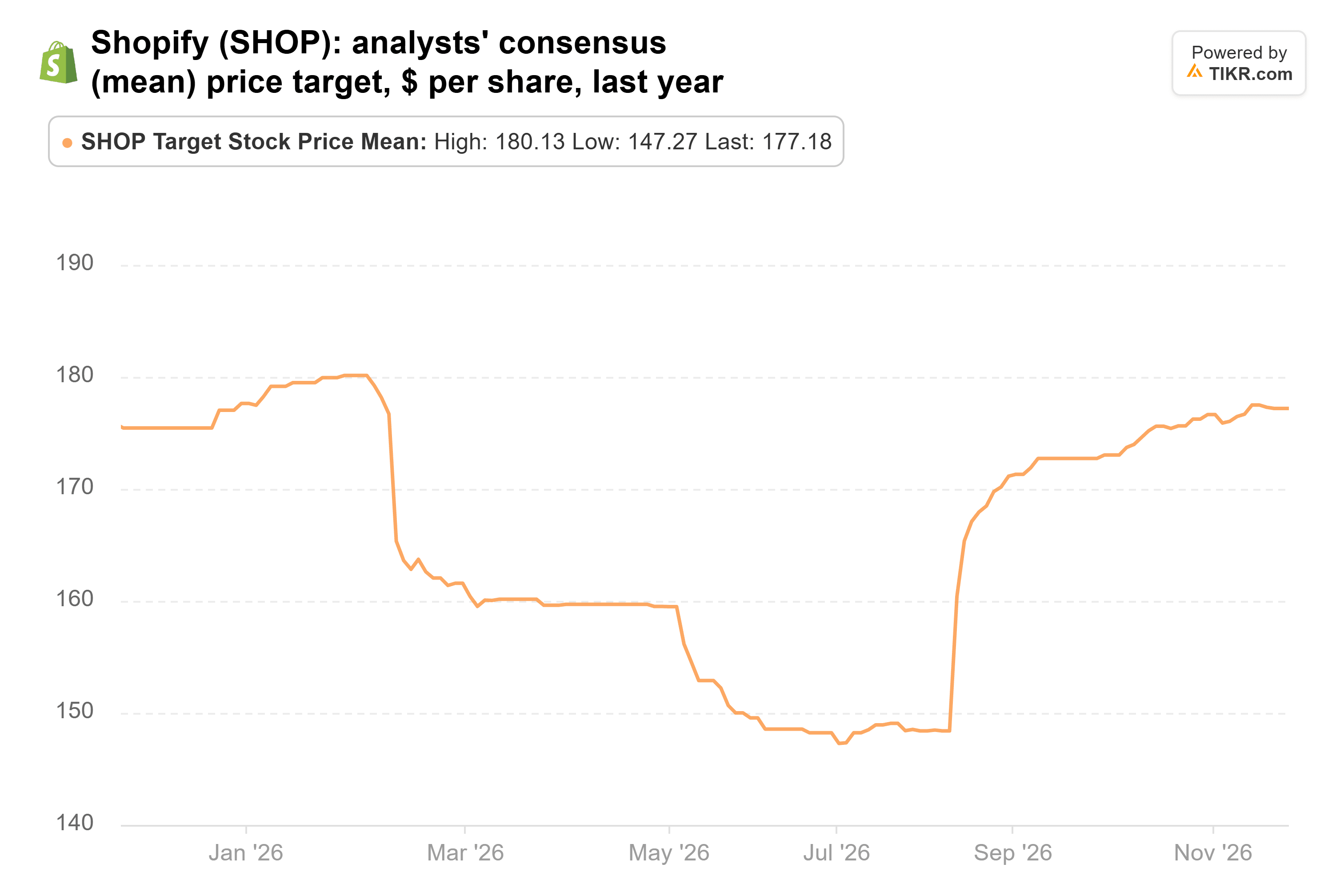
Piper trimmed its target to $172 from $180 after the report, so the Nov. 24 note held the line. The Street’s average target of $177 sits above Piper’s and has barely moved in a year, from $175 to $177, with a dip to $147 in July.
The soft spot is Piper’s own data. A Shopify partner tracker it keeps grew 25% year over year through early November, down from more than 30%.
Does $172 Add Up for Shopify Stock?
Analysts expect normalized EPS to climb from $1.43 in 2025 to $3.26 in 2028. The 2026 and 2027 estimates held at $1.91 and $2.46 through the report, and 2028’s slipped only to $3.26 from $3.32 in late October.
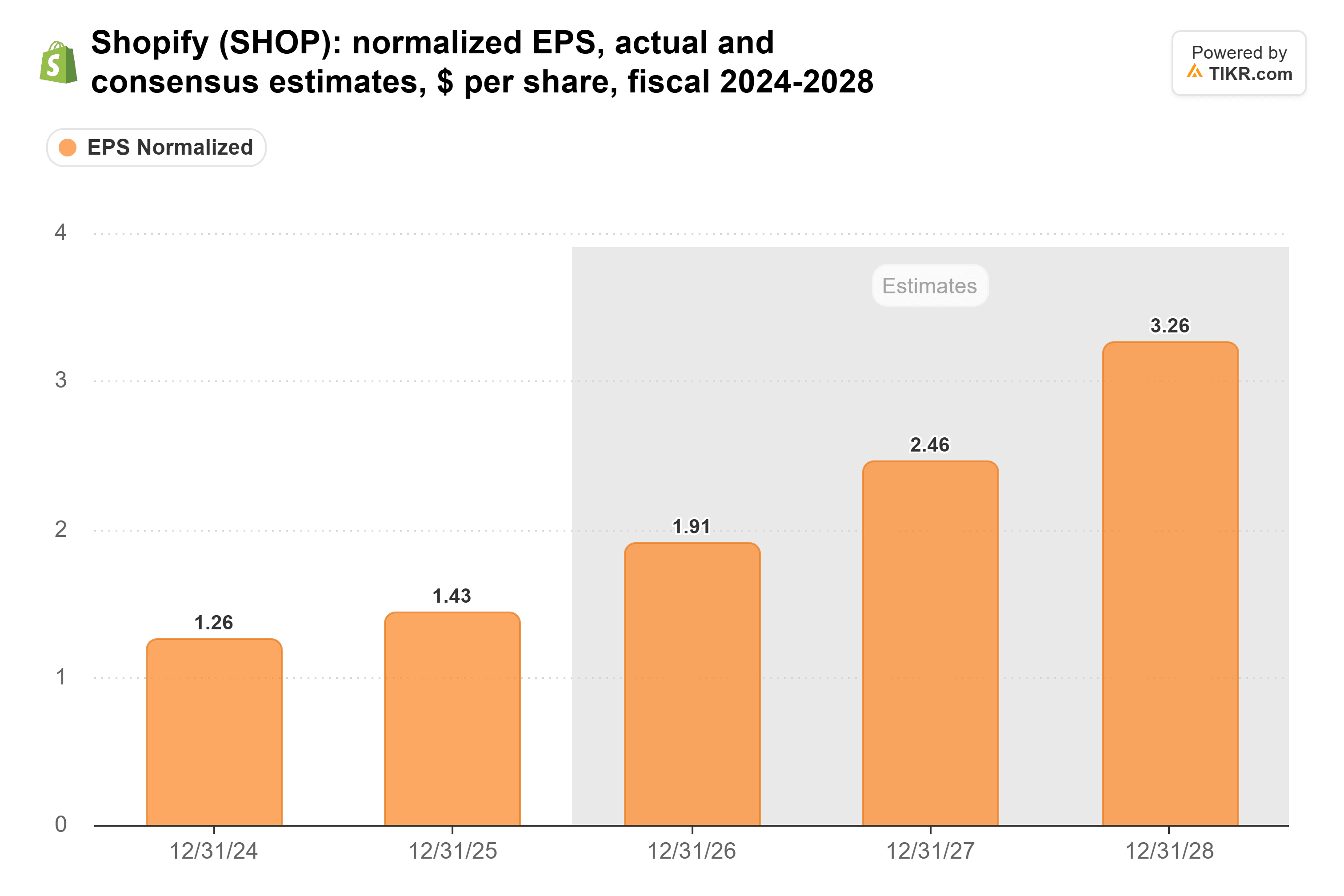
A 12-month target is a price a year out, so it belongs on the earnings a year out. Piper’s $172 is 53x 2028 estimates. Today’s $132.31 is 54x 2027’s. On consensus estimates, $172 doesn’t need a re-rating at all: the stock only has to hold roughly its current multiple while earnings roll forward a year.
Piper Isn’t Asking Much of Shopify
That makes $172 a modest ask, and the numbers back Piper. The catch is growth. The 2028 estimate needs EPS to jump 33% after 2027, while Piper’s own tracker has already cooled below 30%. The fourth-quarter report in February is the next test: revenue growth in the low thirties and gross profit growth in the high twenties, as guided, would keep the estimates and Piper’s case intact.
So what is Shopify stock actually worth?
TIKR lets you forecast the future price of any stock in less than a minute. Just enter a few assumptions into TIKR’s valuation model and see what Shopify could be worth. Start from Wall Street consensus estimates, or adjust the inputs to reflect your own view of the business. It’s free to use.
Disclaimer:
Please note that the articles on TIKR are not intended to serve as investment or financial advice from TIKR or our content team, nor are they recommendations to buy or sell any stocks. We create our content based on TIKR Terminal’s investment data and analysts’ estimates. Our analysis might not include recent company news or important updates. TIKR has no position in any of the stocks mentioned. Thank you for reading, and happy investing!