Key Takeaways
- Anthropic CEO Dario Amodei said in a video for Anthropic’s IPO roadshow that cancer and Alzheimer’s will be “relics of the past” in less than a decade. Eli Lilly chairman and CEO Dave Ricks called that “not likely.”
- AI can speed up drug discovery, but human trials still set the pace and cost of new drugs, and that favors companies with the cash to run them.
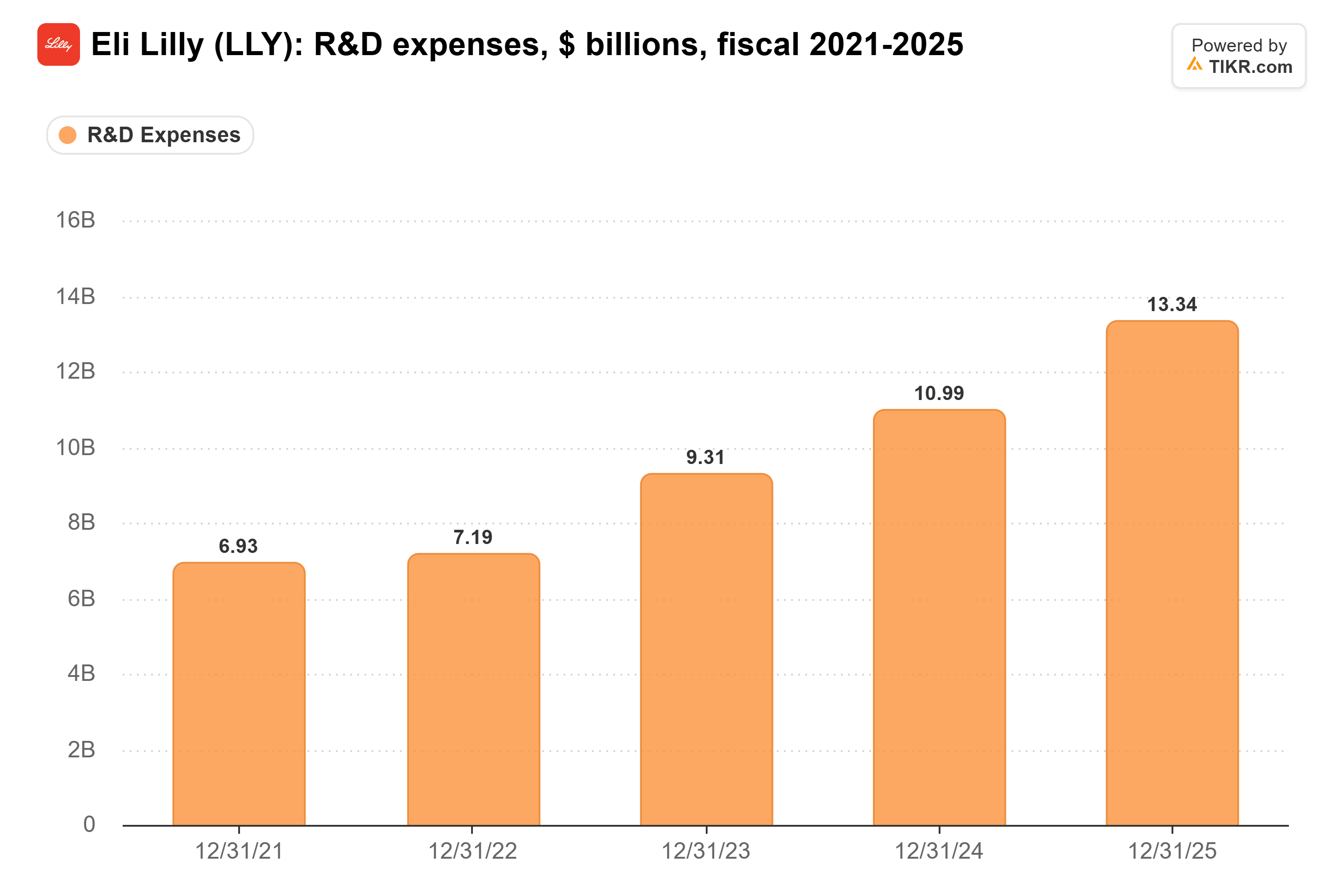
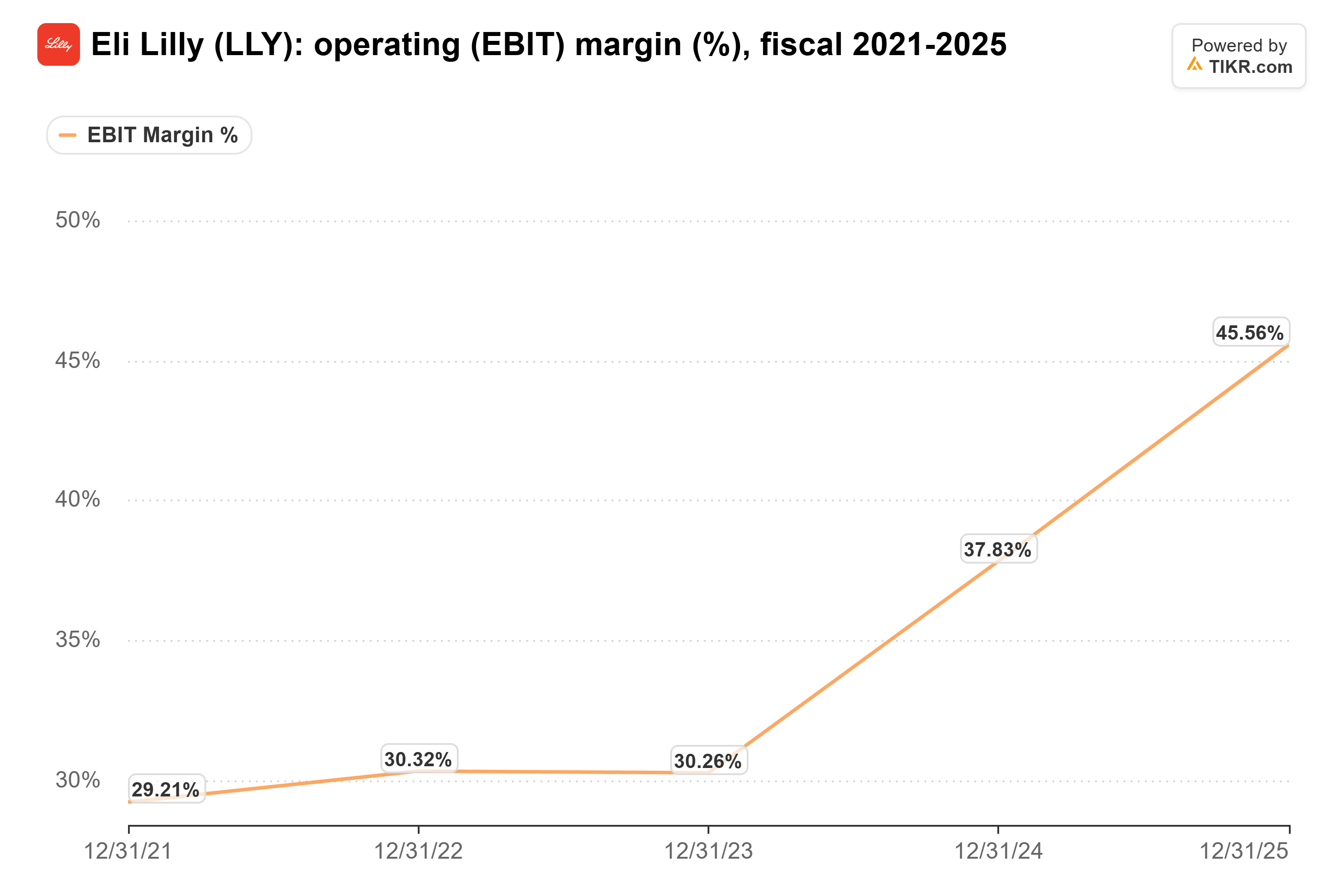
- Lilly spent $13.3 billion on R&D in 2025, nearly double what it spent in 2021, and still had a 45.6% operating margin.
- Analysts expect Lilly’s revenue to grow from $65.2 billion in 2025 to $119 billion by 2028, and its Dec. 7 investor update is the next look at its research plans.
Anthropic CEO Dario Amodei made a big promise to would-be investors this week. Eli Lilly (LLY) chairman and CEO Dave Ricks isn’t buying it.
In a video for Anthropic’s IPO roadshow, which D.A. Wallach read out on This Week in Startups, Amodei said:
“Look at things like cancer, Alzheimer’s, heart disease, mental illness. These will be relics of the past in, I think, less than a decade.”
Ricks replied in a post on X: “I think that would be amazing and I think it’s not likely. The map of biology is still largely a blank page and randomized human proof is the long pole in the tent.”
That’s about as polite as a “no” gets.
I think he’s right, and that’s good news for Lilly shareholders. AI can help scientists find drug candidates faster, but every candidate still has to prove itself in randomized human trials, and those trials take most of the time and money. So the advantage goes to companies that can afford to run a lot of them, like Lilly.
TIKR tracks 31 analysts on Eli Lilly. How many say “Buy”?
See the full breakdown of Buy, Hold, and Sell ratings on Eli Lilly, along with Wall Street’s revenue and earnings estimates, all in one place. More than 500,000 investors use TIKR to research stocks like this one. See Eli Lilly’s Analyst Ratings
The slow part is the expensive part
Investor Elad Gil laid out the problem on this week’s episode of No Priors, the podcast he co-hosts. He said scientific knowledge has exploded, yet “if you look at the number of new drug approvals per year, it’s roughly flat.” By Gil’s count, the cost of a new drug has risen from a few hundred million dollars to $1.5 billion, and the time it takes has gone from 8 or 9 years to 15.
Even the AI-native companies say the real world is what slows them down. On the same episode, Max Jaderberg, president of AI drug-discovery company Isomorphic Labs, said “the big time bottleneck, the big cost bottleneck is synthesizing real atoms and then testing them out in real assays and experiments.” Isomorphic wants to move as much of that lab work onto a computer as it can. But the human trials Ricks is talking about come after all of it, and a trial still has to wait to see how patients do.
Lilly can pay for the slow part
Lilly is big enough to pay for those trials, and analysts expect it to keep growing. Its revenue nearly doubled from $34.1 billion in 2023 to $65.2 billion in 2025, and analysts expect $119 billion by 2028:
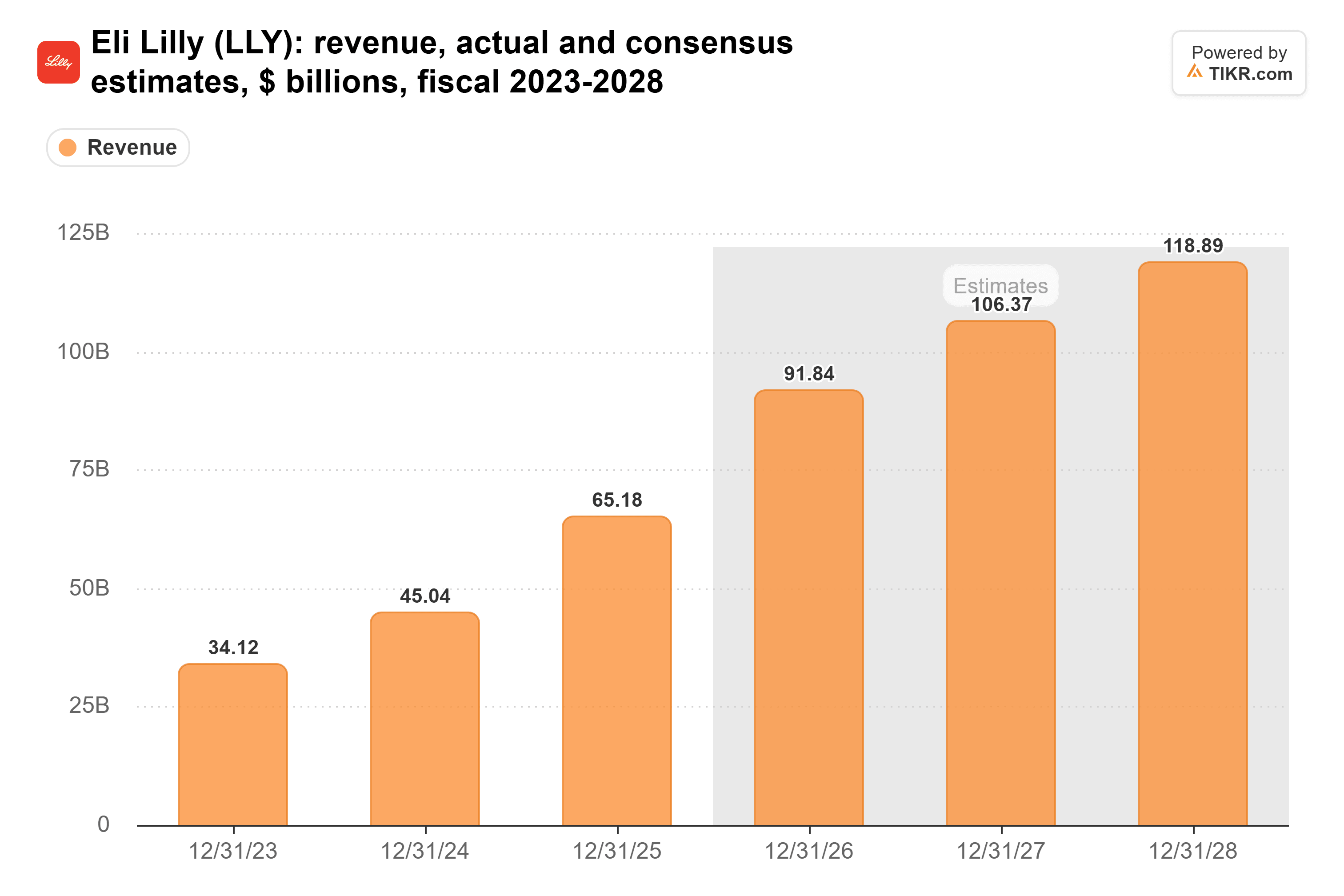
Lilly’s own 2026 guidance is $91 billion-$92 billion, and nothing Amodei or Ricks said this week should change those estimates.
A good chunk of that money goes back into research. Lilly’s R&D spending nearly doubled from $6.9 billion in 2021 to $13.3 billion in 2025:
And Lilly pays for it out of its own pocket. Its operating margin (before charges for acquired research) rose from 29.2% in 2021 to 45.6% in 2025, even as R&D spending kept climbing:
AI’s best customer runs the trials
None of this means AI doesn’t matter to drugmakers. At Gil’s $1.5 billion a drug, even a small gain in how often drugs get through trials would be worth a fortune, and the companies running the most trials would collect most of it.
AI could still wear down Lilly’s edge in the lab if a small team with a great model starts finding better molecules than Lilly’s chemists do. But that team still needs someone to pay for the human trials, and Lilly has been first in line. It was Isomorphic’s first pharmaceutical partner, in a deal announced in January 2024 with $45 million paid upfront. I’d guess more of the best AI-designed drugs end up in Lilly’s trials the same way.
I’m with Ricks on this one
Lilly’s bigger risk today has nothing to do with AI. Mounjaro and Zepbound made up 56% of its 2025 revenue, and generic makers filed in July to sell copies of both.
On AI, though, Amodei’s decade looks far too fast for drug development. Ricks expects progress to be “steady and incremental,” and that suits Lilly fine. The slower AI changes biology, the longer the companies that can pay for randomized trials keep their edge, and few can pay like Lilly.
Of course, a model that could reliably predict how a drug will do in people would change the math. We’ll learn more about Lilly’s research plans when it lays out its long-term targets at its investor update on Dec. 7.
So what is Eli Lilly stock actually worth?
TIKR lets you forecast the future price of any stock in less than a minute. Just enter a few assumptions into TIKR’s valuation model and see what Eli Lilly could be worth. Start from Wall Street consensus estimates, or adjust the inputs to reflect your own view of the business. It’s free to use.
Disclaimer:
Please note that the articles on TIKR are not intended to serve as investment or financial advice from TIKR or our content team, nor are they recommendations to buy or sell any stocks. We create our content based on TIKR Terminal’s investment data and analysts’ estimates. Our analysis might not include recent company news or important updates. TIKR has no position in any of the stocks mentioned. Thank you for reading, and happy investing!