Key Takeaways
- Elon Musk said on Nov. 27 that SpaceX “can’t scale a negative gross margin business” after Grok Bot users complained about usage limits, and replied “Noted, will implement” when a user asked for a tier priced at $2,000 to $5,000 a month.
- SpaceX is pricing Grok Bot to make money on every user, while Meta’s ad business lets it give Muse away.
- Major AI providers keep only 20% to 45% of their paying customers a year, according to an NBER working paper, so Grok Bot’s real customer is the business budget Salesforce and Intuit also charge for.
- Grok Bot is small for SpaceX, but with a lot of spending ahead, SpaceX can’t afford a product that loses money on its users.
SpaceX (SPCX) has a good problem with Grok Bot: its heaviest users want more of it than their plans allow.
On Nov. 27, one user on X said Grok Bot’s usage limits were “still very bad” next to OpenAI’s ChatGPT Dot. But if Grok Bot fixed them, “they are the best Personal Agent AI experience out there. Hands down.”
Elon Musk’s response?
“We can’t scale a negative gross margin business. That’s just impossible.”
In the same post, he took a shot at Muse, the AI agent from Meta Platforms (META): “Muse is a personal assistant, but doesn’t apply the level of heavy-hitter AI needed to operate a company at serious scale.”
Meanwhile, Grok Bot just shipped 11% more usage out of each plan and connectors for Slack, from Salesforce (CRM), and QuickBooks, from Intuit (INTU).
Heavy users are going to pay up
It isn’t the first time Musk has flagged the cost. On Nov. 1, he wrote: “The cost of serving Grok Bot was unsustainably high relative to revenue.”
Now he’s making the pitch: “If Grok Bots are providing high value on par with having excellent employees, then the monthly cost can be quite high, but still deliver outstanding RoI.”
Grok Bot’s top individual plan today, Ultra, costs $200 a month. When a user asked for a tier at $2,000 to $5,000 a month, 10x to 25x that, Musk replied, “Noted, will implement.”
Translation: More usage is coming, and you’ll pay for it.
TIKR tracks 41 analysts on SpaceX. How many say “Buy”?
See the full breakdown of Buy, Hold, and Sell ratings on SpaceX, along with Wall Street’s revenue and earnings estimates, all in one place. More than 500,000 investors use TIKR to research stocks like this one. See SpaceX’s Analyst Ratings
SpaceX can afford to be picky
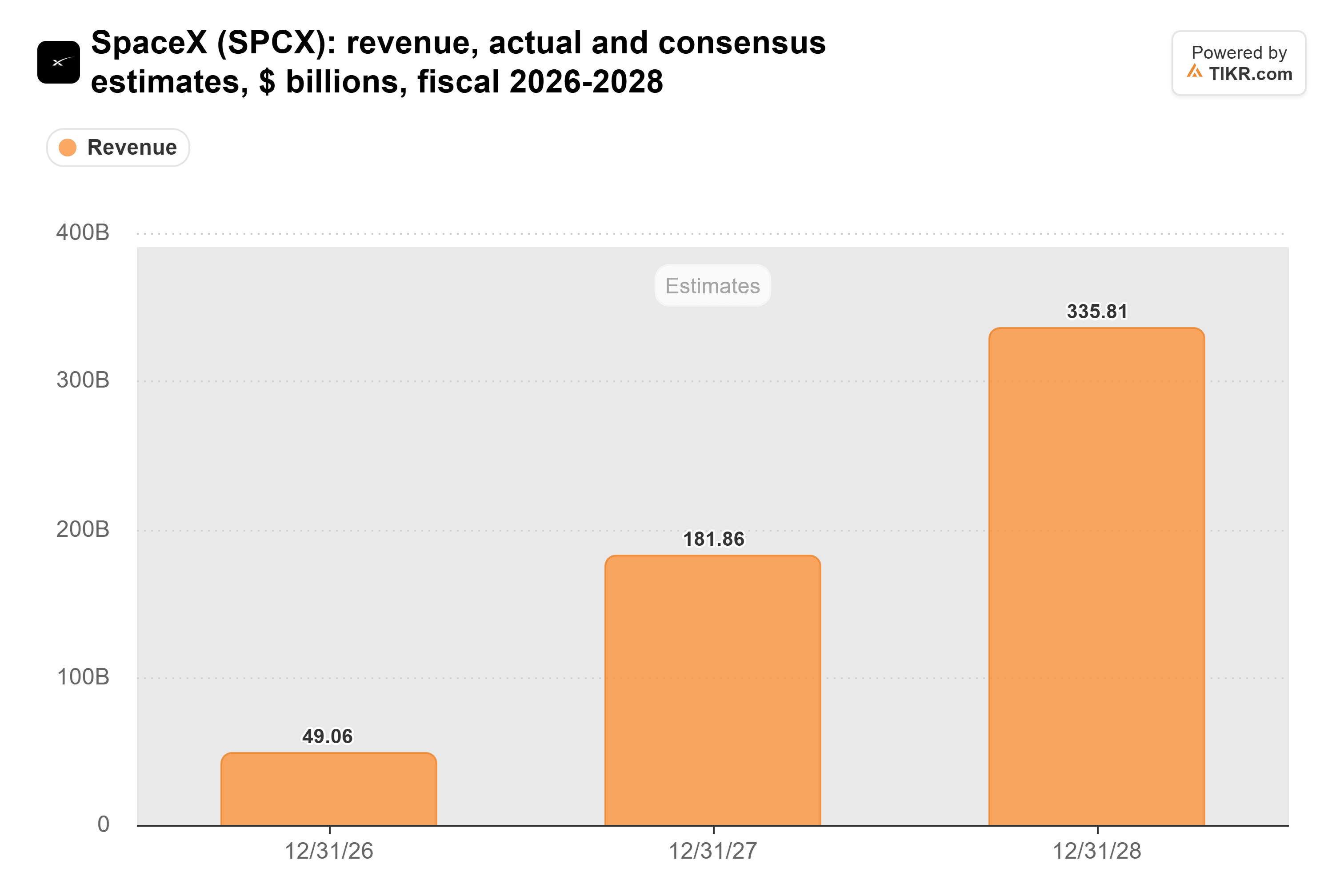
Most of SpaceX’s revenue now comes from Starlink and renting out compute, and analysts expect it to keep soaring:
Its gross margin has climbed too, from 41.2% in 2023 to 49.4% in 2025:

Over the last twelve months, it’s even higher, at 56.7%.
Musk is protecting SpaceX’s chips as much as Grok Bot. On the Oct. 20 third-quarter call, he said SpaceX aims to “split it 50-50” between its own AI products and the compute it rents to other companies. He added: “I think Grok Bot may end up being what uses most of our Super Intelligence compute.” Every chip a power user ties up is one SpaceX could rent to an AI lab instead, so a $200 plan with no real limits would hand that compute to its heaviest users at a price that may not cover it.
Meta is making the opposite bet
Ben Carlson of Ritholtz Wealth Management put it this way on the Nov. 25 episode of the Animal Spirits podcast: “The thing is, Meta doesn’t have to make any money on Muse for a very long time.”
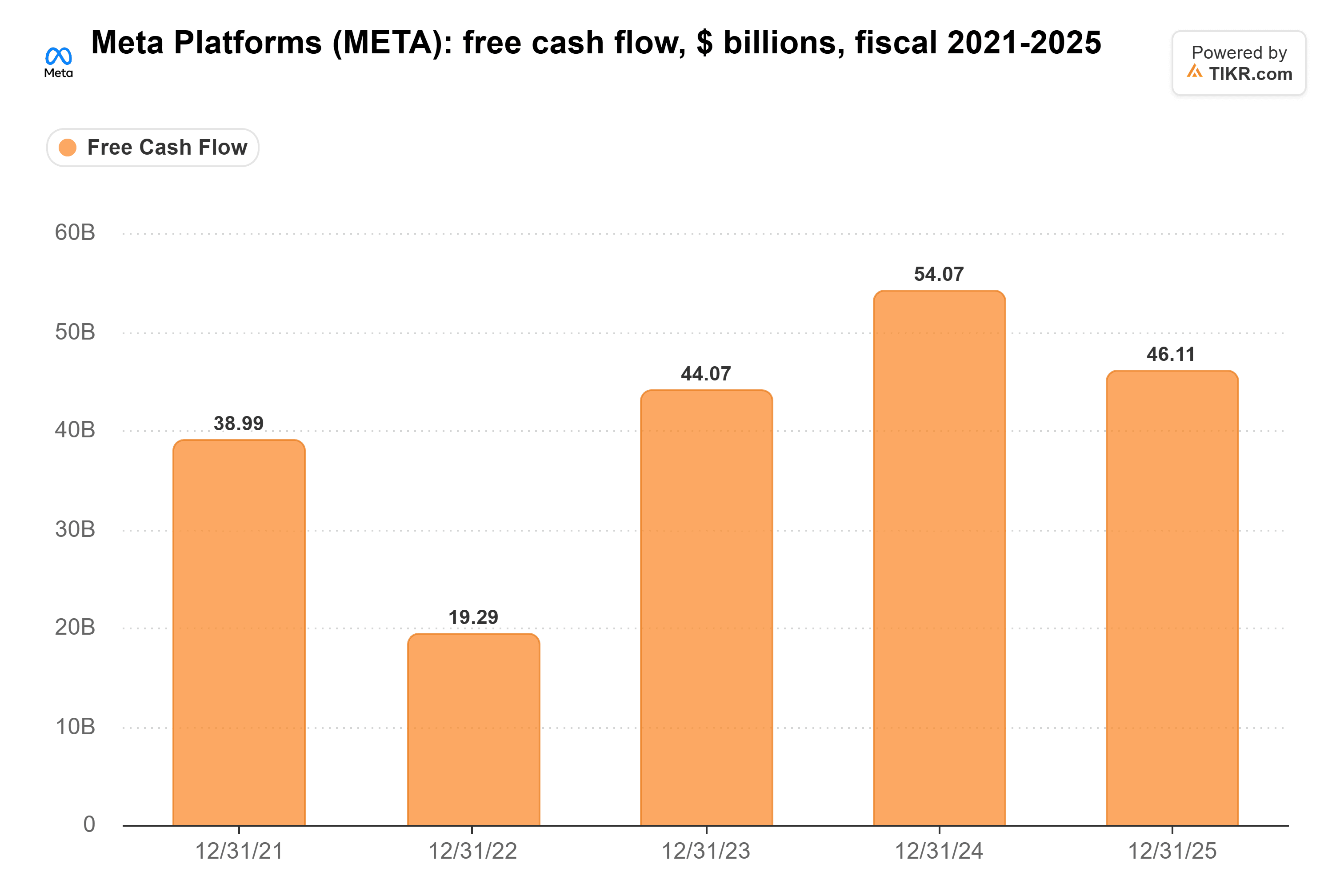
The numbers back him up. Meta generated $38.99 billion or more of free cash flow in four of the last five years:
Muse has paid plans, but by one estimate, Meta would need over 10 million paying users just for Muse to add 1% to revenue. Meta can afford to pay for Muse’s compute and wait for the payoff to show up in its ads.
The real customer is a business
Consumers are a tough sell anyway. According to an NBER working paper Ed Zitron shared on X, major AI providers keep only 20% to 45% of their paying customers a year. Musk’s employee pitch aims past consumers, at what companies spend on their people.
The software Grok Bot plugs into is chasing that budget too. Salesforce’s Agentforce annual recurring revenue topped $1.5 billion as of July 31, up over 240% in a year. Intuit’s QuickBooks Online Accounting revenue rose 19% to $1.4 billion in the quarter ended Oct. 31.
For now, Grok Bot’s connectors look like more usage for both companies, since they run on data customers keep in Slack and QuickBooks. Salesforce’s report after the close on Dec. 2 will show whether Slackbot and Agentforce kept up their pace.
Small for SpaceX, but the right call
Grok Bot won’t move SpaceX’s numbers for a while: one Super Intelligence customer made up 34.5% of SpaceX’s third-quarter revenue on its own. Still, analysts expect SpaceX’s free cash flow to come in at about negative $141 billion in 2027 as it builds data centers.
So Grok Bot’s price looks headed up for anyone who leans on it hard. A $2,000-to-$5,000 tier is a cheap way to find out whether businesses really value Grok Bot like an employee. Of course, that tier isn’t out yet, and if heavy users balk, Muse’s free plan is one tap away.
So what is SpaceX stock actually worth?
TIKR lets you forecast the future price of any stock in less than a minute. Just enter a few assumptions into TIKR’s valuation model and see what SpaceX could be worth. Start from Wall Street consensus estimates, or adjust the inputs to reflect your own view of the business. It’s free to use.
Disclaimer:
Please note that the articles on TIKR are not intended to serve as investment or financial advice from TIKR or our content team, nor are they recommendations to buy or sell any stocks. We create our content based on TIKR Terminal’s investment data and analysts’ estimates. Our analysis might not include recent company news or important updates. TIKR has no position in any of the stocks mentioned. Thank you for reading, and happy investing!