Key Takeaways
- Nvidia’s supply commitments rose $111 billion to $390 billion, mostly on memory.
- Josh Brown says Apple gains most if Nvidia buys less memory.
- Apple guided December gross margin to 45% to 46%, down from 47.9%.
- Analysts expect Apple’s EPS growth to slow to about 5% in fiscal 2027.
Apple (AAPL) has a memory problem, and Josh Brown, one of the stock’s biggest fans this month, thinks he knows the cure: an Nvidia (NVDA) that stops hoarding memory. Nvidia’s own numbers show the opposite, which is good news for memory maker Micron (MU) and bad news for device makers like HP (HPQ), which sold 16% fewer PCs in its latest quarter.
On this week’s episode of The Compound and Friends, the hosts noted Jensen Huang had bought as much memory as Nvidia could get, likely more than it needed. After Nvidia announced Huang’s departure on Nov. 12, Brown said that if a more disciplined Nvidia buys less:
“There is no greater beneficiary than Apple and its pricing power and its need for that same memory for its own devices.”
Nvidia’s Nov. 17 CFO commentary shows supply commitments of $390 billion at the end of October, up from $279 billion three months earlier, “primarily related to the multi-year procurement of memory supply.” Huang was still CEO when those deals were signed.
Memory Is Eating Apple’s Margin
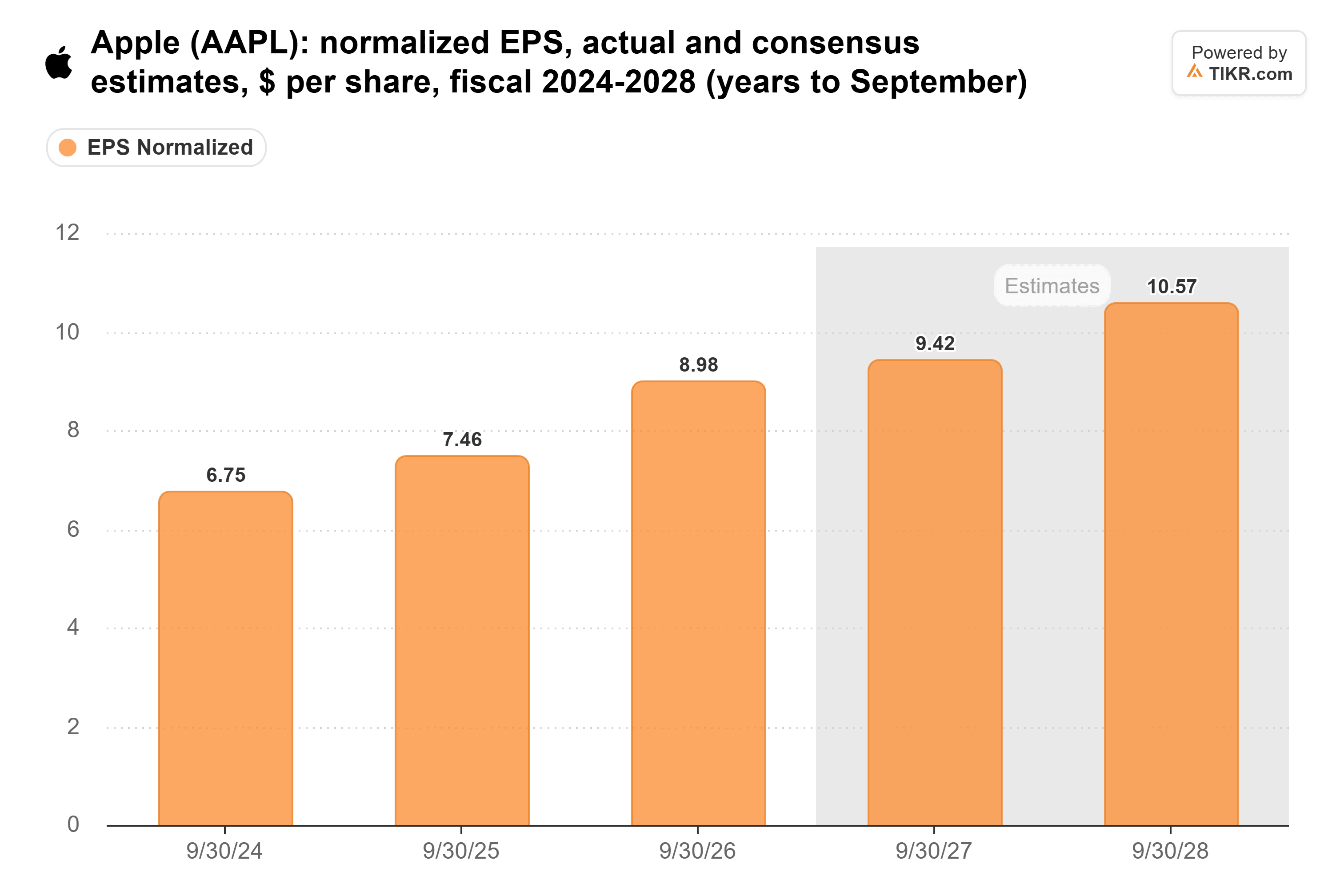
Analysts expect Apple’s normalized EPS to grow about 5% in fiscal 2027 and 12% in fiscal 2028:
Apple’s gross margin fell to 47.9% in the September quarter from 50.1% in June. Excluding tariff refunds (about 2 points in June, 1 in September), it went from about 48.1% to 46.9%. Apple then guided December to 45% to 46%, mainly on higher memory costs:
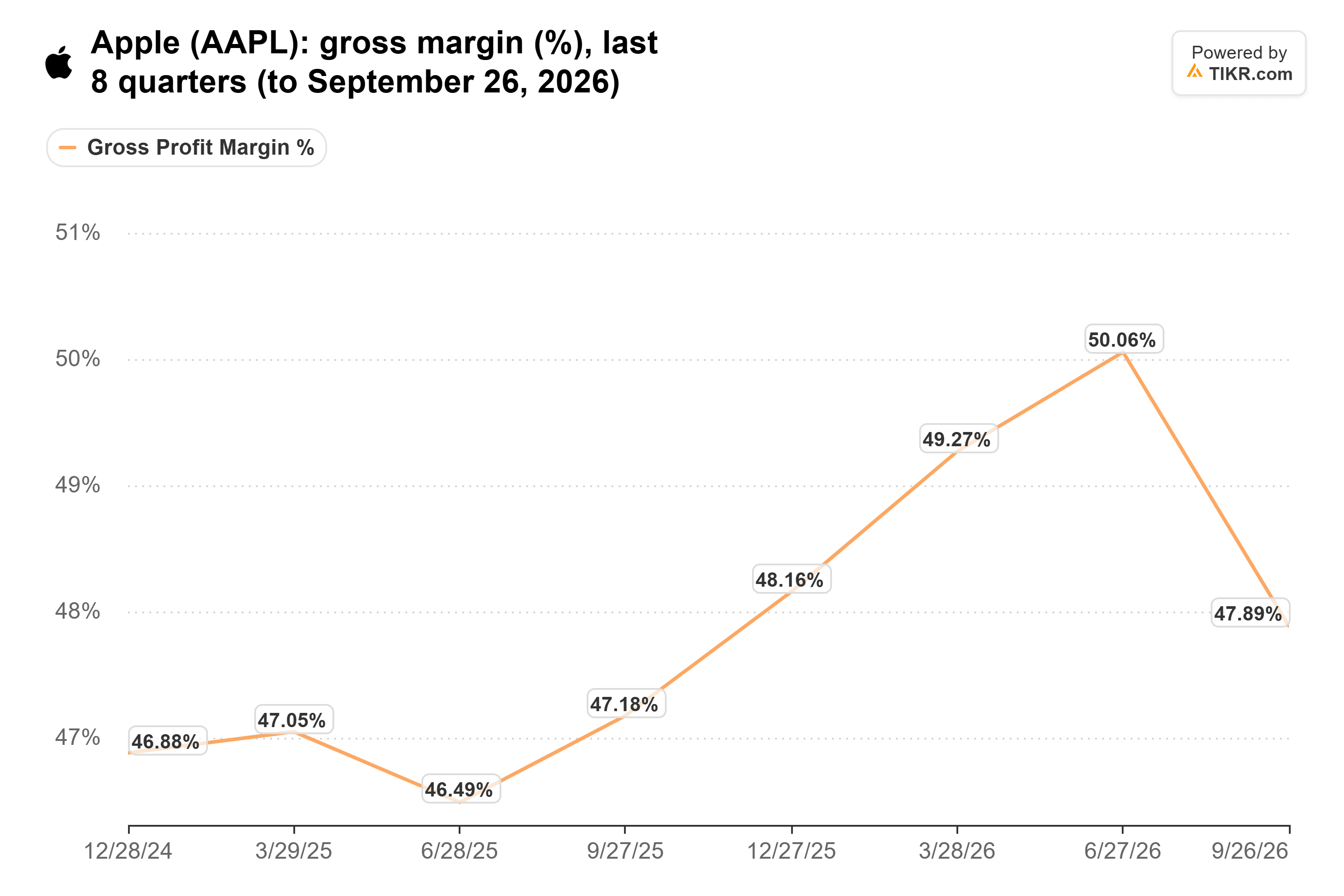
On July’s call, CFO Kevan Parekh said memory explained more than the entire decline in Apple’s adjusted gross margin, and Tim Cook, on his last call as CEO, called it “a 100-year flood on the memory pricing.”
TIKR Tracks 45 Analysts on Apple. How Many Say “Buy”?
See the full breakdown of Buy, Hold, and Sell ratings on Apple, along with Wall Street’s revenue and earnings estimates, all in one place. More than 500,000 investors use TIKR to research stocks like this one. See Apple’s Analyst Ratings
Nvidia’s Commitments Run Into Early 2028
About $203 billion of the $390 billion falls in Nvidia’s fiscal 2028, which ends in January 2028. Analysts expect Micron’s revenue to more than double in fiscal 2027, to $276 billion, after more than tripling in fiscal 2026:
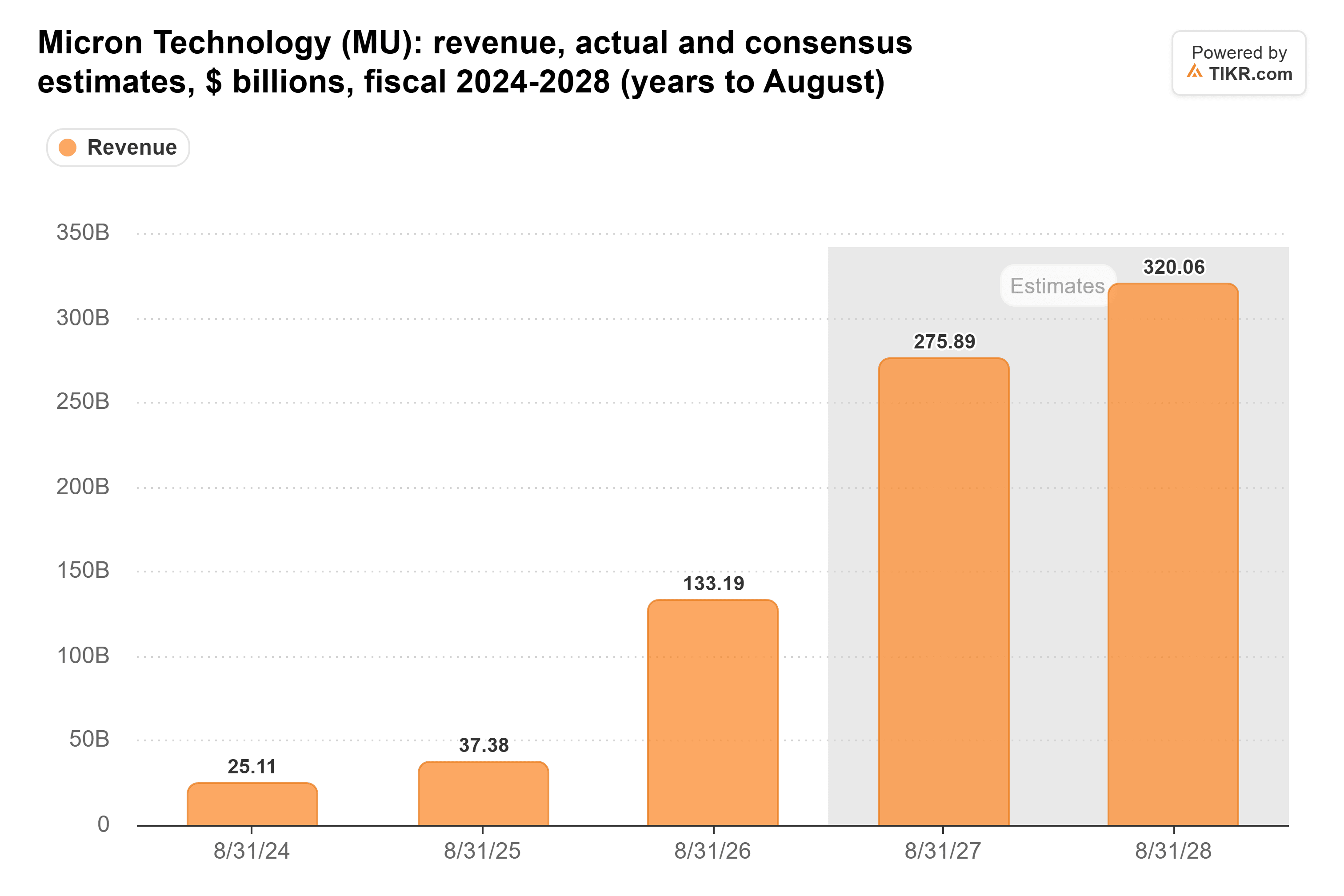
I suspect analysts are counting on memory costs easing for Apple’s fiscal 2028 rebound. But Nvidia’s biggest year for supply and capacity commitments overlaps the first four months of it. Much of Nvidia’s memory is likely high-bandwidth memory for AI, but that’s stacked DRAM made from the same wafer capacity.
Pricing Power Only Goes So Far
The iPhone 18 Pro and Pro Max each cost $100 more than last year’s models, after memory-driven MacBook increases in June. But Apple has called its increases only a partial offset to memory costs, as Bloomberg’s Mark Gurman noted.
HP has less pricing power. Its PC revenue rose 18% in the quarter to July despite the unit drop, but the PC business’s operating margin slipped to 4.6% from 5.4%. HP reports next week, the next read on memory prices.
Apple’s Relief Is a 2028 Story
The squeeze on Apple’s gross margin looks set to last through 2027, so I’d take the fiscal 2028 rebound in its estimates with a grain of salt. A new team at Nvidia could still decide it bought too much. The next test is Apple’s report in late January. A March-quarter gross margin guide above 46% would be the first sign the squeeze is easing.
So What Is Apple Stock Actually Worth?
TIKR lets you forecast the future price of any stock in less than a minute. Just enter a few assumptions into TIKR’s valuation model and see what Apple could be worth. Start from Wall Street consensus estimates, or adjust the inputs to reflect your own view of the business. It’s free to use.
Disclaimer:
Please note that the articles on TIKR are not intended to serve as investment or financial advice from TIKR or our content team, nor are they recommendations to buy or sell any stocks. We create our content based on TIKR Terminal’s investment data and analysts’ estimates. Our analysis might not include recent company news or important updates. TIKR has no position in any of the stocks mentioned. Thank you for reading, and happy investing!