Key Takeaways
- Jensen Huang said Tuesday he would return as Nvidia’s CEO if the board wants him, but the board reportedly isn’t considering it.
- JPMorgan analyst Mark Schilsky says petitions won’t bring Huang back, and only a proxy fight that elects a new board can.
- Huang controls about 3.6% of Nvidia’s votes. Dan Ives says shareholders need 15% to call a special meeting.
- Analysts expect EPS to more than triple by fiscal 2028, so at 13x forward earnings Nvidia looks cheap with or without Huang.
Jensen Huang wants his job back.
On Tuesday, in his first public comment since resigning as CEO of Nvidia (NVDA) last week, Huang posted a statement on X. “I own my mistakes completely,” he wrote. Then he made his pitch:
“If the Board of Directors decides that my return is in the best interest of our shareholders, our employees, the company, and America, I would be honored to answer these calls and return as CEO.”
The board doesn’t seem to be asking. Its directors reportedly aren’t considering bringing him back. They’re focused on their national security investigation, and Nvidia reports its first quarter without Huang after Tuesday’s close.
That leaves JPMorgan analyst Mark Schilsky seeing only one way back. Crowd-sourced petitions “are doomed to fail,” he wrote. “The only real way to bring Jensen back is to run a proxy fight and elect a new Board willing to take on the risks (and rewards) of bringing Jensen back.”
That’s a lot harder than signing a petition.
Huang’s 3.6% is a long way from 15%
Nvidia has one class of stock, with one vote per share, so Huang can’t overrule the board on his own. According to Nvidia’s 2026 proxy statement, he controlled about 3.6% of the votes as of March, counting his family trusts and foundation. Dan Ives of Wedbush wrote on X that “activism could play a role calling for special shareholder meeting at 15% threshold.”
Even counting every share he votes, Huang would need investors with another 11.4% of Nvidia on his side just to call that meeting. Then they’d still have to win the vote to replace the directors.
TIKR tracks 62 analysts on Nvidia. How many say “Buy”?
See the full breakdown of Buy, Hold, and Sell ratings on Nvidia, along with Wall Street’s revenue and earnings estimates, all in one place. More than 500,000 investors use TIKR to research stocks like this one. See Nvidia’s Analyst Ratings
Analysts haven’t cut the earnings
Analysts expect Nvidia’s earnings to keep climbing without Huang:
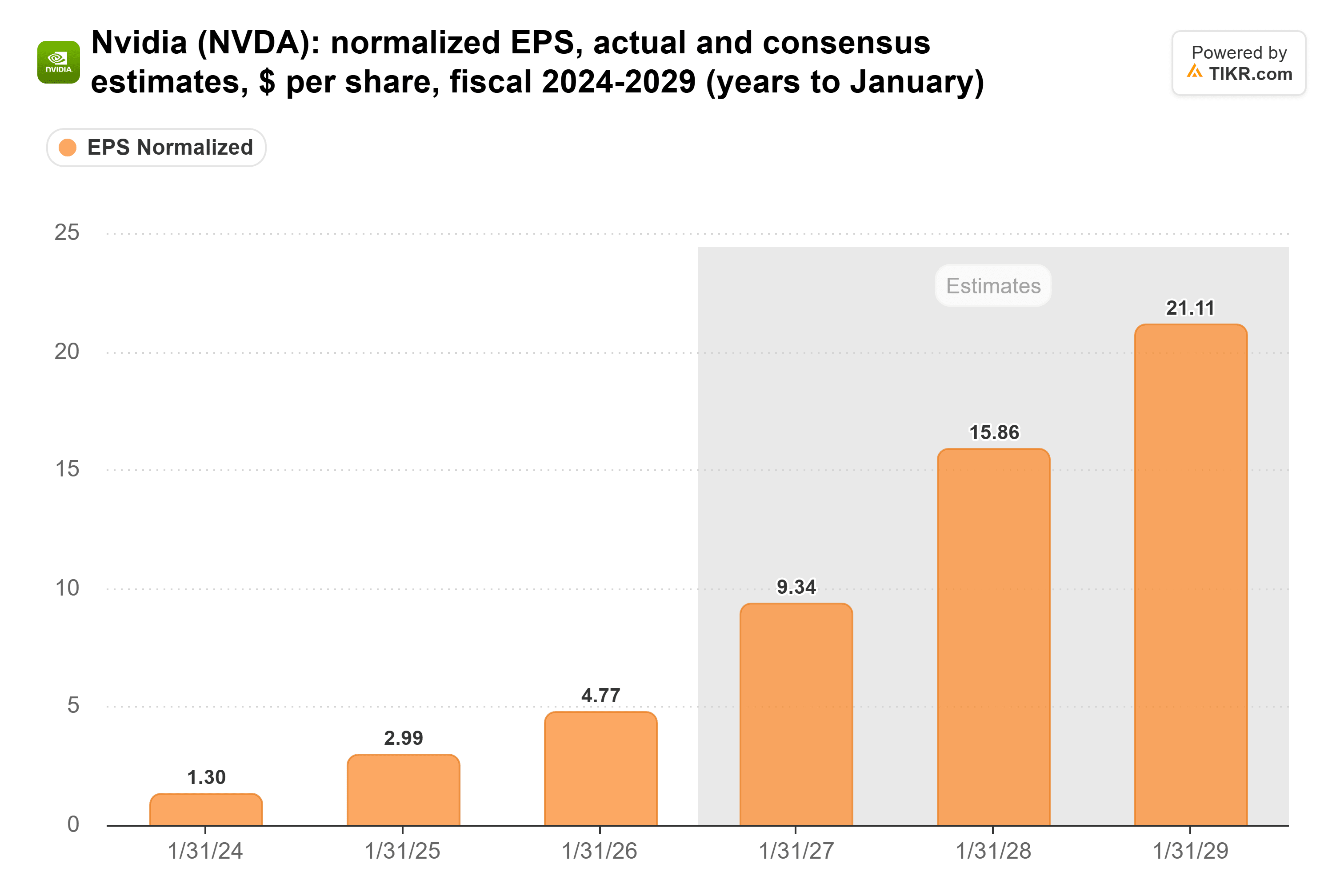
Consensus has normalized EPS rising from $4.77 in the year ended January 2026 to $9.34 this fiscal year and $15.86 in fiscal 2028.
Investors, meanwhile, are paying far less for those earnings:
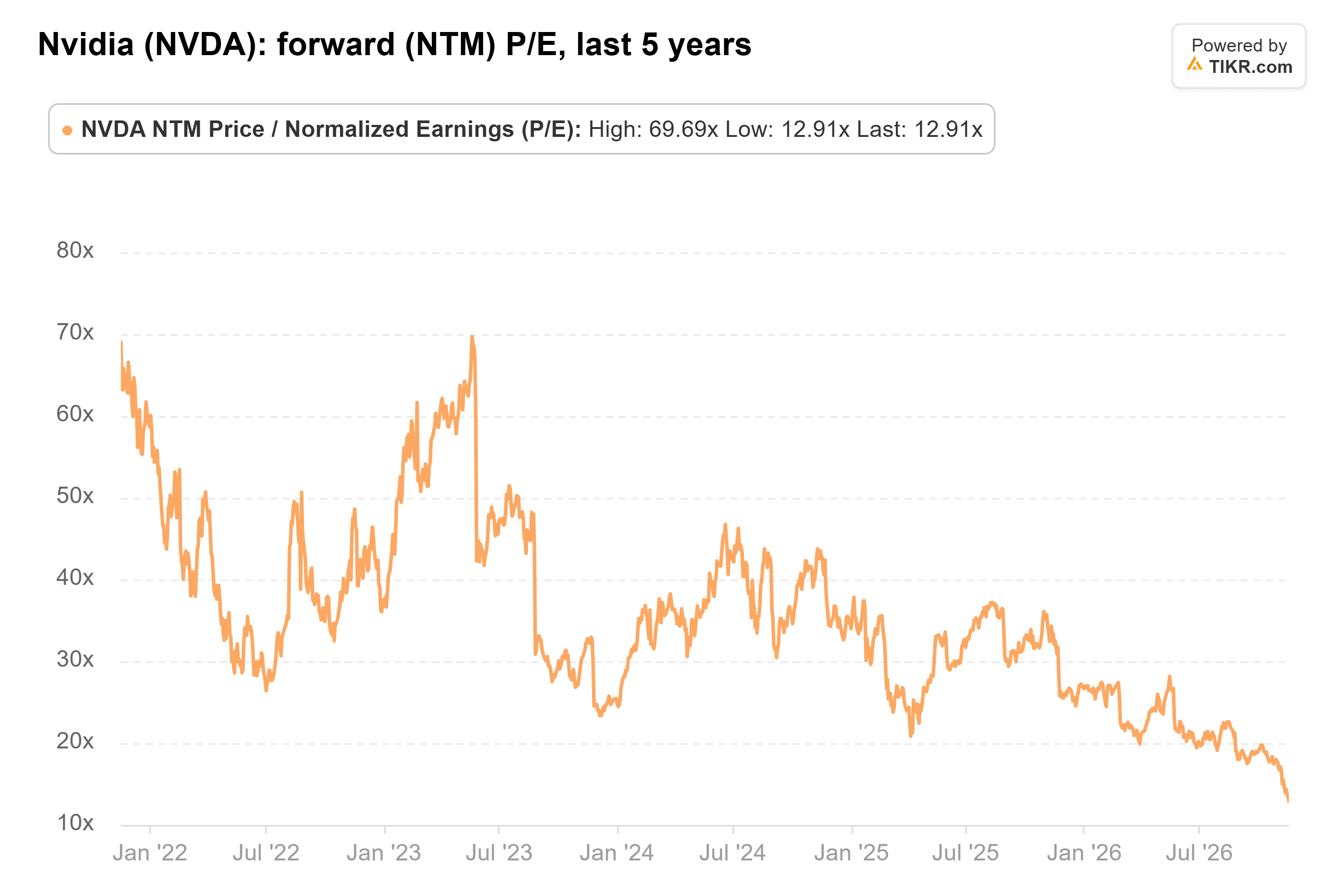
At 13x forward earnings, Nvidia is at the bottom of its five-year range. Its five-year average is 36x. The multiple was already down to 19x at the end of September, so not all of that discount is about Huang. My read: most of the drop since then is the market pricing in Nvidia without him.
A fight would be a bet on his record
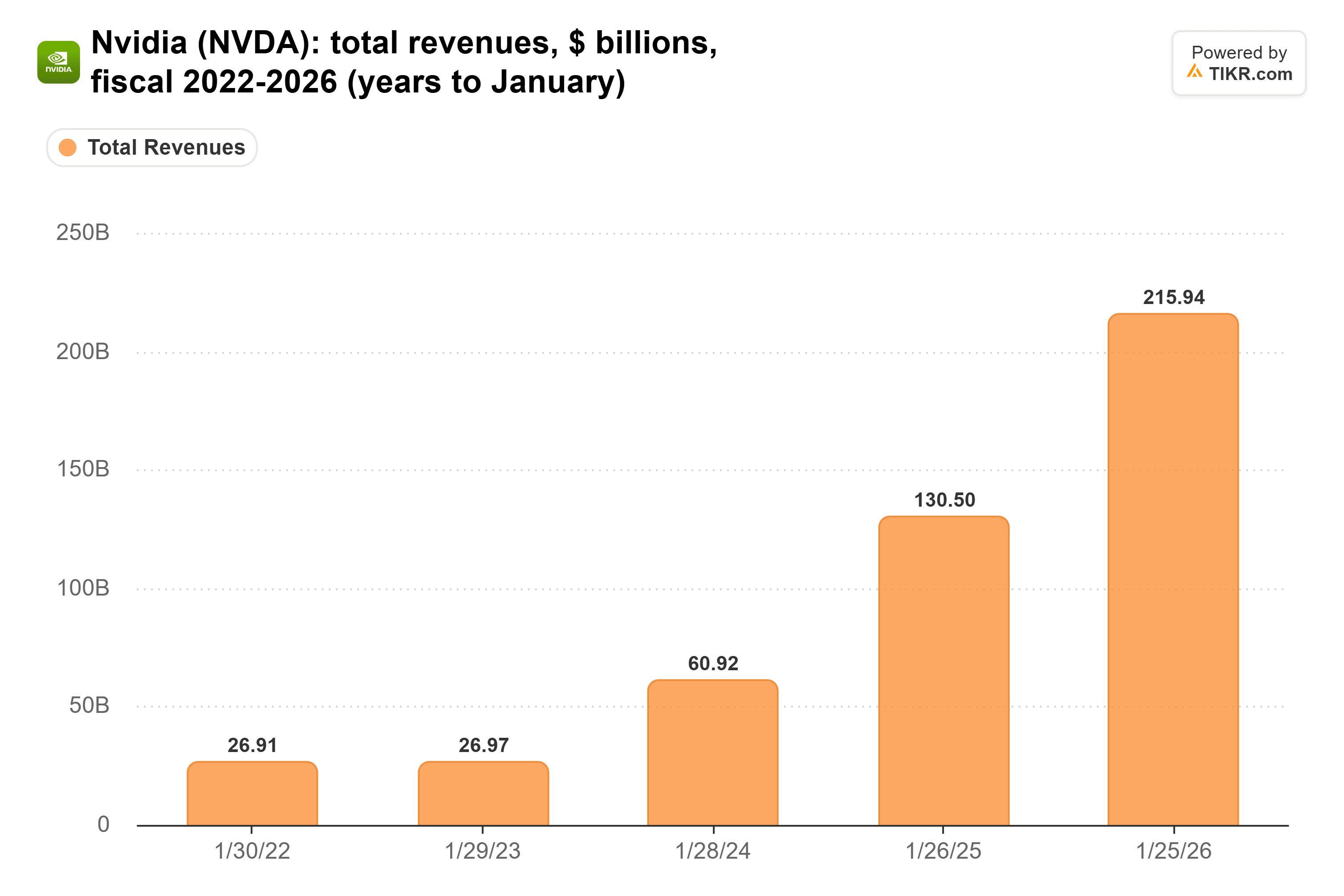
The case for a proxy fight is Huang’s record. Revenue grew about 8x over his last five fiscal years as CEO, from $26.9 billion in fiscal 2022 to $216 billion in the year ended January 2026:
But big holders have good reasons to wait. A proxy fight is expensive and slow, and Huang is due before closed-door sessions of Congress on Dec. 1 to discuss his reported relationship with an alleged Chinese spy.
I wouldn’t wait for a proxy fight
I wouldn’t price in Huang’s return. Nobody has called a special meeting. But with analysts expecting EPS to more than triple, Nvidia doesn’t need Huang back to look cheap at 13x.
Tuesday’s report is the first test. Nvidia guided third-quarter revenue to $108.0 billion, plus or minus 2%. A fourth straight quarter above the top of that range, $110.2 billion, from interim CEO Colette Kress would start closing the gap with no vote at all. If the estimates come down after the report, though, 13x won’t look nearly as cheap.
So what is Nvidia stock actually worth?
TIKR lets you forecast the future price of any stock in less than a minute. Just enter a few assumptions into TIKR’s valuation model and see what Nvidia could be worth. Start from Wall Street consensus estimates, or adjust the inputs to reflect your own view of the business. It’s free to use.
Disclaimer:
Please note that the articles on TIKR are not intended to serve as investment or financial advice from TIKR or our content team, nor are they recommendations to buy or sell any stocks. We create our content based on TIKR Terminal’s investment data and analysts’ estimates. Our analysis might not include recent company news or important updates. TIKR has no position in any of the stocks mentioned. Thank you for reading, and happy investing!