Key Takeaways
- IREN (IREN) closed at $19.48 on November 12, approximately 71% below its May closing high, while J.P. Morgan’s $55 price target implies roughly 182% upside.
- Microsoft (MSFT) requested infrastructure changes that contributed to IREN moving its more than $4 billion contracted annual recurring revenue target into early 2027.
- TIKR estimates dated November 9 projected $2.39 billion in fiscal 2027 revenue and $7.33 billion in fiscal 2028 revenue, suggesting longer-term growth expectations remained relatively resilient.
- IREN traded near 2.4x forward sales on November 10, below its three-year average of 5.2x, although financing costs and potential dilution remain significant risks.
What Happened?
IREN (IREN) has fallen approximately 71% from its May 27 closing high of $67.84 as investors reassess the company’s ambitious AI infrastructure expansion.
J.P. Morgan analyst Richard Choe lowered the firm’s price target from $65 to $55 on November 9 while maintaining an Overweight rating.
Selling pressure intensified after reports that Microsoft was increasing oversight of third-party data center projects amid concerns about construction delays and infrastructure delivery.
During its November 5 fiscal first-quarter earnings announcement, IREN pushed its target of more than $4 billion in contracted annual recurring revenue from year-end 2026 to January 2027, with a possible extension into February.
Co-CEO Daniel Roberts attributed the revised timeline to customer-requested changes and supplier timing, explaining that the milestone “may extend to the end of February.”
Despite the delay, IREN reported a 182% sequential increase in AI Cloud revenue to $200 million, while contracted revenue backlog rose 22% to $20.3 billion, according to its fiscal first-quarter earnings release.
These results suggest substantial contracted demand, but investors remain concerned about how quickly IREN can bring additional capacity online and translate that demand into recognized revenue.
Is IREN Stock Undervalued After Its Selloff?
IREN appears potentially undervalued if its delayed infrastructure projects become operational and its fiscal 2028 growth expectations remain achievable.
According to TIKR estimates dated November 9, analysts projected $2.39 billion in fiscal 2027 revenue, down from $2.81 billion in late October. However, fiscal 2028 expectations remained relatively stable at $7.33 billion, compared with $7.41 billion previously.
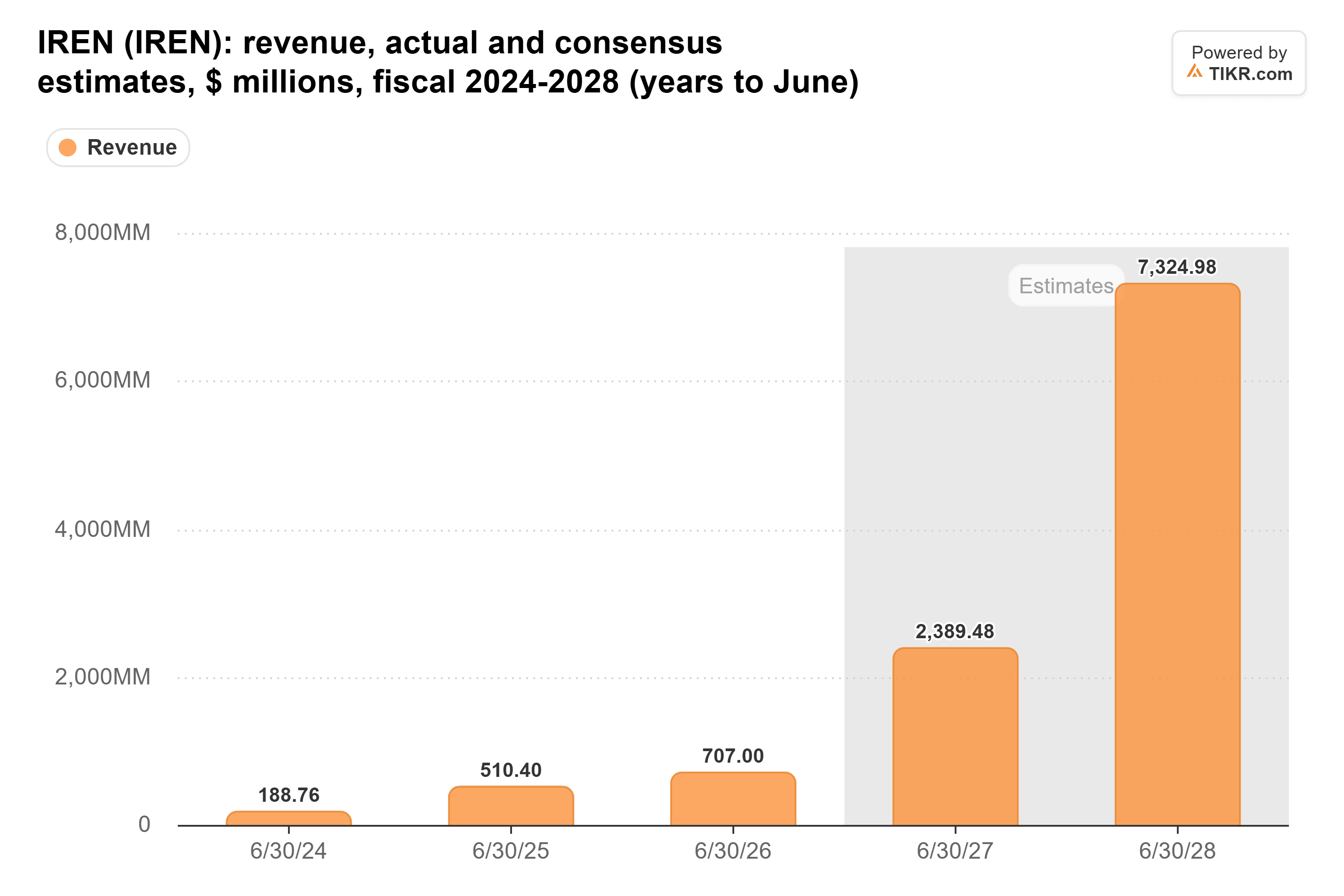
This suggests analysts have reduced near-term forecasts more aggressively than longer-term expectations, indicating that deployment timing may be a greater concern than the company’s projected demand.
IREN traded at approximately 2.4x forward sales on November 10, compared with its three-year average of 5.2x, reflecting substantial valuation compression.
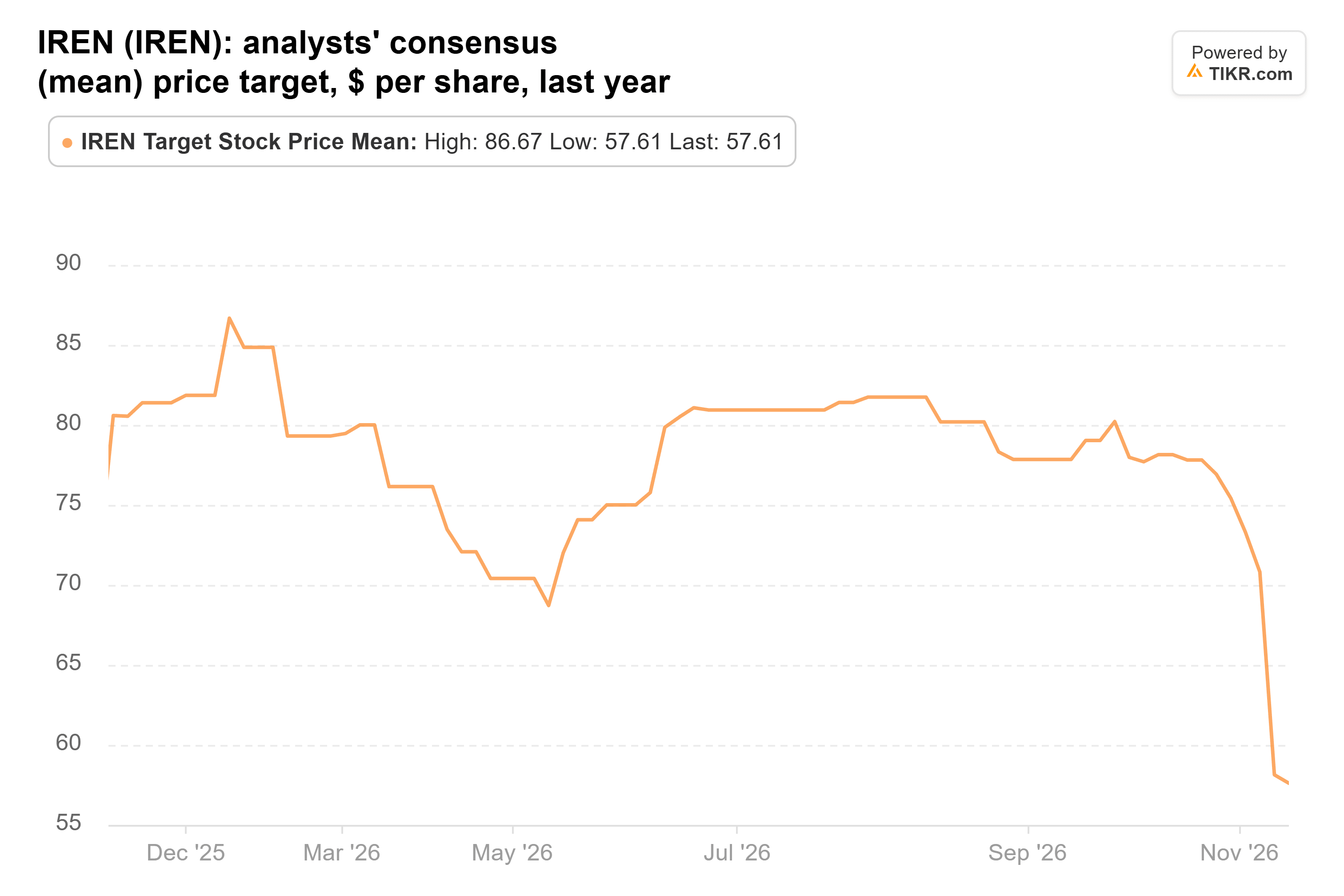
At the November 10 valuation baseline, J.P. Morgan’s $55 target would imply approximately 6.7x forward sales, above the historical average. However, the current forward revenue window largely reflects fiscal 2027, while future estimates increasingly incorporate the company’s much larger fiscal 2028 revenue projections.
If IREN achieves those forecasts, a higher revenue base could support a stronger share price without requiring the same valuation multiple.
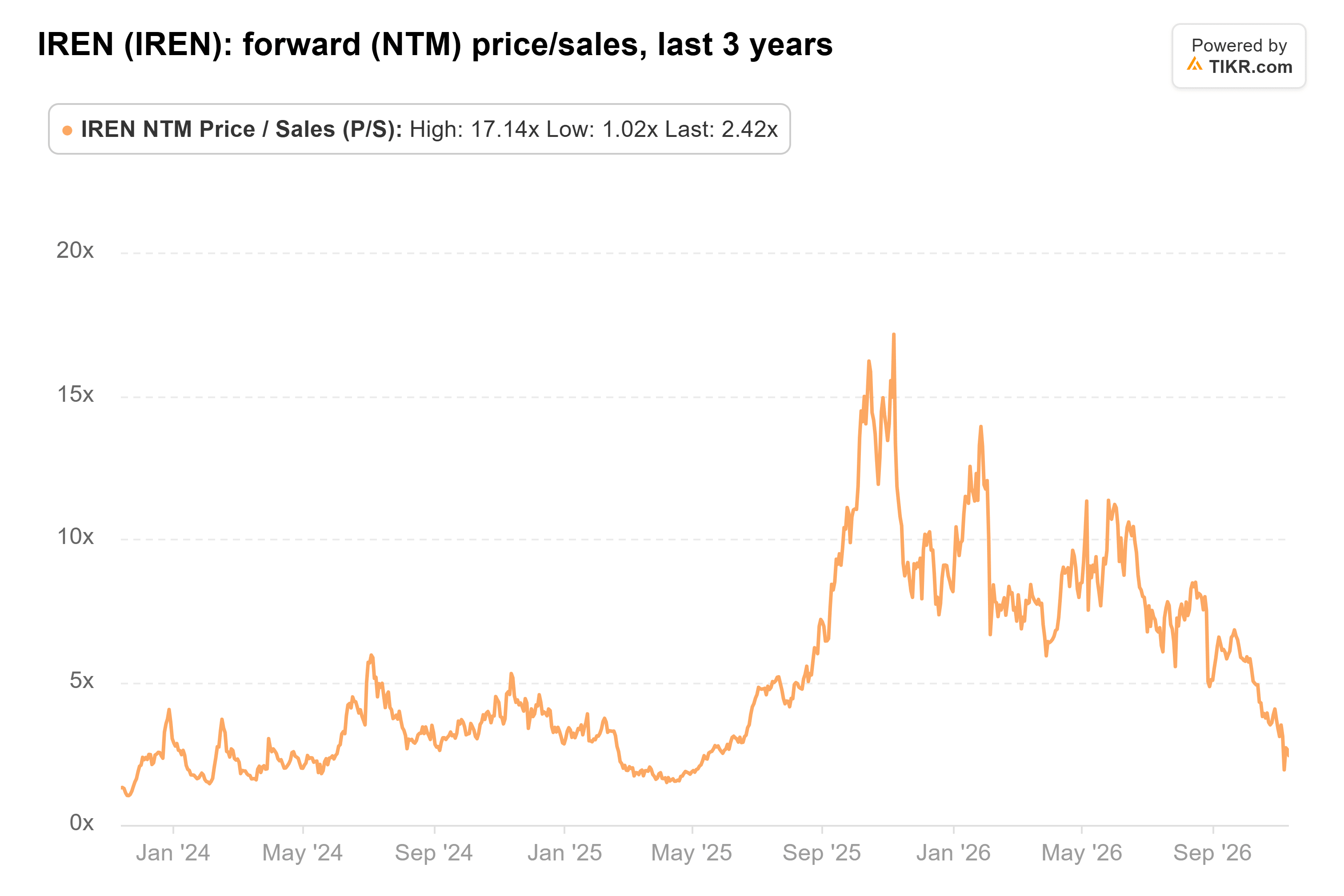
J.P. Morgan’s $55 target also matched IREN’s median analyst target in the November 9 TIKR data, while the mean target stood near $58, down from approximately $87 in December 2025.
Financing remains the biggest obstacle to that bullish scenario. Of approximately $15 billion in remaining planned fiscal 2027 capital spending, $9 billion was expected to come from cash, committed GPU financing, and customer prepayments. The remaining $6 billion depended on additional funding sources subject to market conditions.
Although management described its existing $4 billion annualized revenue milestone as fully contracted and funded, additional expansion could increase borrowing costs or dilute shareholders.
Over the next 12 months, infrastructure deployment, customer acceptance, financing decisions, and progress toward the revised revenue milestone will determine whether IREN can justify a higher valuation.
IREN appears potentially undervalued if its fiscal 2028 revenue projections materialize, but J.P. Morgan’s $55 target depends on successful execution and manageable financing costs.
If IREN achieves its early-2027 milestone without significant dilution, the selloff could prove excessive. Further delays or expensive financing, however, could prevent the company’s projected revenue growth from translating into comparable shareholder returns.
So what is IREN stock actually worth?
TIKR lets you forecast the future price of any stock in less than a minute. Just enter a few assumptions into TIKR’s valuation model and see what IREN could be worth. Start from Wall Street consensus estimates, or adjust the inputs to reflect your own view of the business. It’s free to use.
Disclaimer:
Please note that the articles on TIKR are not intended to serve as investment or financial advice from TIKR or our content team, nor are they recommendations to buy or sell any stocks. We create our content based on TIKR Terminal’s investment data and analysts’ estimates. Our analysis might not include recent company news or important updates. TIKR has no position in any of the stocks mentioned. Thank you for reading, and happy investing!