Key Takeaways
- UPS yields 5.9% and GSK yields 3.8%, and at the pace each dividend is growing now, $10,000 in either pays about $12,500 over 20 years.
- GSK’s dividend took 39% of free cash flow in the twelve months to June 30, 2026, against 85% for UPS in the twelve months to Sept. 30, 2026.
- UPS paid out more in dividends than it made in free cash flow in fiscal 2025, but it now targets about $6.1 billion of adjusted free cash flow in 2026 against about $5.4 billion of dividends.
- UPS’s Teamsters contract, which expires on Aug. 1, 2028, will test how much cash it has left for its dividend.
If you buy a dividend stock to hold for 20 years, the check you collect in 2046 matters as much as the one you get this quarter.
United Parcel Service (UPS) pays the bigger check today, a 5.9% yield. On Nov. 4, it declared $1.64 a share for the quarter, the rate it has paid since early 2025. GSK (GSK) yields 3.8%, but its dividend is growing again: on Oct. 28, it declared 17p a share for the third quarter, up from 16p a year earlier.
So which one would I hold for the next 20 years?
| Metric | GSK | UPS |
|---|---|---|
| Dividend yield | 3.8% | 5.9% |
| Dividend growth, fiscal 2020-2025 | -12.0% a year | 10.2% a year |
| Cash dividend payout ratio (TTM) | 39% (to June 30, 2026) | 85% (to Sept. 30, 2026) |
| Net debt/EBITDA (LTM) | 1.8x | 1.6x |
| Interest coverage (LTM) | 14.7x | 6.7x |
| Forward P/E | 10x | 14x |
6 safe dividend stocks paying retirees 6%+ yields
There are over 100 stocks paying 6%+ annual dividends today.
But after an extensive investment review leveraging TIKR’s proprietary data, we now believe only six of them are truly safe for retirees.
They’re all yours as part of our new investment report. Learn more about how to get access right here.
GSK reset its dividend, and it’s growing again
From fiscal 2020 to fiscal 2025, GSK’s dividend per share grew at -12.0% a year, because the dividend was reset when GSK spun off Haleon. The cash it pays out has been climbing since then, and free cash flow has covered the dividend every year since fiscal 2016:
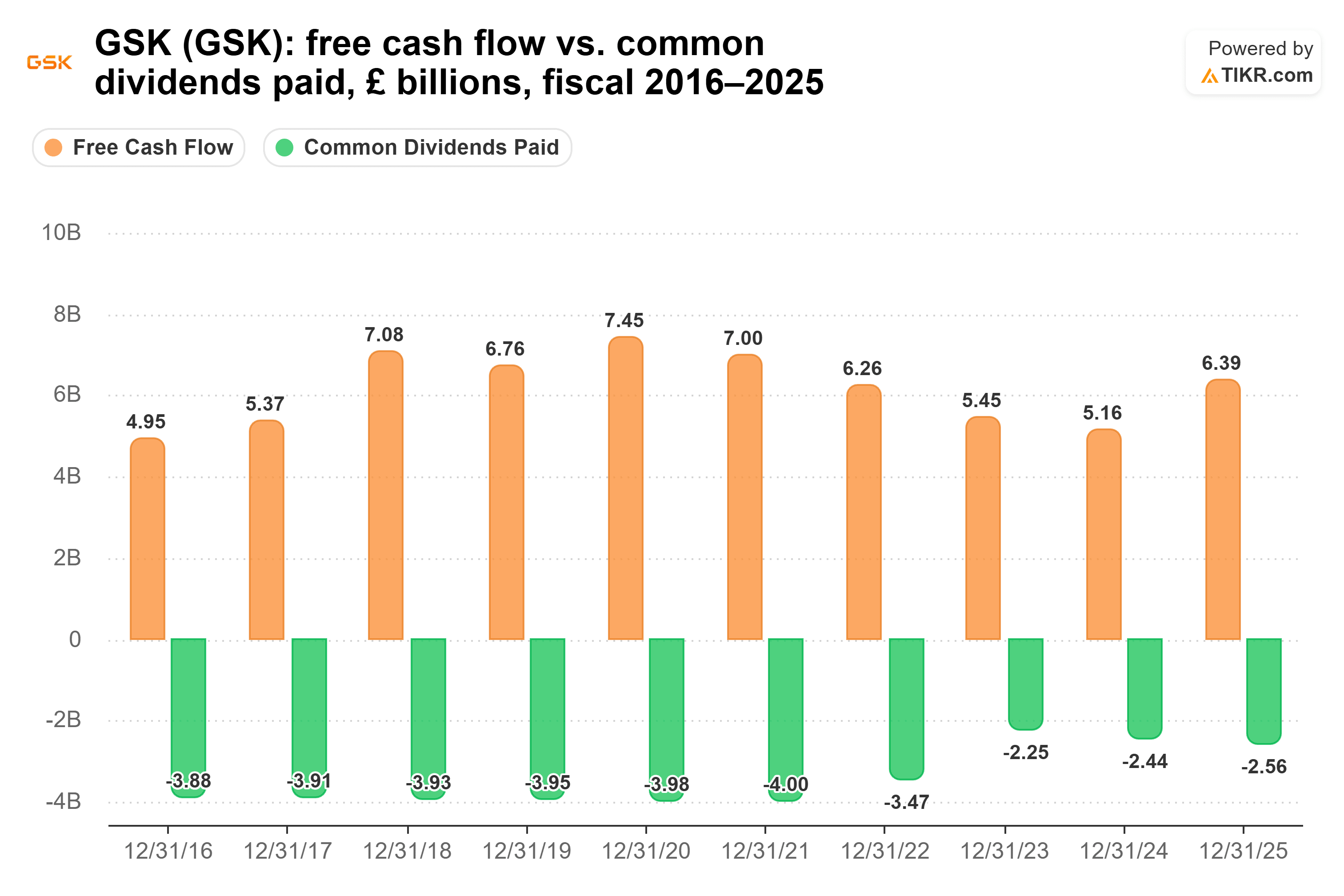
Dividends paid dropped from £4.00 billion in fiscal 2021 to £2.25 billion in fiscal 2023, then rose to £2.56 billion in fiscal 2025. In the twelve months to June 30, 2026, they took a comfortable 39% of free cash flow. GSK’s third-quarter 2026 sales rose 5% from a year earlier to £8.9 billion, and it reaffirmed its full-year guidance. GSK sets its dividend in pounds, so the dollar amount a US holder collects moves with the exchange rate.
Legal bills are the main risk. Reports on Nov. 13 had GSK facing a $2.2 billion Zantac settlement and winning a broad European injunction against Pfizer and BioNTech in a vaccine patent fight. GSK ended another dispute on Oct. 28, when it settled with Moderna and neither side paid the other. GSK’s free cash flow leaves room for a bill that size.
UPS pays more, with less to spare
UPS’s record runs the other way. Its dividend per share rose 10.2% a year from fiscal 2020 to fiscal 2025, from $4.04 to $6.56. Most of that came in one step, though, and free cash flow hasn’t kept up:
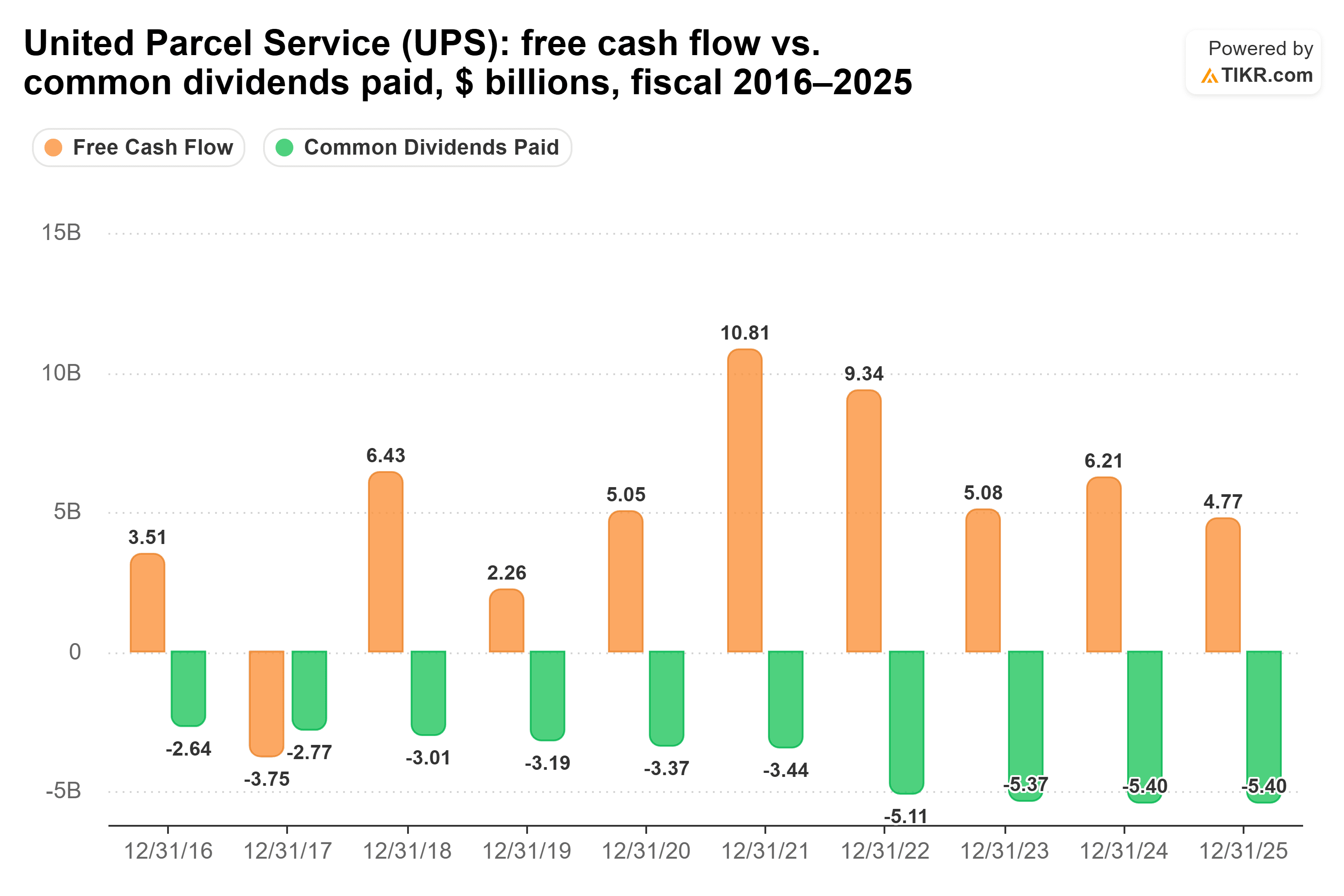
Dividends paid jumped from $3.44 billion in fiscal 2021 to $5.11 billion in fiscal 2022 and reached $5.40 billion in fiscal 2025. Over the same years, free cash flow fell from $10.8 billion to $4.77 billion. That made the fiscal 2025 dividend 113% of free cash flow, and the dividend took a tight 85% over the twelve months to Sept. 30, 2026.
The third quarter helped. Revenue rose 6.7% from a year earlier to $22.9 billion. UPS also raised its 2026 target for adjusted free cash flow to about $6.1 billion, against about $5.4 billion of planned dividends, and the stock rose 6% on the Oct. 27 report. “So clearly, our dividend is safe and secure,” CEO Carol Tomé said on the third-quarter call.
The business is still shrinking in places. UPS’s third-quarter operating margin slipped to 7.6% from 8.4% a year earlier. Its US daily volume fell 3.3% as it deliberately cut its Amazon business.
So which dividend wins?
GSK gets my dividend dollars for the next 20 years.
At their 5-year rates, UPS would win in a walk: $10,000 would pay about $34,500 over 20 years, against about $2,900 from GSK. But those rates come from GSK’s reset and UPS’s one big step. The dividends are growing slowly now: GSK’s dividends paid rose 4.9% in fiscal 2025, and UPS’s dividend rose 0.6%. At those paces, the two pay about $12,500 apiece over 20 years, and GSK’s yearly income passes UPS’s around 2037.
So for me, the question is which check I trust to last. GSK’s dividend takes 39% of free cash flow, and its interest coverage is 14.7x. UPS’s figures are 85% and 6.7x. And GSK’s forward P/E shows I’m not paying up for that safety:
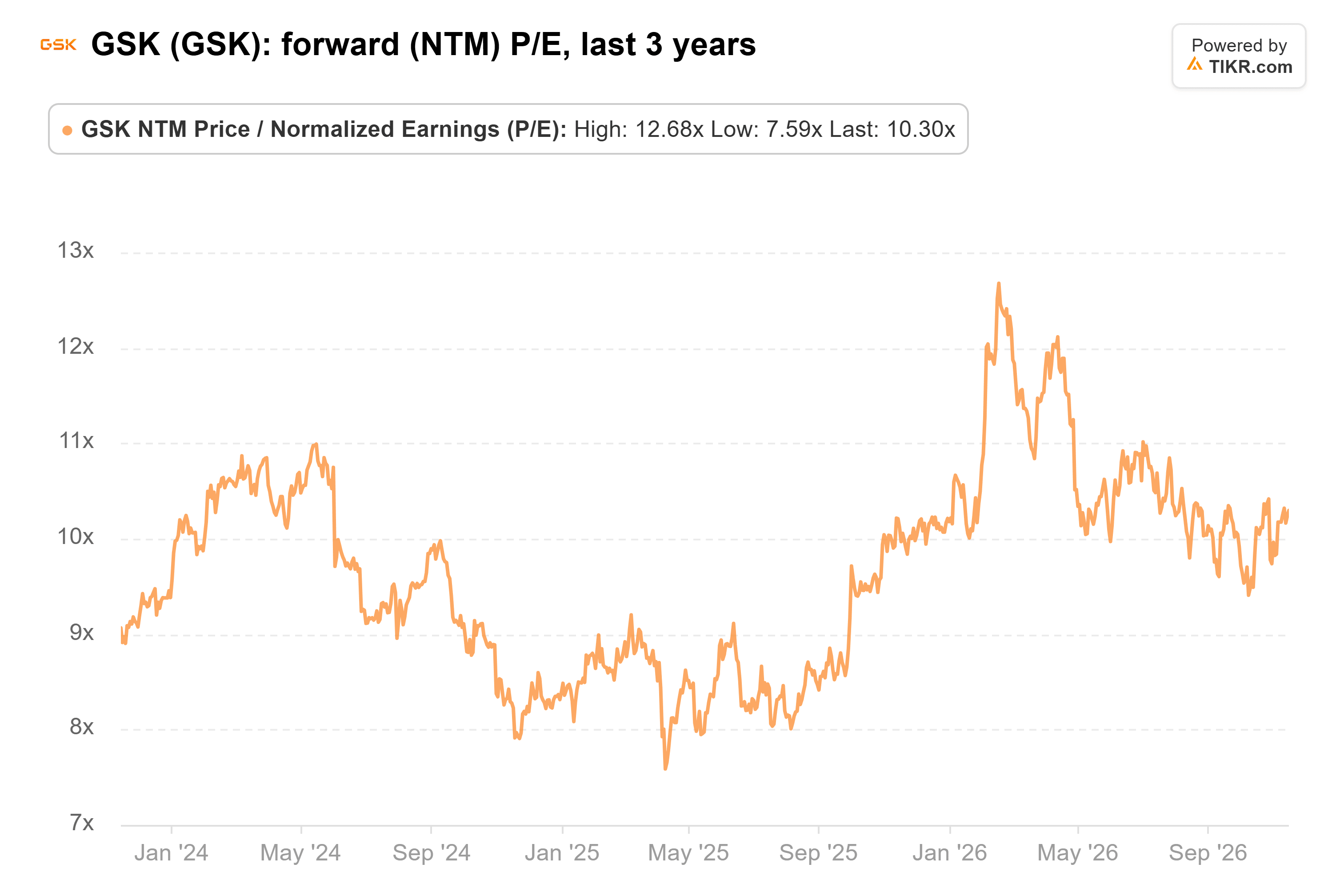
At 10x forward earnings, GSK trades close to its three-year average of 9.7x and well under February’s high of 13x. UPS trades at 14x.
That doesn’t put UPS’s dividend in immediate trouble. Its 5.9% yield pays $590 a year on $10,000 today, against $380 from GSK, and its 2026 free cash flow target covers the dividend. It’s just that, over 20 years, I’d rather own the check with room to spare.
Of course, if UPS’s free cash flow keeps climbing past this year’s target, its coverage will look a lot better. Its Teamsters contract, which expires on Aug. 1, 2028, will be a big test of that.
Forget GSK: 6 safe 6%+ dividend yields you can buy right now
Dividends can hold the key to enormous wealth. But only if you buy the right ones.
Picking the right high-yield dividend stock can be the difference between a dream retirement…and scraping by every month, waiting for the next Social Security check to clear.
We’ve identified six stocks yielding 6%+ that we believe every retiree should know about right now. (And GSK isn’t one of them.)
Disclaimer:
Please note that the articles on TIKR are not intended to serve as investment or financial advice from TIKR or our content team, nor are they recommendations to buy or sell any stocks. We create our content based on TIKR Terminal’s investment data and analysts’ estimates. Our analysis might not include recent company news or important updates. TIKR has no position in any of the stocks mentioned. Thank you for reading, and happy investing!