
Key Takeaways
- The US proposed tariffs on 14 economies, with Vietnam at 20% with a deal or up to 35% without.
- Nike made about 95% of its brand’s footwear in Vietnam, Indonesia and China in fiscal 2026.
- All three countries’ headline rates top Nike’s 15% assumption, yet analysts still expect fiscal 2028 growth.
- Nike’s thin margins leave it little room to absorb the cost.
Walmart (WMT) made early headlines on the new tariff list, but groceries are 59% of its US sales. Nike (NKE) has much more at stake: it makes nearly all of its shoes in three of the countries on the list.
The news also reaches On Holding (ONON), a premium rival that held full price last quarter, and Dick’s Sporting Goods (DKS), whose shelves would carry any price increase.
What Exactly Happened
The US Trade Representative proposed the tariffs after an eight-month Section 301 investigation, and nothing takes effect until after hearings begin Jan. 25, 2027. Goods from Vietnam would face 20% with a deal and up to 35% if talks fail. Indonesian goods would face up to 18%, and most Chinese goods up to 20% on top of first-term duties, rising to as much as 40% if the truce expiring Jan. 10 collapses.
Three Countries, 95% of the Shoes
Nike’s annual report says Vietnam, Indonesia and China made about 52%, 27% and 16% of the Nike brand’s footwear in fiscal 2026. That footwear brought in $29.5 billion of Nike’s $46.4 billion in revenue.
Nike’s Forecast Assumed 15%
Nike’s outlook assumed incremental tariffs of 10% through July and 15% after, it said on its June earnings call. Each footwear country’s headline rate is higher.
Estimates from Nov. 23, before the list, still have normalized EPS rising from $1.29 in fiscal 2027 to $1.37 in fiscal 2028, though Nike guided fiscal 2028 adjusted EPS to decline modestly:
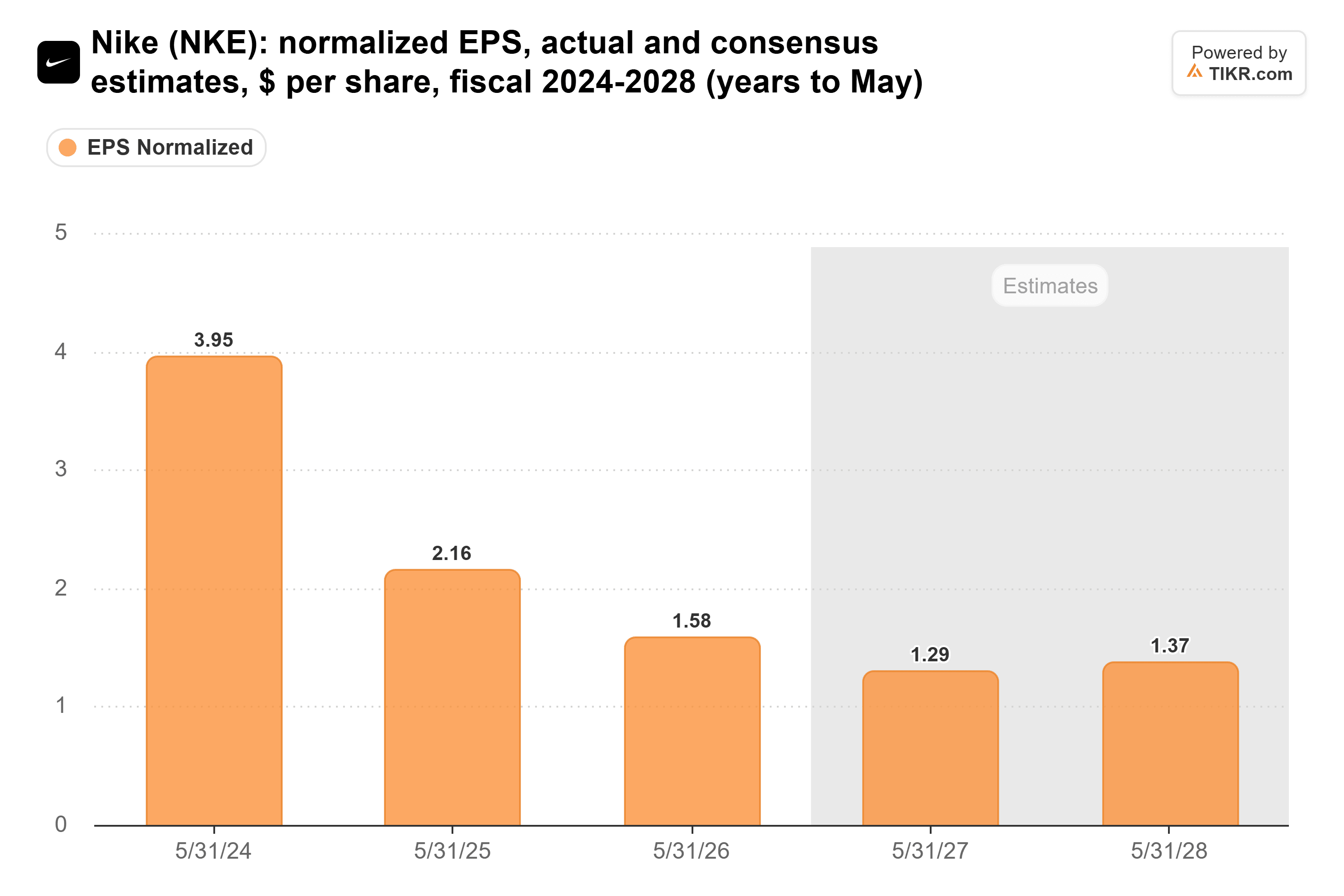
Fiscal 2028 would be the first full year at the new rates, so I’d expect those estimates to fall if Vietnam lands near 35%.
Nike’s Margins Have Little Room Left
In December 2025, Nike put the old tariffs at about $1.5 billion of annualized costs, a 320-basis-point gross margin headwind for fiscal 2026 before offsets and 120 after. The Supreme Court struck them down in February, and Nike booked a $986 million recovery, the spike below:
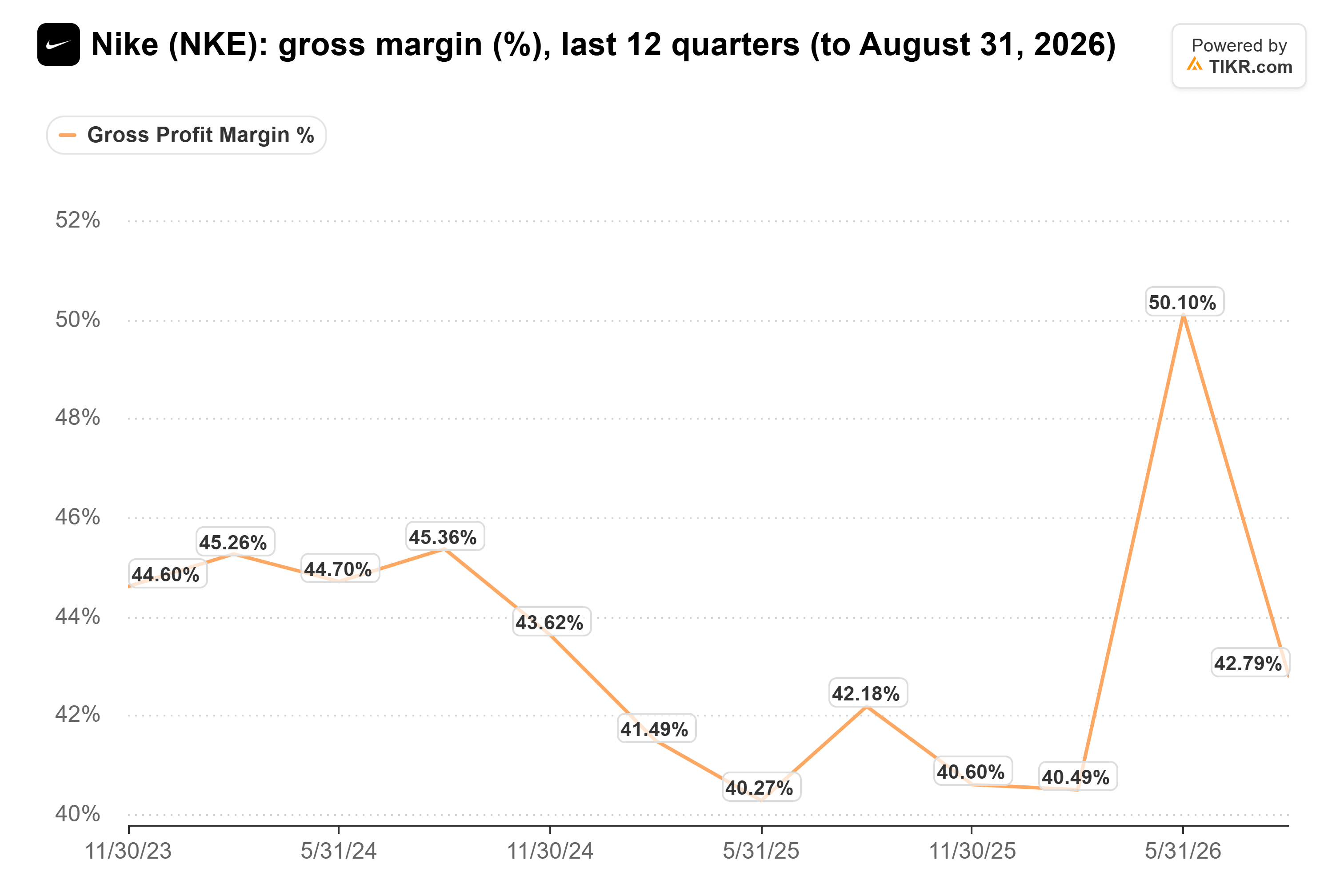
Gross margin went from 45.4% in the quarter to August 2024 to 42.8% two years later, partly on tariffs (the latest quarter was up 60 basis points year over year). Operating margin sits near its ten-year low:
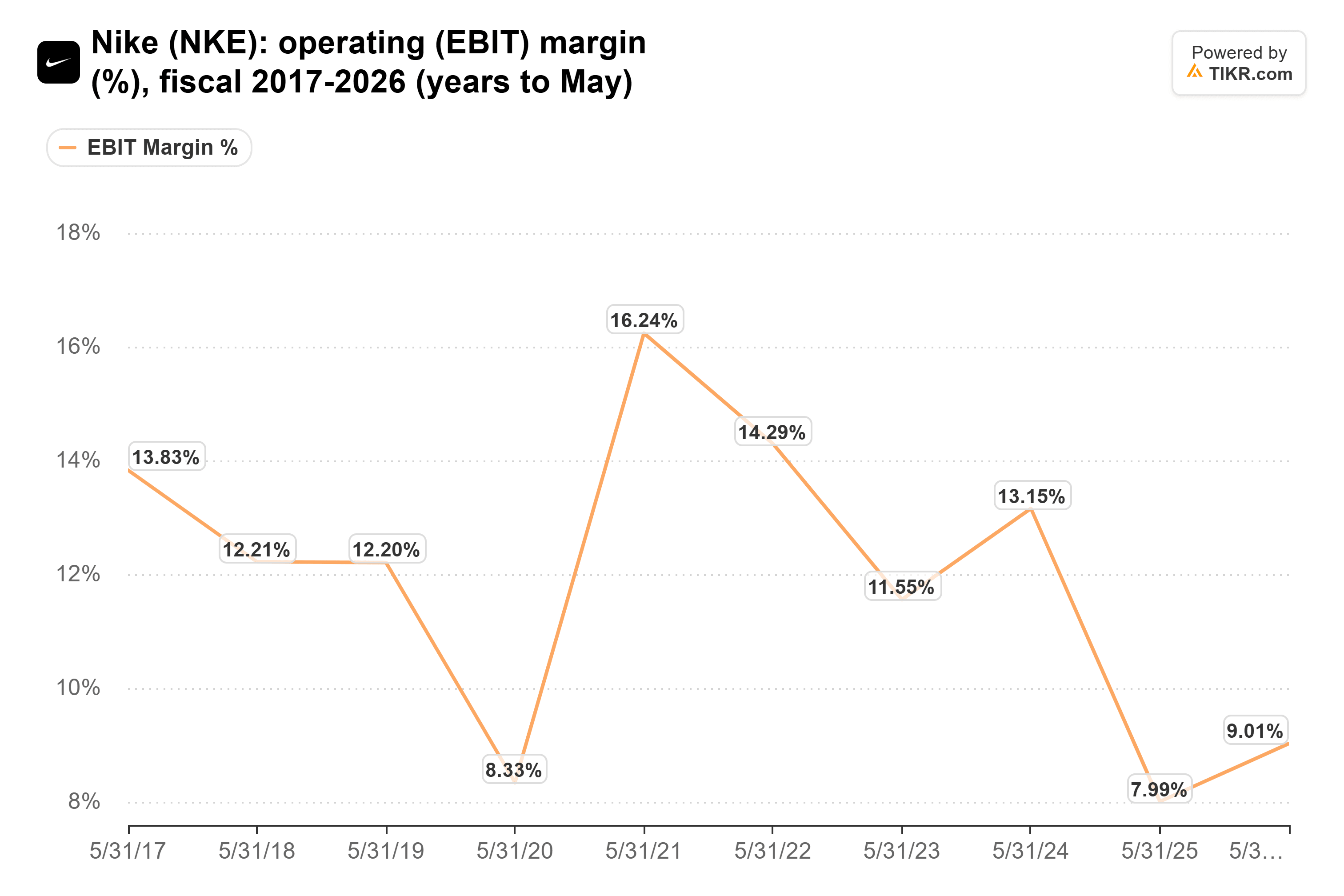
Fiscal 2026’s 9.0% includes the refund. On Nike’s own EBIT measure, it was 8.3%, or 6.2% without it.
TIKR Tracks 45 Analysts on Nike. How Many Say “Buy”?
See the full breakdown of Buy, Hold, and Sell ratings on Nike, along with Wall Street’s revenue and earnings estimates, all in one place. More than 500,000 investors use TIKR to research stocks like this one. See Nike’s Analyst Ratings
Raising Prices Won’t Come Easy
Rivals in the same countries would pay the same rates, and Nike planned to offset most of the last round. On held full price in a discount-heavy third quarter, and its 66.9% gross margin without tariff refunds was a record.
Nike’s is 24 points lower, and about 61% of Nike brand revenue goes through wholesale partners. Nike is about 31% of Dick’s merchandise purchases, and Executive Chairman Ed Stack flagged “a continued challenging athletic footwear marketplace” in Dick’s Nov. 24 results. With non-GAAP operating margin down to 4.9% from 5.8%, Dick’s can’t absorb much either.
What Nike’s December Report Has to Show
Unlike grocery-heavy Walmart, Nike can’t spread a tariff, and its margins have little room left. That puts the fiscal 2028 recovery analysts expect at real risk. Nike reports its second quarter on Dec. 17, and a tariff assumption above 15% there would push the $1.37 estimate down.
So What Is Nike Stock Actually Worth?
TIKR lets you forecast the future price of any stock in less than a minute. Just enter a few assumptions into TIKR’s valuation model and see what Nike could be worth. Start from Wall Street consensus estimates, or adjust the inputs to reflect your own view of the business. It’s free to use.
Disclaimer:
Please note that the articles on TIKR are not intended to serve as investment or financial advice from TIKR or our content team, nor are they recommendations to buy or sell any stocks. We create our content based on TIKR Terminal’s investment data and analysts’ estimates. Our analysis might not include recent company news or important updates. TIKR has no position in any of the stocks mentioned. Thank you for reading, and happy investing!