Key Takeaways
- Dell, Super Micro, Hewlett Packard Enterprise and Lenovo are reportedly asking for 25% to 45% more on AI servers already under contract.
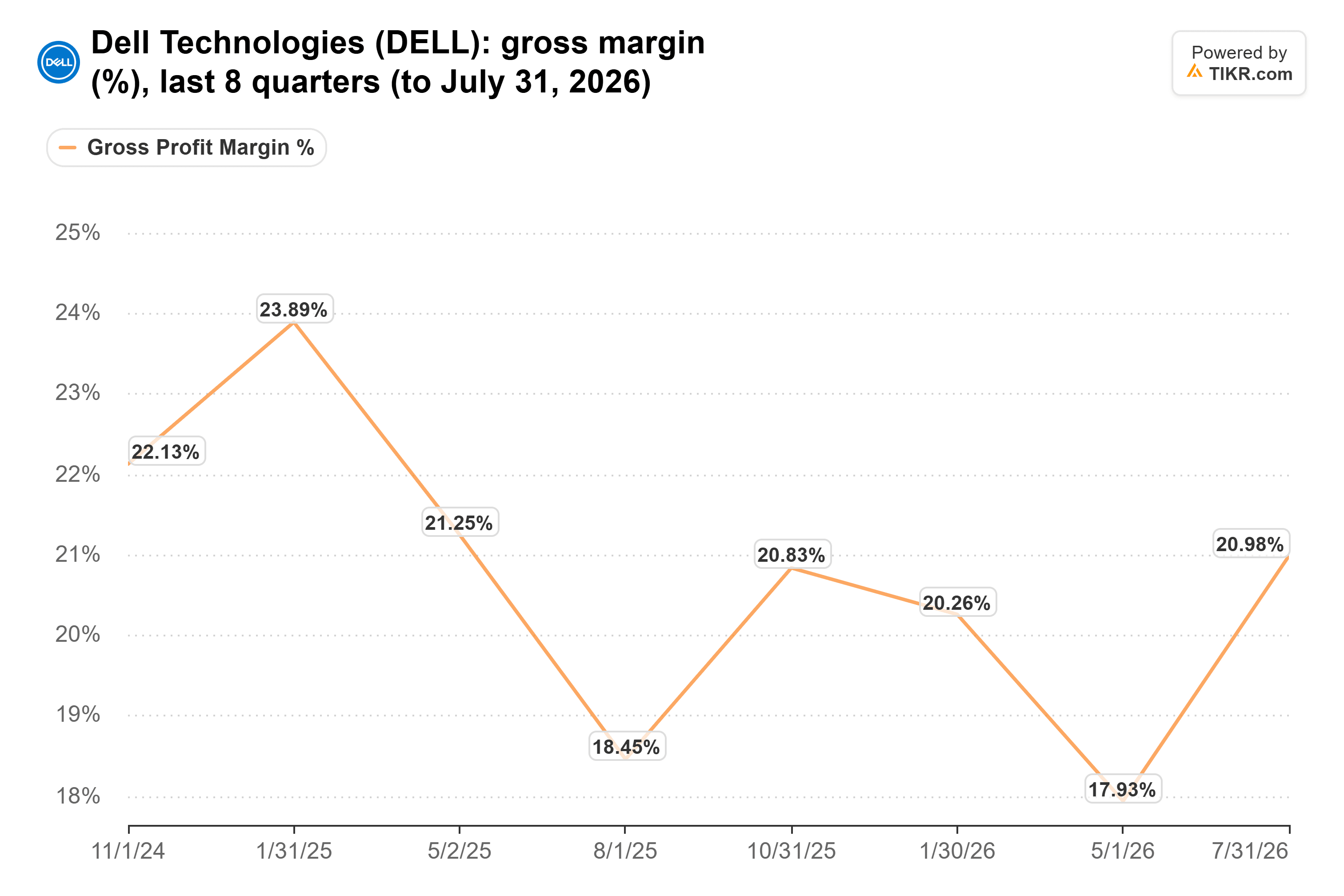
- Reopening signed contracts shows real pricing power, which protects thin margins: Dell’s latest gross margin was 21.0% and Super Micro’s was 12.0%.
- Memory makers like Micron are keeping most of the gains.
- The risk is that debt-heavy buyers like CoreWeave push back, and Dell’s report on Tuesday is the first test of whether customers are paying.
Dell Technologies (DELL) and Super Micro Computer (SMCI) have found a new way to handle soaring memory costs: go back to customers who already signed.
The Financial Times reported on Sunday that both companies, along with Hewlett Packard Enterprise (HPE) and Lenovo, are asking buyers to pay 25% to 45% more at delivery than their contracts say for Nvidia-based AI servers.
That’s a bold ask. Memory makers like Micron Technology (MU) are collecting the extra money, and AI cloud providers like CoreWeave (CRWV), which already borrow heavily to build, are getting the bill.
Blame memory
The server makers reportedly blame shortages of memory and circuit boards, and Micron’s results show where that money ends up. In the quarter ended Sept. 3, Micron’s revenue was $54.23 billion, up from $11.32 billion a year earlier, and its non-GAAP gross margin rose to 87.0% from 45.7%.
Analysts expect a lot from Dell, too. The consensus has its normalized EPS at $25.86 for the fiscal year ending in January, up from $10.30 last year, and at $30.55 the year after:
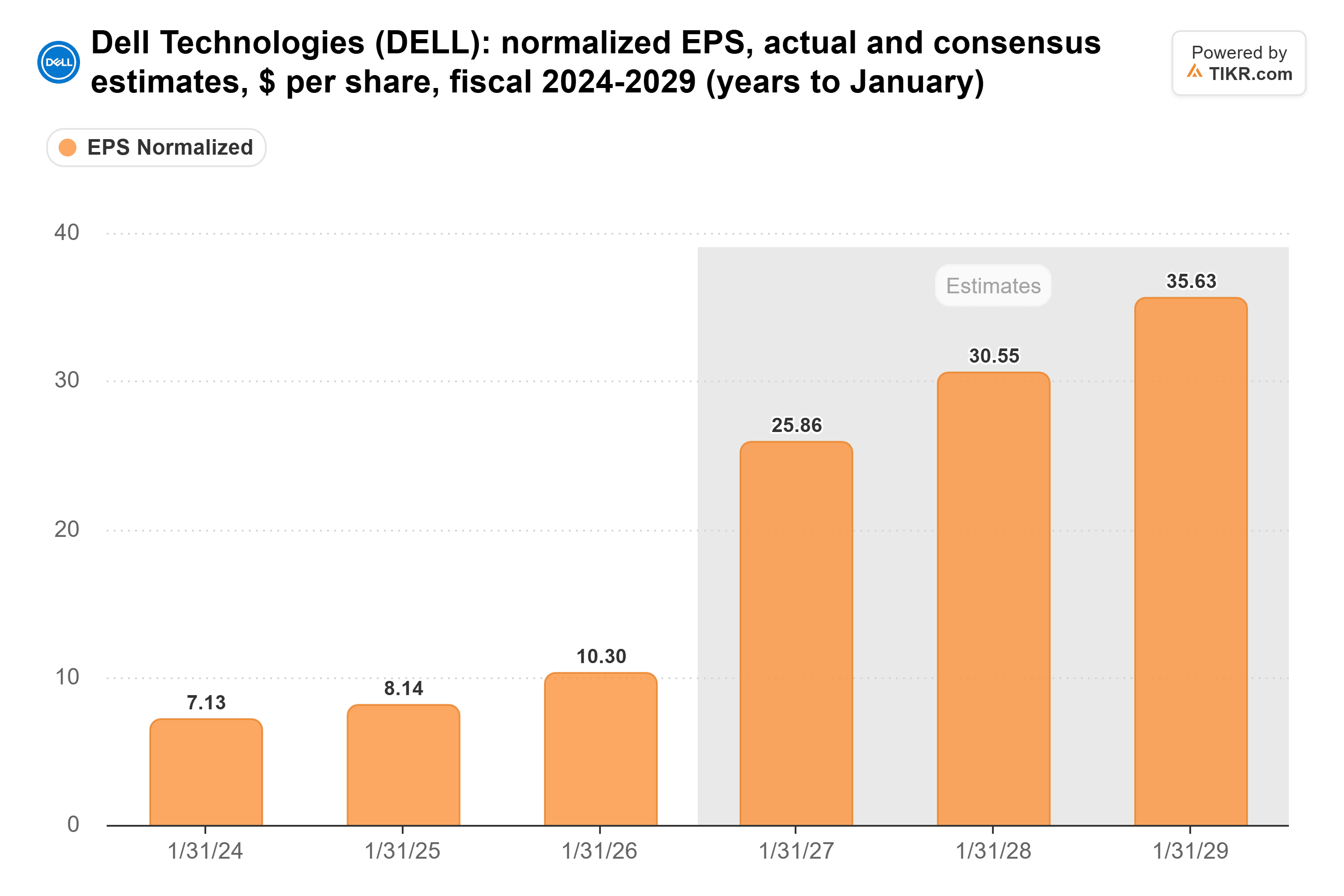
Those estimates came before the weekend’s report. If Dell can make customers pay more, that next step up looks more achievable.
TIKR tracks 30 analysts on Dell Technologies. How many say “Buy”?
See the full breakdown of Buy, Hold, and Sell ratings on Dell Technologies, along with Wall Street’s revenue and earnings estimates, all in one place. More than 500,000 investors use TIKR to research stocks like this one. See Dell Technologies’ Analyst Ratings
Dell has done this before
Raising prices isn’t new for Dell. It raised server prices on Dec. 10, 2025, and PC prices on Jan. 6, and management said on its call a year ago that it gets back about two-thirds of cost increases within 90 days.
It worked. Dell’s product gross margin was 17.3% in the quarter ended July 31, up from 12.1% a year earlier, even though low-margin AI servers made up more of its sales. Its overall gross margin rose to 21.0% that quarter, from 17.9% the quarter before:
HPE has seen the same thing: its Cloud & AI segment’s operating margin rose to 17.0% in the quarter ended July 31, from 7.0% a year earlier.
Super Micro needs it most
Super Micro has the least room of the group. Its gross margin went from 6.3% in the quarter ended December 2025 to 17.5% in the June quarter, then fell back to 12.0% in the quarter ended Sept. 30:
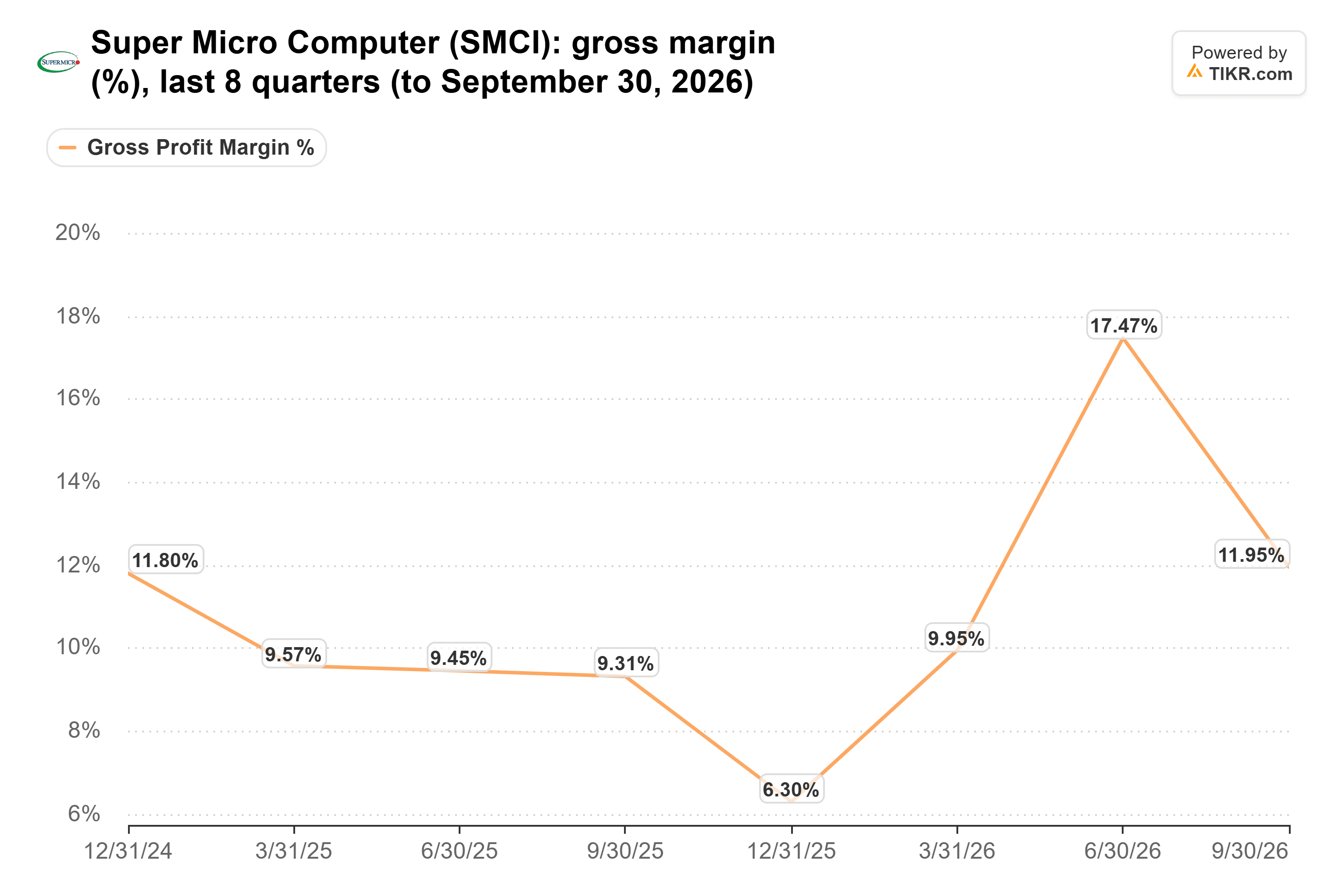
September-quarter sales were $19.9 billion, up from $5.0 billion a year earlier, so each point of gross margin it wins back is worth about $200 million a quarter.
Not every buyer can pay up
There’s a limit, though. A price increase that only passes along memory costs won’t make AI servers much more profitable, and Dell’s management still holds them to a mid-single-digit operating margin.
The AI clouds are the real test. Dell’s management has named CoreWeave among the big customers it builds AI clusters for, and in CoreWeave’s third quarter, its $846 million of net interest expense was more than four times its $207 million of operating income. So does CoreWeave pay up, pass the cost on to its own customers, or push deliveries back?
What Tuesday needs to show
Dell guides to $19 billion of AI server revenue for the quarter, and its AI backlog was $95 billion at July 31. AI revenue at or above $19 billion, a backlog still near $95 billion and an Infrastructure Solutions Group operating margin above the guide of just over 13.4% would mean customers are paying.
The way I see it, reopening signed contracts is about as clear a sign of pricing power as a hardware business gets, and it’s a net positive for Dell’s margins going into Tuesday. The open question is how many customers say no.
So what is Dell stock actually worth?
TIKR lets you forecast the future price of any stock in less than a minute. Just enter a few assumptions into TIKR’s valuation model and see what Dell could be worth. Start from Wall Street consensus estimates, or adjust the inputs to reflect your own view of the business. It’s free to use.
Disclaimer:
Please note that the articles on TIKR are not intended to serve as investment or financial advice from TIKR or our content team, nor are they recommendations to buy or sell any stocks. We create our content based on TIKR Terminal’s investment data and analysts’ estimates. Our analysis might not include recent company news or important updates. TIKR has no position in any of the stocks mentioned. Thank you for reading, and happy investing!