Key Takeaways
- Carvana has gained 24% since Oct. 12 after third-quarter retail units rose 39% to a record 217,385 and revenue jumped 42% to $8.04 billion.
- Adjusted EBITDA margin slipped to 10.0% from 11.3% as Carvana offered below-benchmark loan rates to win volume.
- Director Ira Platt sold $2.25 million of stock, and the $81 mean target implies only about 10% upside.
- The Feb. 18 report must show sequential unit growth and a margin that has stopped slipping.
Carvana (CVNA) has gained 24% since its Oct. 12 close, and it added another 2.1% on Friday to finish at $74. Over the past year, the stock has returned 26.8%.
The rally followed a third quarter with records nearly everywhere. Retail units rose 39% to 217,385, and revenue jumped 42% to $8.04 billion, ahead of the $7.70 billion estimate.
The broader used-car industry was roughly flat. Carvana is taking share at a pace few retailers ever manage.
Insiders, however, keep selling. Director Ira Platt reported a $2.25 million sale on Friday, following CFO Mark Jenkins’ $4.07 million disposal in October.
And the stock still sits 24% below its 52-week high of $97. So which signal do you follow?
Records, with a margin asterisk
Here’s what the quarter delivered:
- Net income: $483 million, up $220 million from a year earlier
- Adjusted EBITDA: a record $800 million, up $163 million
- GAAP operating margin: 8.9%
“We are just beginning to realize the potential of the machine we are building,” founder and CEO Ernie Garcia said in the release.
The asterisk is the margin. Adjusted EBITDA margin was 10.0%, down from 11.3% a year earlier, because Carvana chose to offer loan rates below benchmarks. Higher fuel prices and rising benchmark rates cost another $200 or so per unit.
That trade is visible in gross margin…
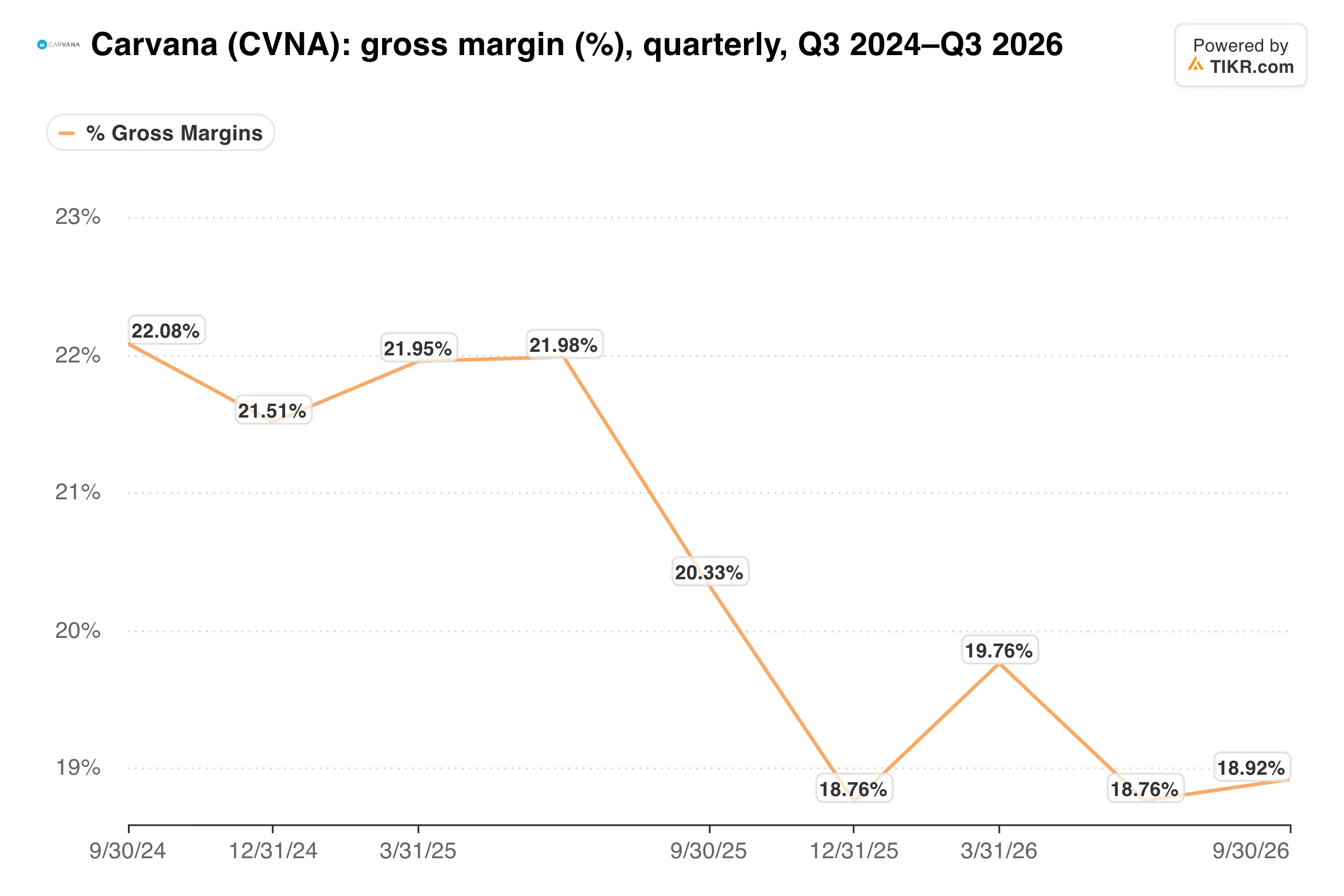
Carvana is buying volume with margin, and so far the volume is showing up.
Capacity is the real limit
Carvana’s long-term goal is 3 million retail units a year at a 13.5% adjusted EBITDA margin. Today it runs near 870,000.
Demand doesn’t seem to be the bottleneck. Reconditioning is, so Carvana keeps adding capacity, including a new inspection and reconditioning center at its ADESA Orlando site with about 100 jobs.
For the fourth quarter, management expects retail units to rise sequentially from 217,385. It also sees full-year adjusted EBITDA at the higher end of its $2.7 billion to $3.0 billion range.
Analysts expect the top line to keep compounding:
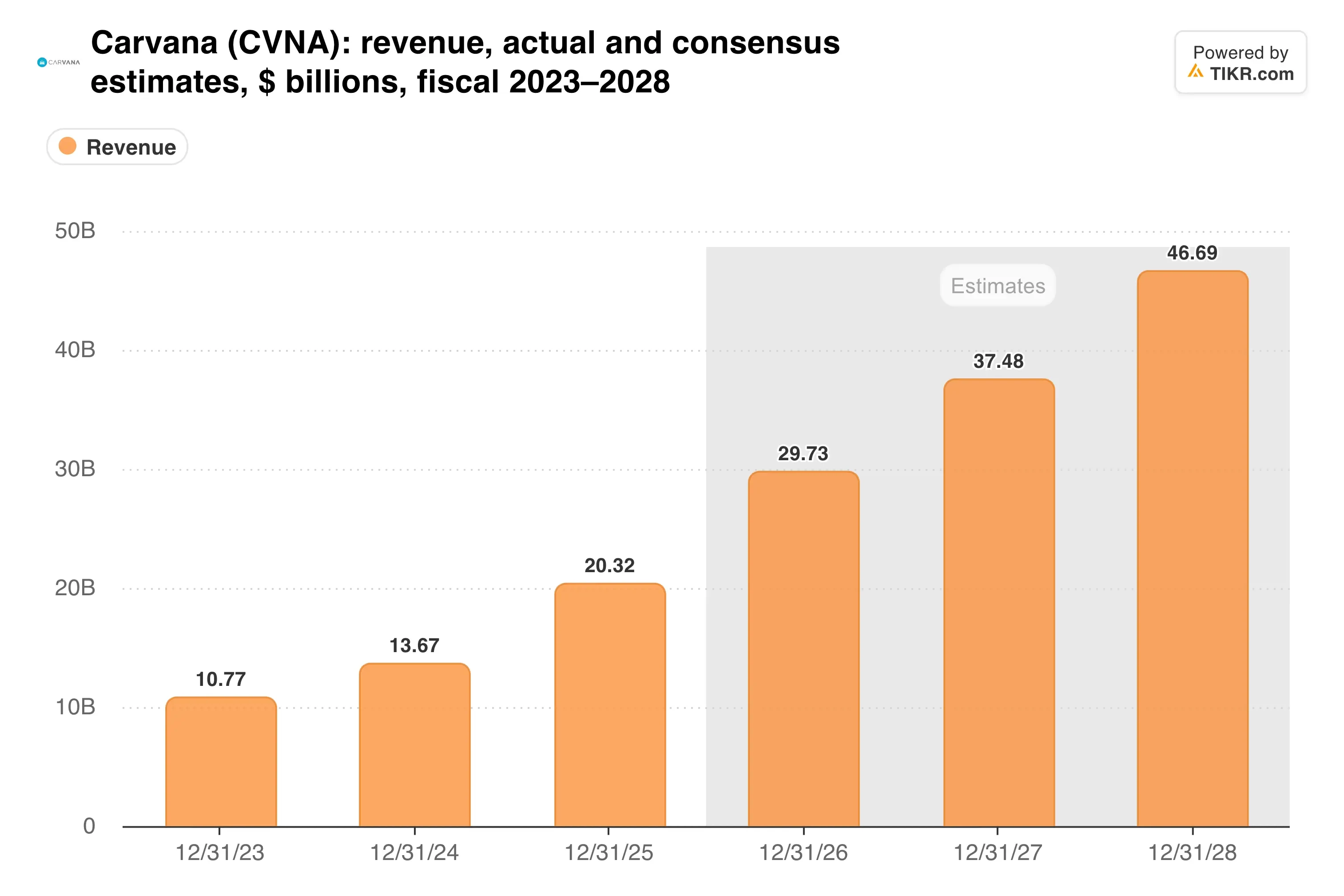
Consensus calls for revenue growth of about 36% a year over the next two years.
TIKR tracks 24 analysts on Carvana. How many say “Buy”?
See the full breakdown of Buy, Hold, and Sell ratings on Carvana, along with Wall Street’s revenue and earnings estimates, all in one place. More than 500,000 investors use TIKR to research stocks like this one. See Carvana’s Analyst Ratings
Paying 36 times for growth
That growth comes at a price. Carvana trades at 36.2x forward earnings, roughly in line with its five-year average of about 35x.
For a company growing units near 40%, that’s not outrageous. Still, before this quarter it had fallen on earnings day in four of five reports, even after beats, because the bar keeps rising.
The balance sheet is far stronger than the one investors remember:
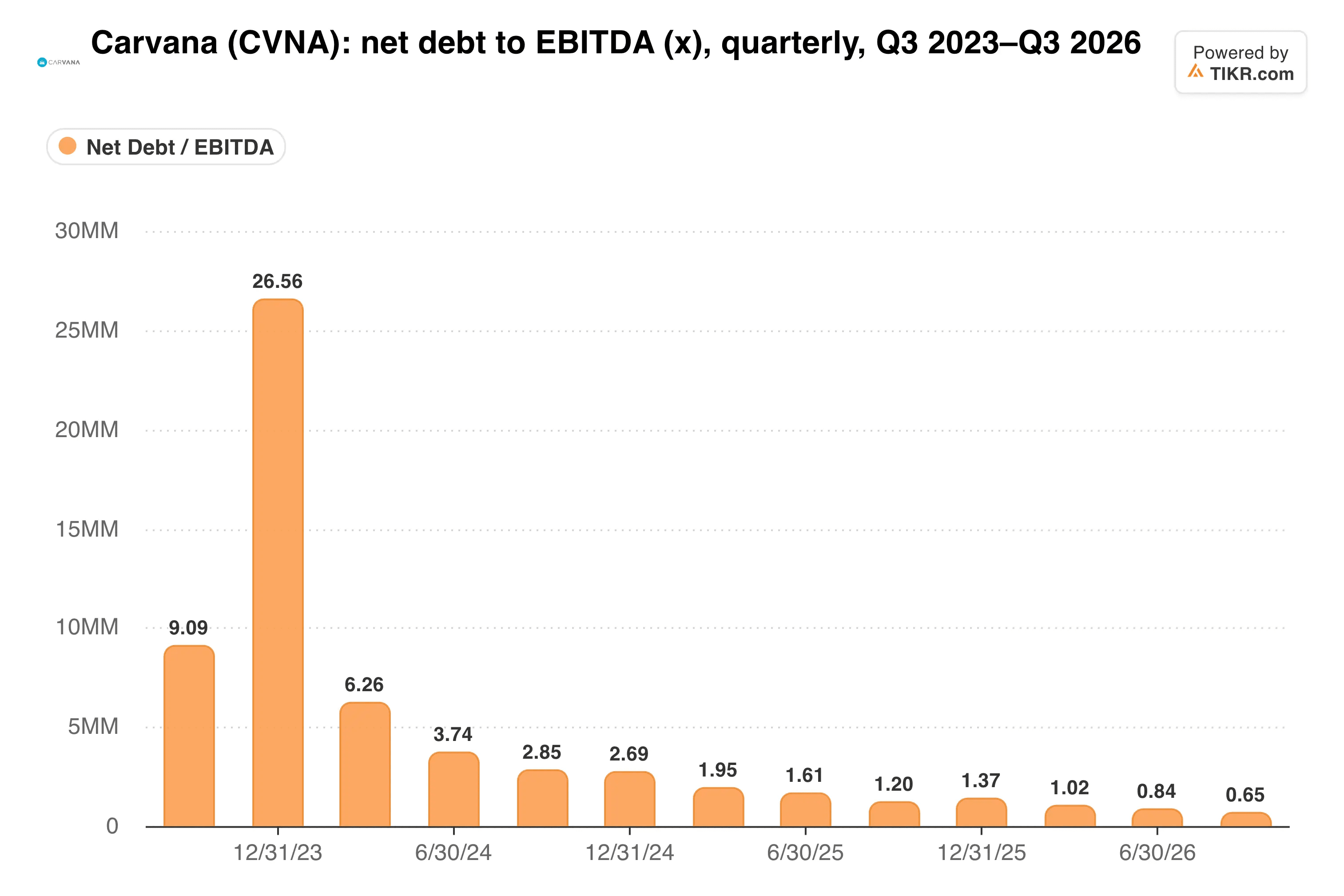
Net debt is now about 0.8x trailing EBITDA, which removes the old solvency worry.
The Street’s mean target of $81 implies about 10% upside. That’s thin after a 24% run in less than a month.
My take: I’d hold Carvana here. The unit growth is real, leverage is low, and the margin dip came from a deliberate pricing choice that Carvana can reverse. But I wouldn’t chase it either, with insiders selling and the mean target close.
The fiscal-year report, expected Feb. 18, is the next test. It needs to show sequential unit growth and a margin that has stopped slipping.
So what is Carvana stock actually worth?
TIKR lets you forecast the future price of any stock in less than a minute. Just enter a few assumptions into TIKR’s valuation model and see what Carvana could be worth. Start from Wall Street consensus estimates, or adjust the inputs to reflect your own view of the business. It’s free to use.
Disclaimer:
Please note that the articles on TIKR are not intended to serve as investment or financial advice from TIKR or our content team, nor are they recommendations to buy or sell any stocks. We create our content based on TIKR Terminal’s investment data and analysts’ estimates. Our analysis might not include recent company news or important updates. TIKR has no position in any stocks mentioned. Thank you for reading, and happy investing!