Key Takeaways
- Oracle stock is down 50% from its June high. On Nov. 10, Bernstein kept its Outperform rating and $325 target, which is 159% above the price.
- Bernstein sees Oracle’s data center and database businesses as long-term AI winners and names two catalysts: an OpenAI IPO and positive free cash flow in the second half of fiscal 2028.
- Analysts have raised their earnings estimates even as the stock fell, so Oracle trades at about 14x forward earnings against a five-year average of 21x.
- The selloff looks overdone. But $325 needs about 38x forward earnings while Oracle is still raising money, and that’s too much to expect within a year.
Oracle (ORCL) stock is down 50% from its June high, and Bernstein still isn’t budging. On Nov. 10, analyst Mark Moerdler kept his Outperform rating and $325 price target, 159% above where the stock trades now.
The bills came first, then the bad news
The slide started with the cost of Oracle’s AI build. S&P cut Oracle’s credit rating to BBB- in July. In the quarter to Aug. 31, capex hit $28.5 billion, free cash flow was negative $5 billion, and Oracle finished a $20 billion stock sale. On Nov. 2, it priced another $20 billion raise in new shares and notes.
Then November piled on. Oracle canceled a chip-leasing deal with Tencent worth an estimated $7 billion, the Financial Times reported. AI build-out stocks sold off on Nov. 5 after Democrats won both chambers of Congress. And on Nov. 6, Bloomberg reported that Microsoft is winding down a deal to rent AI computing from Oracle.
TIKR tracks 42 analysts on Oracle. How many say “Buy”?
See the full breakdown of Buy, Hold, and Sell ratings on Oracle, along with Wall Street’s revenue and earnings estimates, all in one place. More than 500,000 investors use TIKR to research stocks like this one. See Oracle’s Analyst Ratings
Bernstein is playing a 10-year game
“Oracle has been the most controversial stock in our coverage,” Moerdler wrote. Bernstein reran its 10-year forecast on management’s latest figures and found Oracle’s economics better than analysts had assumed. With investors worried that AI will eat into software, Moerdler sees Oracle’s data center arm and its database business as winners. His two catalysts are an OpenAI IPO, which would show whether AI labs can afford the computing they’ve signed up for, and Oracle’s return to positive free cash flow in the second half of fiscal 2028, a date management gave in October.
Can Oracle grow into $325?
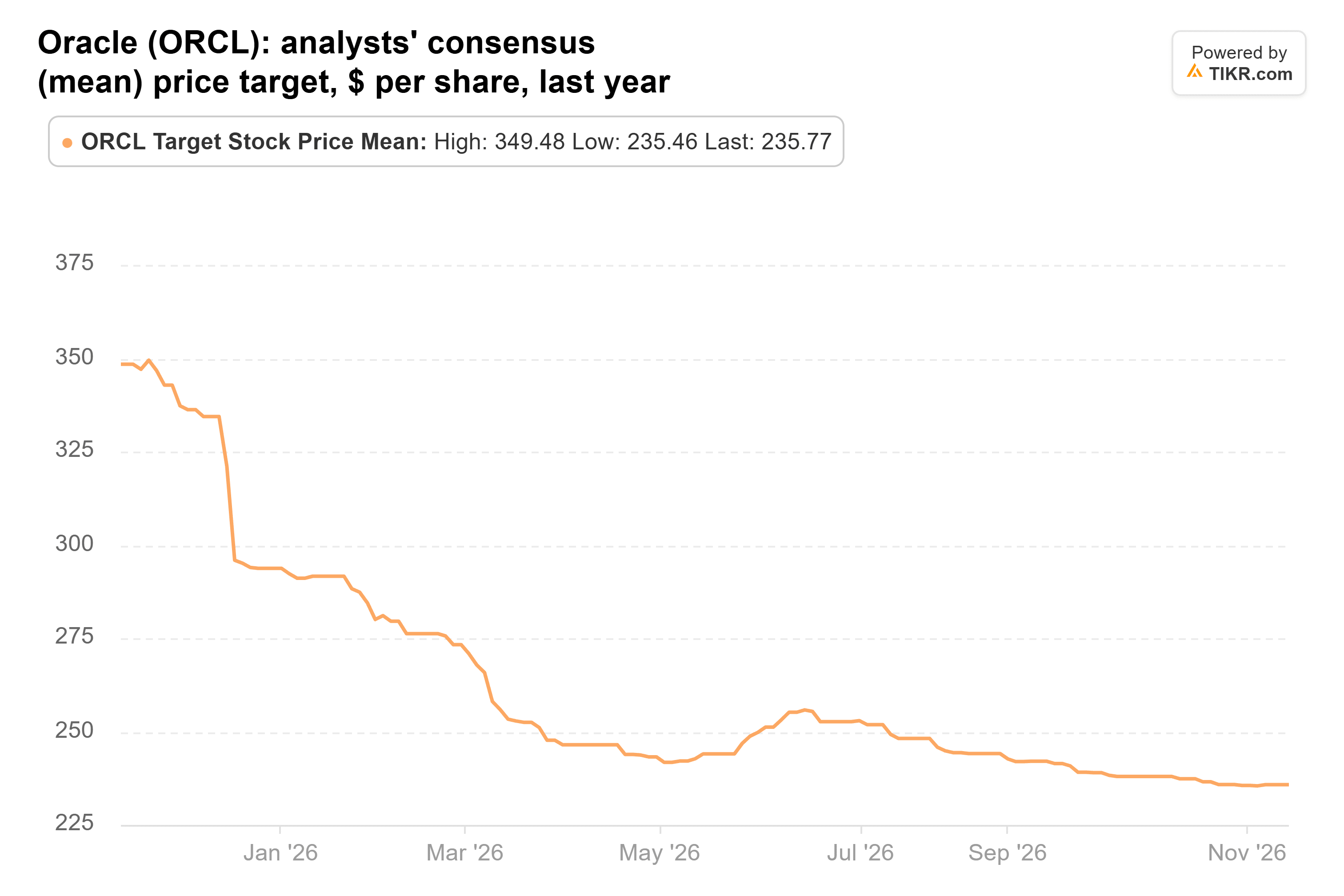
Forty-two analysts cover Oracle, and their average target of $236 is 88% above the price, but $325 sits 38% above even that. The consensus target has fallen from $348 a year ago:
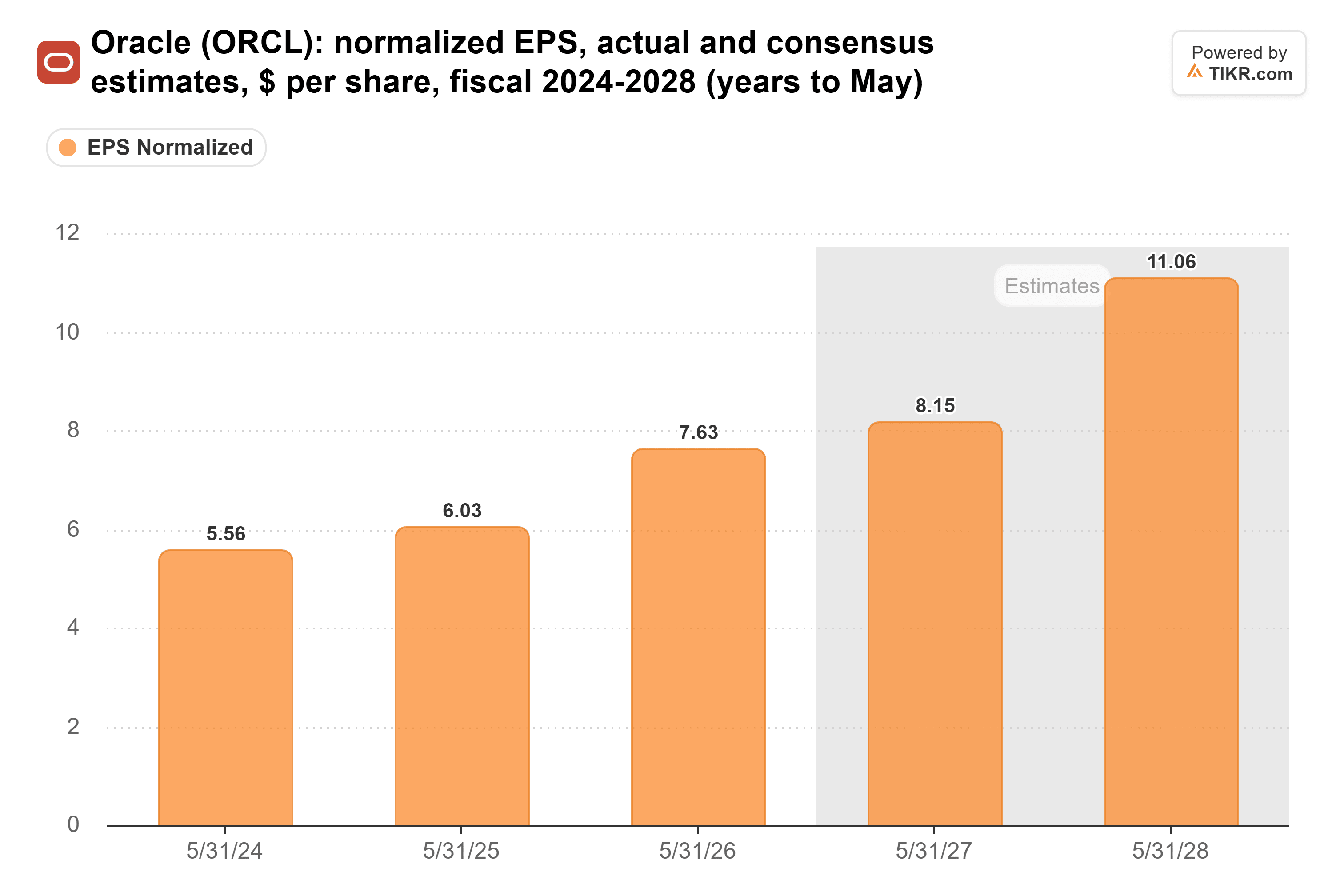
Earnings estimates have gone the other way. Analysts expect $8.15 of normalized EPS for the fiscal year to May 2027, up from $8.05 90 days ago, and $11.06 for fiscal 2028, up from $10.90:
So the stock got cheaper as its earnings outlook improved. At the last close, Oracle traded at about 14x forward earnings, near the 12x low of the past five years and well below its 21x average:
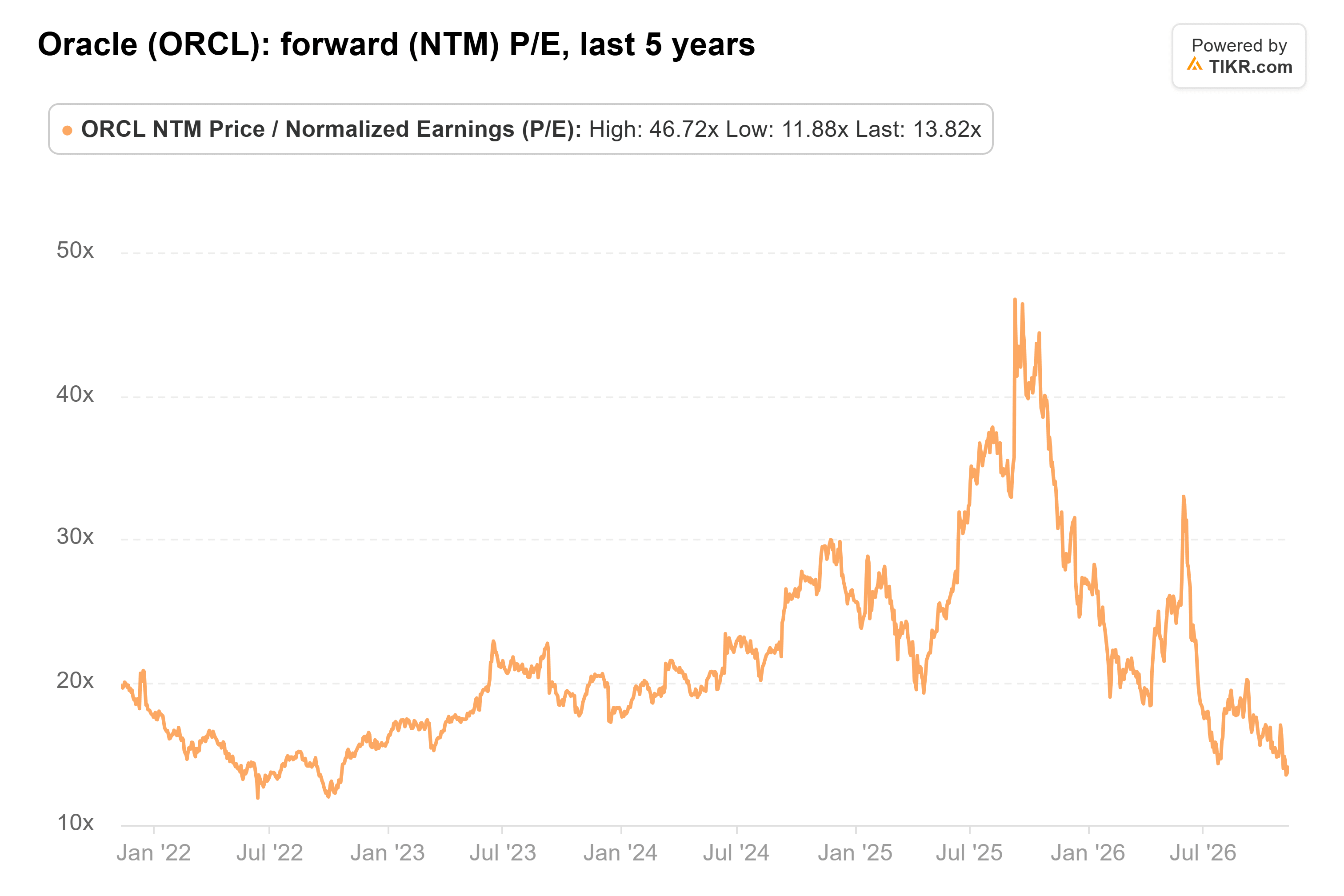
Bernstein’s target asks for a lot more: about 38x the next twelve months’ consensus EPS of $8.54. Oracle’s five-year high is 47x, from September 2025.
Room to rebound, but $325 is a reach
The risk is the balance sheet: total debt, including leases, was $169.1 billion at Aug. 31, before this month’s raise.
I do think the selloff went too far, since a stock near the bottom of its multiple range with rising estimates has room to recover. But $325 needs a multiple far above Oracle’s average while it’s still selling stock and bonds to fund its data centers, and that’s too much to expect within a year. Its second-quarter report in mid-December will show whether the backlog held up after the Tencent cancellation and Microsoft’s pullback.
So what is Oracle stock actually worth?
TIKR lets you forecast the future price of any stock in less than a minute. Just enter a few assumptions into TIKR’s valuation model and see what Oracle could be worth. Start from Wall Street consensus estimates, or adjust the inputs to reflect your own view of the business. It’s free to use.
Disclaimer:
Please note that the articles on TIKR are not intended to serve as investment or financial advice from TIKR or our content team, nor are they recommendations to buy or sell any stocks. We create our content based on TIKR Terminal’s investment data and analysts’ estimates. Our analysis might not include recent company news or important updates. TIKR has no position in any of the stocks mentioned. Thank you for reading, and happy investing!