Key Takeaways
- AMD fell 8% after Hunterbrook reported that a blacklisted Chinese server maker keeps using newer AMD firmware.
- Hunterbrook, which is short AMD, says its findings don’t establish a violation, so the drop looks overdone.
- A company linked to it also sold billions of dollars of Nvidia-based computers.
- The bigger risk is the export rules, which a January deadline could extend to blacklisted companies’ affiliates.
Advanced Micro Devices (AMD) fell 8% today on a report about its China ties from short seller Hunterbrook’s investigative arm.
Hunterbrook Media’s post on X put it plainly: “Investors treated $AMD as the winner of Nvidia’s China crisis. The problem: AMD has a China problem of its own.” Nvidia (NVDA), meanwhile, is little changed.
A firmware trail to a blacklisted server maker
IEIT Systems, added to the Commerce Department’s Entity List in March 2025, has put at least six newer versions of AMD firmware into its BIOS updates since, Hunterbrook found. Three companies linked to IEIT, including Kaytus in Singapore and Aivres in California, sell AMD-based servers with nearly identical firmware. Hunterbrook says its findings don’t establish an export-law violation.
Aivres also exported more than $3 billion of computers built with Nvidia chips to Southeast Asia between April 2024 and February, The New York Times reported. But Nvidia’s outlook for the quarter ending in January already assumes no data center compute revenue from China, so it has little left to lose there.
The rules are the bigger risk
AMD has plenty to lose. China and Hong Kong were 22.4% of its 2025 revenue ($7.8 billion) by billing location, including PCs and other chips the export rules don’t cover. Under this week’s tighter chip rules, advanced AI chips shipped to Singapore, where AMD billed customers $4.28 billion, and four other countries now need a license. And on Jan. 10, a pause ends on a rule that would extend blacklist limits to companies at least 50% owned by blacklisted ones. Kaytus’s audited accounts name IEIT as its ultimate parent.
TIKR tracks 54 analysts on AMD. How many say “Buy”?
See the full breakdown of Buy, Hold, and Sell ratings on AMD, along with Wall Street’s revenue and earnings estimates, all in one place. More than 500,000 investors use TIKR to research stocks like this one. See AMD’s Analyst Ratings
Still priced near its average
Analysts expect AMD’s normalized EPS to more than double in 2027:
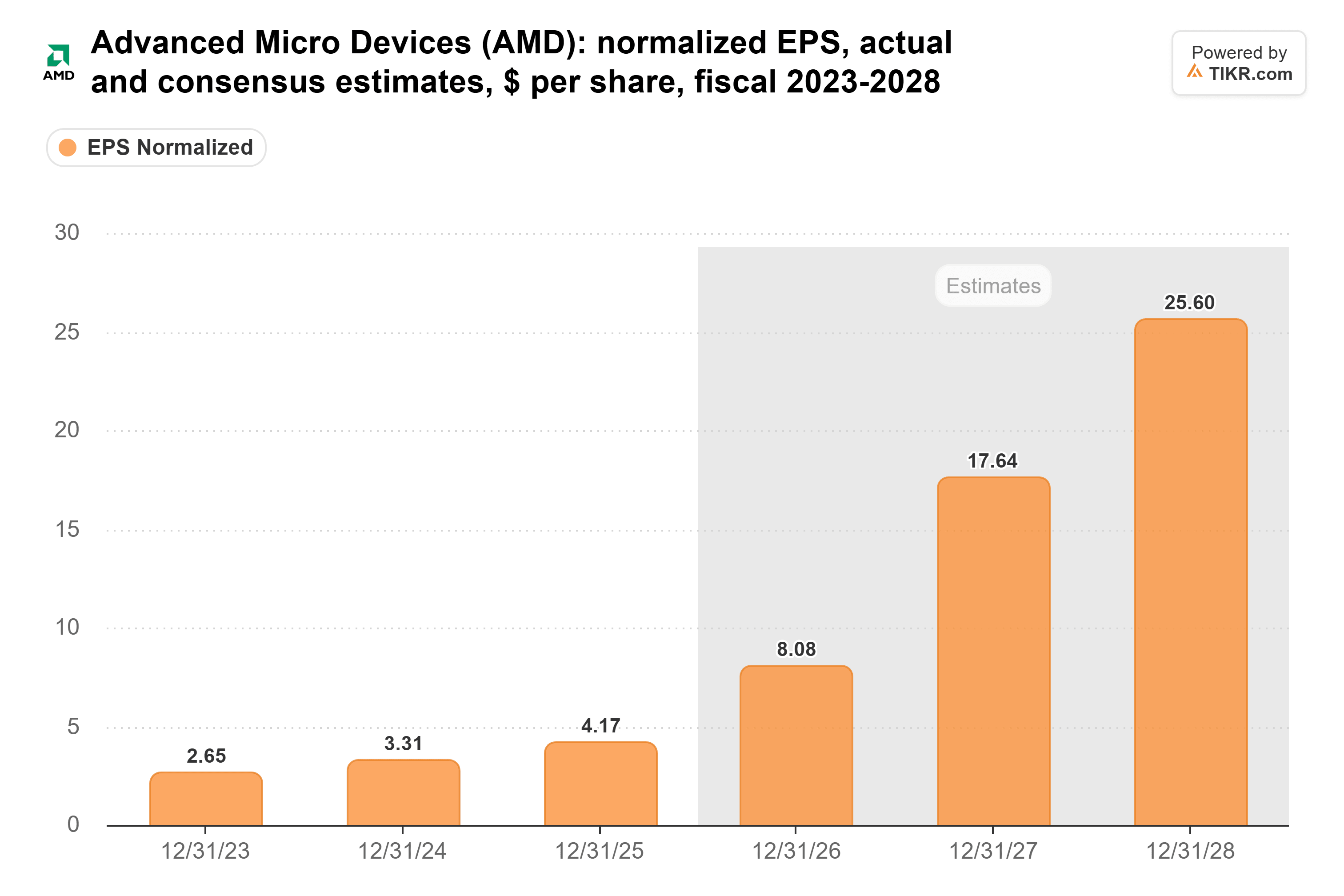
Those estimates came before Hunterbrook’s report, and nothing in the report changes a reported number. AMD’s forward P/E is right at its five-year average:
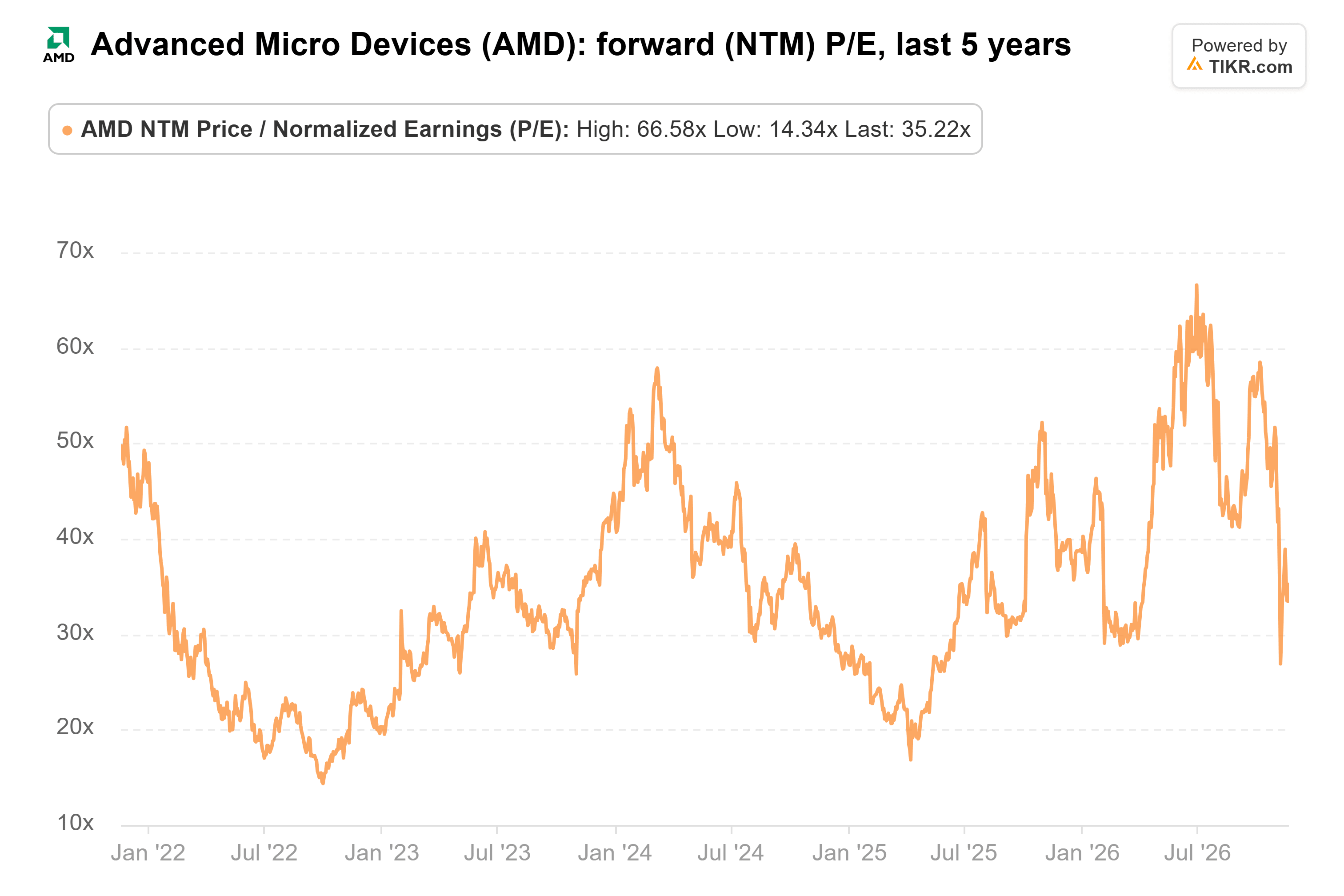
It was 35x at the last close, about half its 67x peak in June, and today’s drop takes it to about 33x.
I think investors sold a stock at its usual multiple on a report that stops short of alleging a violation. Jan. 10 comes first. Then, in early February, fourth-quarter revenue near its guidance of about $17 billion would show the China worries haven’t reached the business.
So what is AMD stock actually worth?
TIKR lets you forecast the future price of any stock in less than a minute. Just enter a few assumptions into TIKR’s valuation model and see what AMD could be worth. Start from Wall Street consensus estimates, or adjust the inputs to reflect your own view of the business. It’s free to use.
Disclaimer:
Please note that the articles on TIKR are not intended to serve as investment or financial advice from TIKR or our content team, nor are they recommendations to buy or sell any stocks. We create our content based on TIKR Terminal’s investment data and analysts’ estimates. Our analysis might not include recent company news or important updates. TIKR has no position in any of the stocks mentioned. Thank you for reading, and happy investing!