Key Takeaways
- Covalis Capital, a firm that manages $4.8 billion, held no Cheniere Energy, CoreWeave or Ameren stock by Sept. 30, its latest 13F shows.
- Cheniere has gained 29% since then, after raising its 2026 outlook again in late October.
- CoreWeave has fallen 47% over the same stretch, with its interest bill still more than twice its operating income, and analysts have trimmed their targets.
- Ameren’s exit is the easiest to back, but Cheniere is the one of the three I’d buy today.
Cheniere Energy (LNG) is up 29% since Sept. 30, and CoreWeave (CRWV) is down 47%. Covalis Capital, a firm that manages $4.8 billion, owned neither stock by then, nor any Ameren (AEE), according to its 13F for the quarter ended Sept. 30, filed Nov. 13.
It wasn’t all selling. The 13F holds $1.24 billion of US stocks across 90 positions, and its largest is now Teck Resources, a stake Covalis built up in the quarter to 7.4% of its 13F stocks. But the three stocks it exited were all sizable holdings at the end of June.
Cheniere keeps raising the bar
Covalis held 188,557 Cheniere shares worth $45 million at June 30, 2.5% of its 13F stocks. Since the quarter ended, the company has given investors plenty to like. In its third-quarter release on Oct. 29, Cheniere raised its full-year 2026 adjusted EBITDA guidance again, to $8.75 billion to $9.25 billion from $7.90 billion to $8.40 billion.
Analysts have kept raising their average target on the stock over the past year:
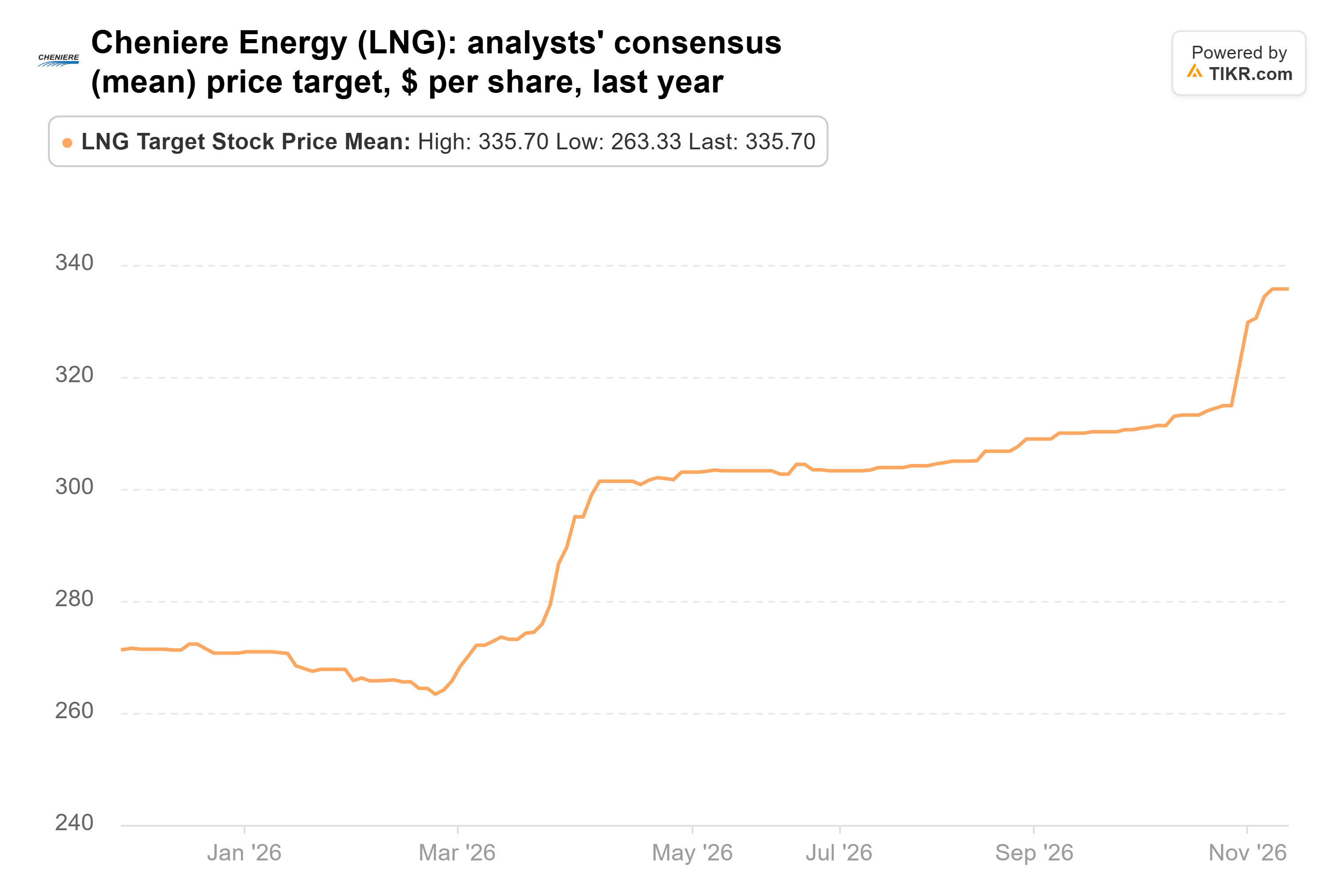
It reached $335.70 in early November, up from $271.32 a year earlier, and it’s still 9% above the $308.75 close, even after the run. At about 13x forward earnings, that’s a modest price for a company still lifting its outlook.
TIKR tracks 23 analysts on Cheniere Energy. How many say “Buy”?
See the full breakdown of Buy, Hold, and Sell ratings on Cheniere Energy, along with Wall Street’s revenue and earnings estimates, all in one place. More than 500,000 investors use TIKR to research stocks like this one. See Cheniere Energy’s Analyst Ratings
CoreWeave’s growth comes with a big interest bill
Covalis’s CoreWeave stake was smaller: 410,049 shares worth $41 million at June 30, 2.3% of its 13F stocks. And this is the stock that has gone the other way since.
CoreWeave’s third quarter was strong. Adjusted operating income of $379 million beat its own guidance of $200 million to $260 million, and its backlog grew to about $132.5 billion. The trouble is the cost of paying for all that capacity: its interest bill still runs at more than twice that operating income, and the consensus has its free cash flow negative every year through 2030.
Having ruled out new unsecured bonds, CoreWeave expects its next contract-backed loan to price at a yield of 7% to 7.5%, above the under-6% rate on the one it priced in March. Then Jensen Huang’s sudden exit as NVIDIA’s CEO sank the stock again on Nov. 12. NVIDIA supplies CoreWeave’s chips, invested $2 billion in it in January at $87.20 a share, and rents back capacity from it.
Analysts have trimmed their average target since the summer, though it still sits far above the stock:
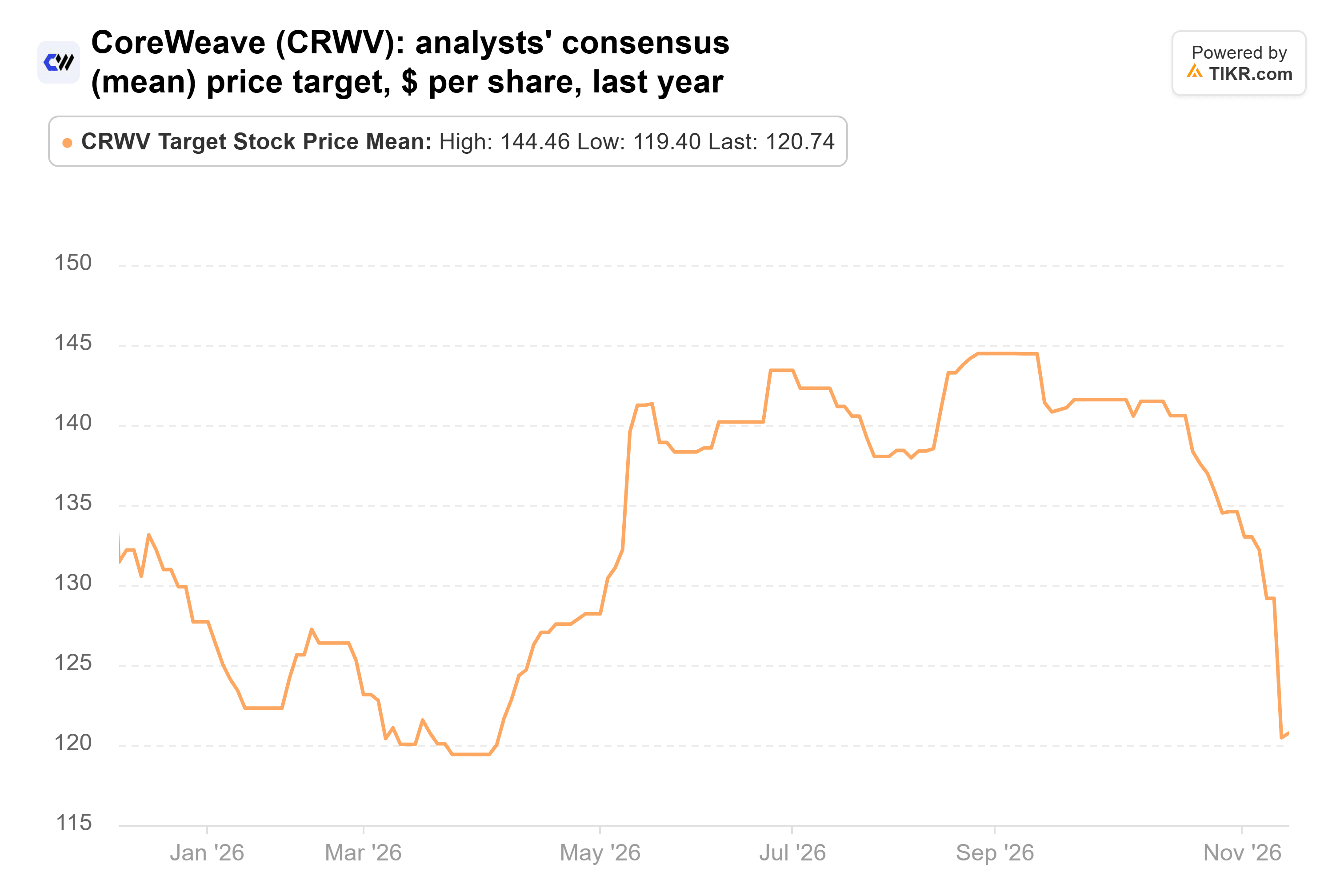
At $120.74, the average is down from $144.46 in late August, but it’s still more than twice the $53.13 close. The 41 analysts covering CoreWeave are far apart, though, with targets from $39 to $278. Its forward price-to-sales multiple was already 2.5x on Sept. 30, its lowest quarter-end reading since its March 2025 IPO, and it’s lower still after the drop.
Ameren’s sale is the easy one to back
Ameren was the biggest of the three exits: 629,746 shares worth $71 million at June 30, 4.0% of its 13F stocks. The business is doing fine. In its third-quarter release, Ameren raised its 2026 earnings guidance to $5.35 to $5.55 a share, from $5.25 to $5.45, and set 2027’s at $5.70 to $5.90.
Wall Street thinks the stock already reflects that. Analysts’ average target has crept up over the past year:
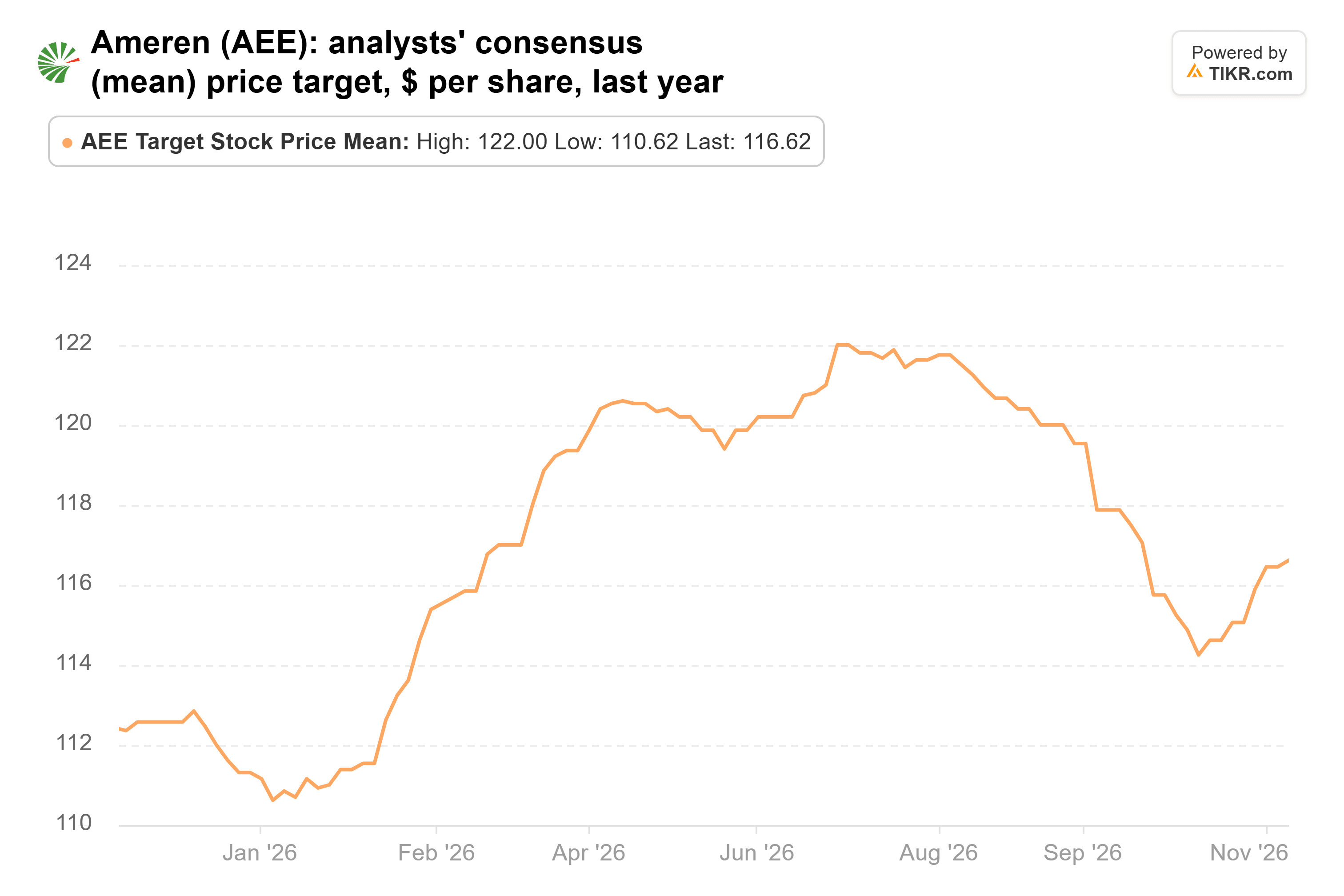
At $116.62, it’s up from $112.36 a year earlier but below July’s $122.00 peak, and just 2% above the $114.77 close. With the shares at about 20x forward earnings and 3% from their 52-week high, the 19 analysts covering Ameren see little left to gain.
I’d buy Cheniere
Of the three exits, Ameren’s is the one the numbers back best: a utility that just raised its guidance, priced about where the Street thinks it should be. CoreWeave is the hardest to call. Analysts’ average target is more than twice the price, but until its operating income catches up with its interest bill, the stock depends on lenders and NVIDIA staying friendly.
If I could only buy one of the three right now, it’d be Cheniere. It keeps raising its outlook, analysts keep raising their targets, and it still trades at a modest multiple.
Of course, investors have already paid up for some of that good news, with the stock up 29% in about six weeks. Covalis’s next 13F, for the quarter ending Dec. 31, is due by mid-February, and it’ll show whether Covalis has come back to any of the three.
So what is Cheniere Energy stock actually worth?
TIKR lets you forecast the future price of any stock in less than a minute. Just enter a few assumptions into TIKR’s valuation model and see what Cheniere Energy could be worth. Start from Wall Street consensus estimates, or adjust the inputs to reflect your own view of the business. It’s free to use.
Value Cheniere Energy for free
Disclaimer:
Please note that the articles on TIKR are not intended to serve as investment or financial advice from TIKR or our content team, nor are they recommendations to buy or sell any stocks. We create our content based on TIKR Terminal’s investment data and analysts’ estimates. Our analysis might not include recent company news or important updates. TIKR has no position in any of the stocks mentioned. Thank you for reading, and happy investing!