Key Takeaways
- Harris Associates manages $109 billion. Its 13F filed Nov. 16 shows that Meta, Marsh and Citigroup were its biggest additions in the third quarter.
- Meta and Citigroup have fallen since Sept. 30, and analysts’ average targets sit well above both stocks.
- Marsh’s business is growing steadily, but its stock has climbed to within 2% of the Street’s average target.
- Of the three, Meta has the strongest case on the numbers, though heavy AI spending will keep its free cash flow negative in 2027.
Bill Nygren’s Harris Associates, which runs the Oakmark funds, filed its 13F for the quarter ended Sept. 30 on Nov. 16. Its boldest move was in Meta Platforms (META), where it grew its stake more than 500-fold to 2.43 million shares.
Its other two biggest additions were Marsh (MRSH), up 24% to 10.78 million shares, and Citigroup (C), up 30% to 11.34 million. Since the quarter ended, Meta is down 23% and Citi is down 15%, while Marsh is up 21%.
Meta is the big new bet
At Sept. 30, Harris’s Meta shares were worth $1.76 billion. That’s 2.3% of its 13F stocks and its No. 12 holding. It wasn’t the only fund buying: Brad Gerstner’s Altimeter added 25% to its Meta stake in the same quarter.
Meta’s third-quarter revenue rose 26% to $64.6 billion, but capital spending of $34.9 billion outran the $32.8 billion of cash its operations brought in. On Oct. 21, a New Mexico court also ordered Meta to pay a $25 billion penalty, which Meta will appeal.
Analysts haven’t budged. Their average price target is about where it was a year ago, $848 against $840:
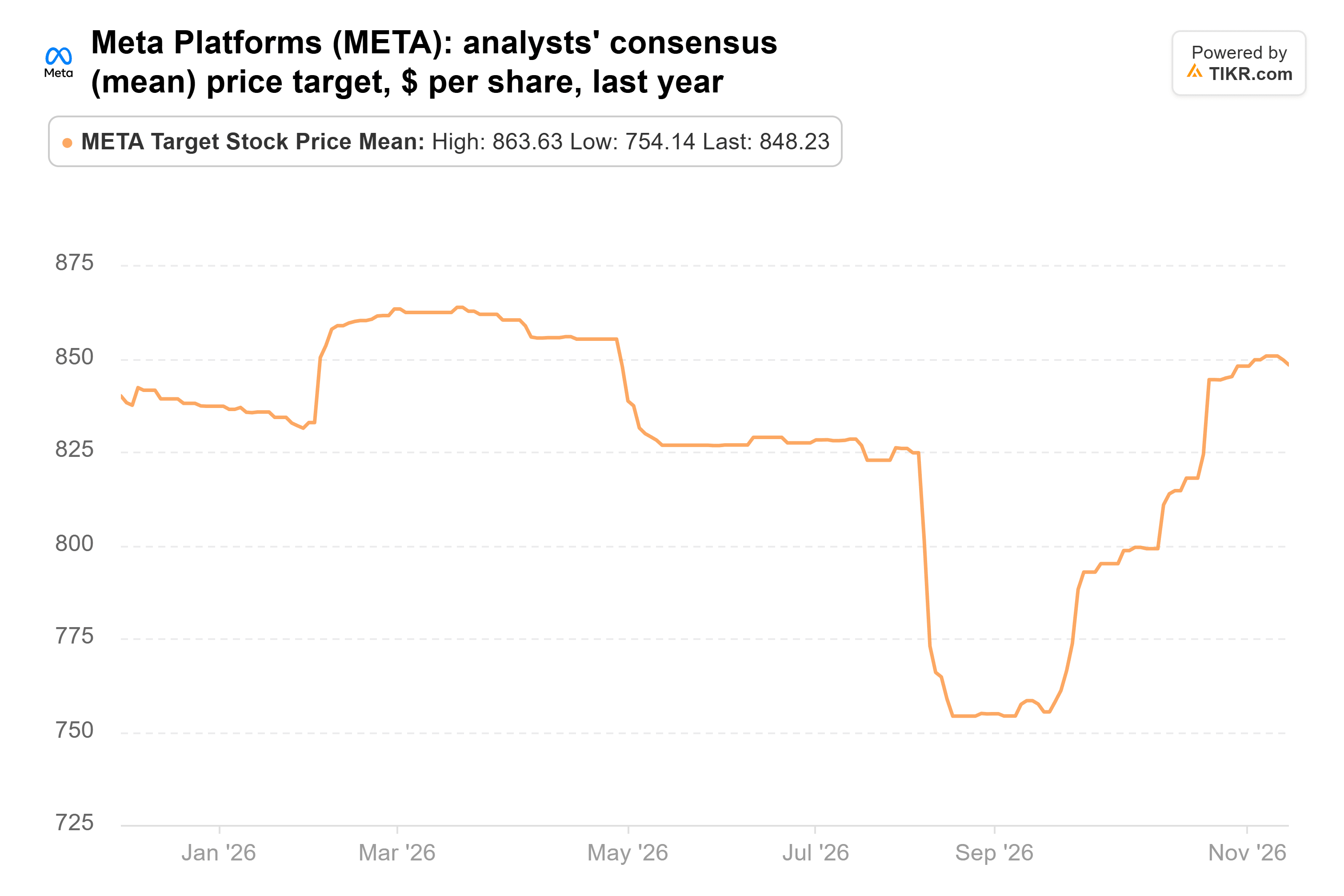
That target is 51% above the stock, and even the lowest target, $650, is above it. At about 17x forward earnings, Meta trades well below its five-year average of 21.4x. Analysts expect $42.40 of normalized EPS for 2028, and the $848 target is 20x that. So the target needs no re-rating, only for the estimates to hold.
TIKR tracks 62 analysts on Meta Platforms. How many say “Buy”?
See the full breakdown of Buy, Hold, and Sell ratings on Meta Platforms, along with Wall Street’s revenue and earnings estimates, all in one place. More than 500,000 investors use TIKR to research stocks like this one. See Meta Platforms’ Analyst Ratings
Citi’s returns are rising, and the stock got cheaper
Harris added 30% to Citi and ended the quarter with 11.34 million shares worth $1.47 billion, 1.9% of its 13F stocks. Citi’s third-quarter GAAP net income rose 40% to $5.2 billion. Its return on tangible common equity was 12.6% for the first nine months, already inside the 11% to 13% it targets for 2027 and 2028. Management does expect fourth-quarter Markets revenue to fall about 20% from the third quarter, and its guidance implies a fourth-quarter return in the high single digits. Its next report is due Jan. 14.
The analysts’ average target climbed through the first half of the year and has kept most of that gain:
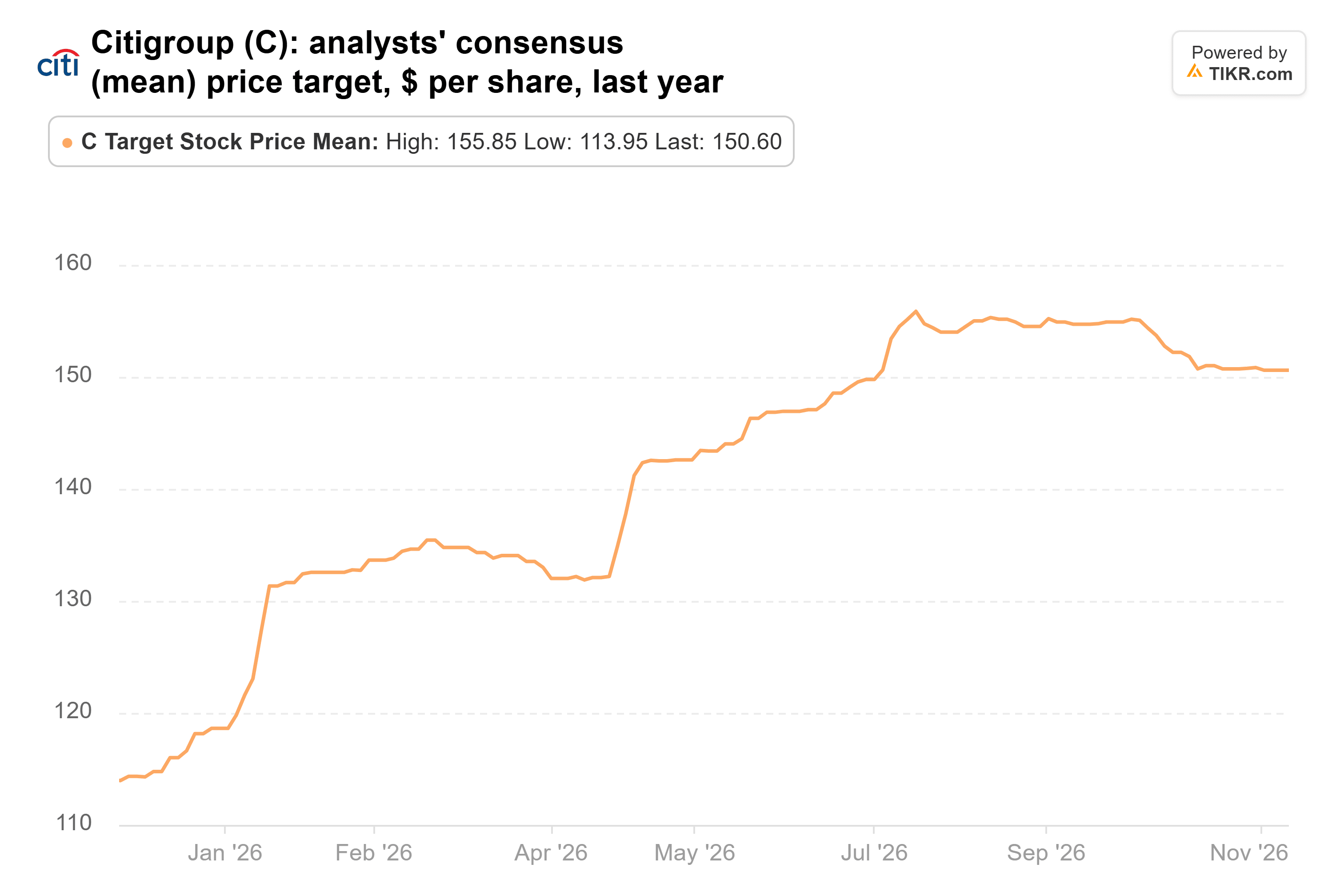
At $151, the average target is 36% above the stock, and even the lowest target, $127, is above it. Citi trades at about 1.1x its tangible book value of $101.59 a share. That’s below where it closed any quarter of 2026, when the range was 1.17x to 1.41x. Analysts expect $122.01 of tangible book per share for 2028, and the $151 target is about 1.2x that. So Citi only has to grow its book as fast as analysts already expect.
Marsh has already done the work
By value, Marsh was the biggest of the three. Harris added 24% and ended the quarter with 10.78 million shares worth $1.84 billion, 2.4% of its 13F stocks and its No. 10 holding. Marsh’s third-quarter revenue rose 8% to $6.9 billion, or 5% on an underlying basis, and adjusted EPS rose 10% to $2.03. Management still expects underlying revenue growth this year to be similar to 2025’s, with another year of margin expansion. It had bought back $2 billion of stock through September.
The stock is up 21% since Sept. 30, while the analysts’ average target has drifted lower over the year:
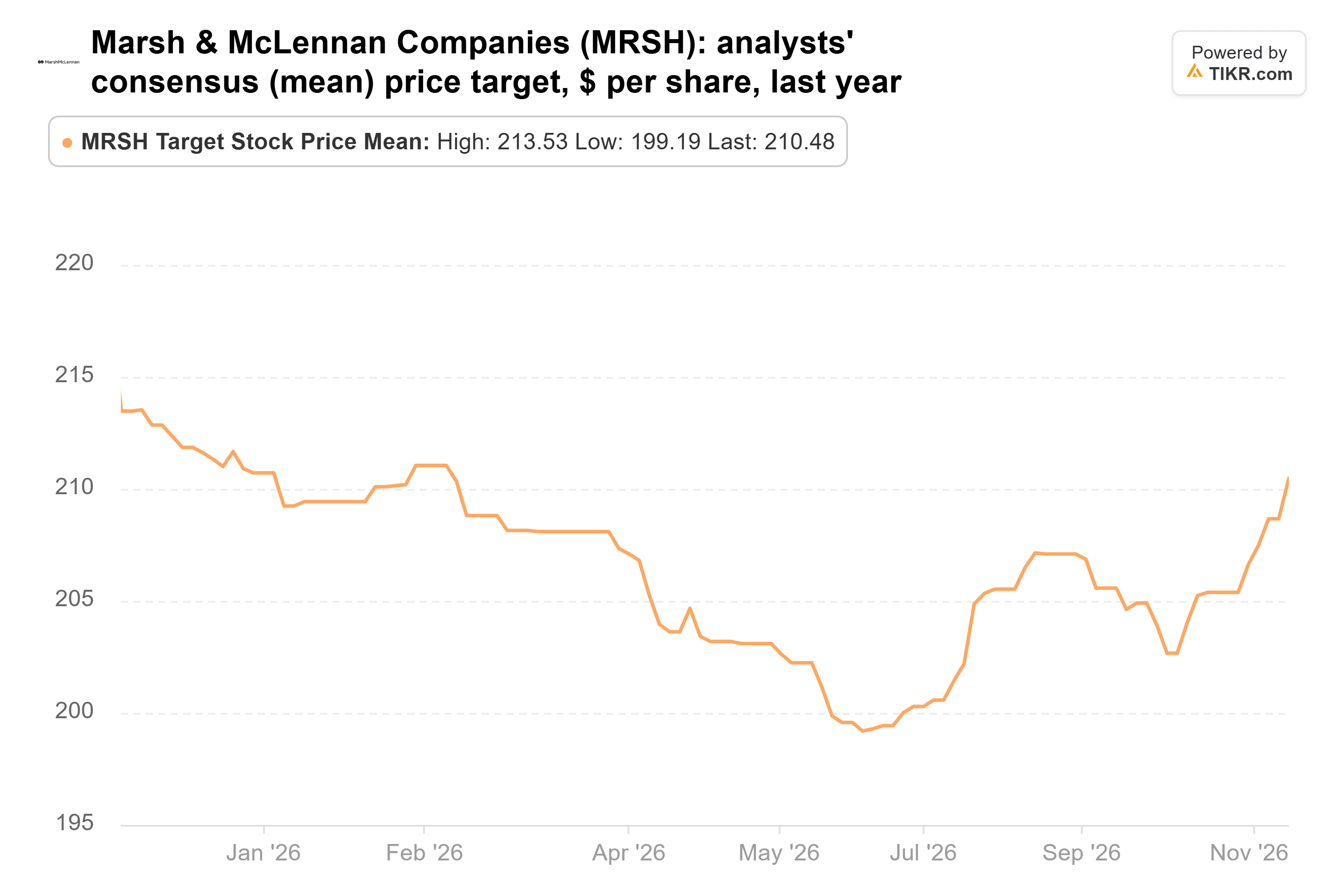
The average target is $210.48 now, against $213.47 a year ago, so the stock sits just 2% below it. Marsh’s business is in good shape, but the stock has already gone most of the way to where analysts think it should be.
Meta gets my vote
If I could follow Harris into only one of these right now, it’d be Meta. The stock is 23% cheaper than it was on Sept. 30, and the case doesn’t need a higher multiple to work. Citi is a close second, and Marsh is the one I’d wait on.
The risk with Meta is the cash. As capital spending climbs, analysts expect free cash flow of negative $35.1 billion in 2027 and just $0.6 billion in 2028, and Meta’s legal bill is still growing on top of that.
Meta’s fourth-quarter call in late January is the test. The case holds if revenue lands in the upper half of the $73 billion to $76 billion guidance range and the 2027 capex plan comes in near the $203 billion analysts expect. Harris’s next 13F, due by mid-February, will show whether it’s still on board.
So what is Meta stock actually worth?
TIKR lets you forecast the future price of any stock in less than a minute. Just enter a few assumptions into TIKR’s valuation model and see what Meta could be worth. Start from Wall Street consensus estimates, or adjust the inputs to reflect your own view of the business. It’s free to use.
Disclaimer:
Please note that the articles on TIKR are not intended to serve as investment or financial advice from TIKR or our content team, nor are they recommendations to buy or sell any stocks. We create our content based on TIKR Terminal’s investment data and analysts’ estimates. Our analysis might not include recent company news or important updates. TIKR has no position in any of the stocks mentioned. Thank you for reading, and happy investing!